
Kenya Public Institutions: 1.28% Disability Employment Amid 5% Quota Gap
Summary
- A recent study found that persons with disabilities hold only 1.28% of jobs in surveyed Kenyan public institutions, falling significantly short of the 5% statutory requirement.
- The Persons with Disabilities Act, 2025, mandates that employers with 20 or more staff reserve 5% of positions for individuals with disabilities and provide reasonable accommodation.
- Only three out of ten public institutions assessed confirmed meeting the employment quota, with many lacking the data to verify compliance.
- Workplace accessibility, reasonable accommodation, and digital system accessibility scored poorly in the assessment, indicating broader systemic issues.
- While procurement awards to businesses owned by persons with disabilities have increased, barriers such as inaccessible tender information and delayed payments continue to hinder their full participation.
Current State of Disability Employment in Kenya
The assessment highlights that achieving the employment target necessitates more than just recruitment, requiring substantial investment in assistive technologies, accessible workplaces, and robust opportunities for retention, promotion, and leadership.
A recent analysis has revealed a significant disparity in the employment of persons with disabilities within Kenya's public sector, with only 1.28 percent of positions held by this demographic across seven surveyed public institutions. This figure falls considerably short of the statutory requirement mandating that at least five percent of all jobs be reserved for individuals with disabilities. The comprehensive gap analysis identified a total of 371 employees with disabilities among approximately 29,011 staff members in the institutions that furnished workforce data.
These findings, presented in Nairobi during a collaborative meeting by the Unlocking Opportunities Programme and the Mastercard Foundation, underscore the ongoing difficulties in implementing policies aimed at disability-inclusive employment. The assessment encompassed 42 institutions located in Embu, Kilifi, Kisumu, Nairobi, Nakuru, and Turkana counties, scrutinizing their internal policies, operational systems, and established practices concerning both employment and government procurement opportunities for persons with disabilities. It is important to note that the reported employment statistics were based on submissions from the institutions themselves and were not independently verified against comprehensive human resource records.
Legal Mandates and Compliance Challenges
The Persons with Disabilities Act, enacted in 2025, stipulates a clear legal obligation for employers with a workforce of 20 or more individuals to allocate a minimum of five percent of their positions to persons with disabilities and to ensure the provision of reasonable accommodation. Despite this legislative framework, the study indicated widespread non-compliance. Out of ten public institutions specifically evaluated for this requirement, only three confirmed that they met the mandated five percent threshold.
A further four institutions were found to be non-compliant, while the remaining three were unable to ascertain their compliance status due to a lack of accessible workforce data. Beyond mere recruitment numbers, the assessment also brought to light substantial deficiencies in workplace accessibility, the provision of reasonable accommodation, and pathways for career advancement. Budgetary allocations for reasonable accommodation received a low score of 36.7 percent, and the accessibility of digital systems and communication tools fared even worse, scoring only 33.3 percent. The assessment highlights that achieving the employment target necessitates more than just recruitment, requiring substantial investment in assistive technologies, accessible workplaces, and robust opportunities for retention, promotion, and leadership.
Procurement Opportunities and Persistent Hurdles
While employment figures lag, the study did observe some positive developments in the realm of government procurement for businesses owned by persons with disabilities. Nationally, the proportion of government contracts awarded to these enterprises saw an increase from 9.84 percent to 14.38 percent. Furthermore, within the six counties covered by the assessment, the total value of contracts secured by these businesses more than doubled, rising from Sh46.37 million in the 2024/25 financial year to Sh95.46 million in the 2025/26 period. Their share of Affirmative Action in Public Procurement (AGPO) awards within these counties also saw a notable jump, from 4 percent to 15.1 percent.
Despite these gains, the report identified several significant obstacles hindering full participation. These barriers include the inaccessibility of tender information, overly complex procurement requirements, limited access to financial resources, and critically, delays in payment. The institutional assessment revealed that timely payment scored a mere 40 percent, a factor that the report warned could severely impede the capacity of small businesses to fulfill contractual obligations and compete for future opportunities.
Calls for Action and Broader Impact
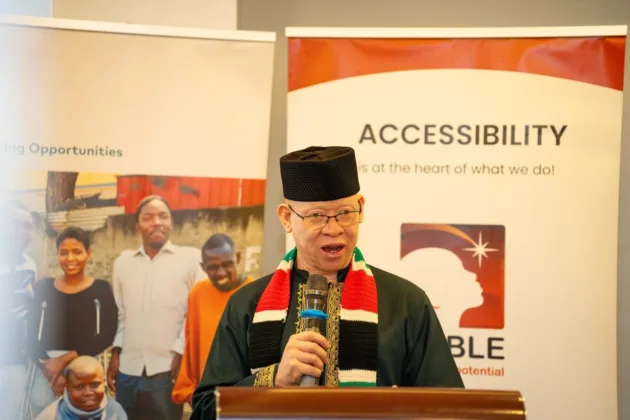
During the Nairobi meeting, Senator Isaac Mwaura, who heads the Office of Diversity, Inclusion and Disability Rights within the Executive Office of the President, issued a strong call for public institutions and employers to translate their stated commitments to inclusion into tangible, measurable outcomes. He emphasized that businesses owned by persons with disabilities are capable of delivering high-quality services, fostering innovation, and providing significant value, while employees with disabilities enrich workplaces with unique perspectives.
Charles Warria, the Programmes Director at inABLE, speaking on behalf of the Unlocking Opportunities Programme, explained that the assessment's primary purpose was to pinpoint areas where implementation falls short, thereby guiding the development of practical interventions. Eannes Ongus, Deputy Director for Resource Mobilisation and Partnerships at the Public Procurement Regulatory Authority, acknowledged that public institutions are indeed making procurement reservations under AGPO. However, he highlighted that the challenge lies in effectively converting these reservations into actual contract awards, indicating a persistent gap between policy and execution.
Practical Implications
Lawyers advising public institutions or private companies in Kenya (with 20+ employees) must note the widespread non-compliance with the Persons with Disabilities Act, 2025, regarding the 5% employment quota and reasonable accommodation. Compliance officers should review current hiring, workplace accessibility, and procurement practices to mitigate legal risks and ensure adherence to statutory requirements, particularly concerning the 5% PWD employment target and accessible procurement processes.
Source
How does this affect you?
Get an AI analysis of this article grounded in your jurisdictions, practice areas, and any policy documents you've uploaded to Wansom.
Finish Reading the Full Story and the Expert Analysis.
Get the latest legal & regulatory intelligence in Kenya
Wansom is AI and can make mistakes.