
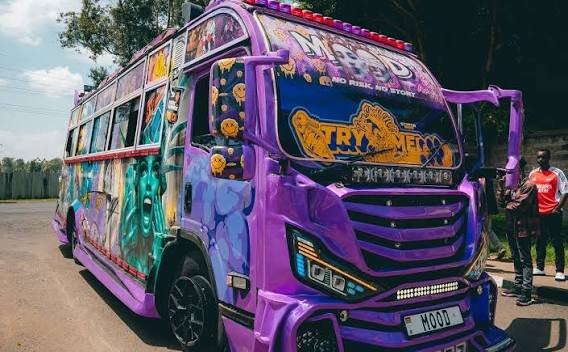
KENYA proposes REGULATING MATATU FARE with NTSA BILL
Abstract
Kenya and Uganda are the only countries in a comparison Barasa cited to Parliament that lack a structured fare-setting framework, while Tanzania, Rwanda, Ghana, and several other African peers already regulate PSV pricing.
Introduction
The Bill responds directly to a familiar seasonal pattern, fares that multiply during rain, festive travel, and fuel price spikes, and it would require operators to display approved fare tables, creating a formal channel for commuters to report overcharging.
Matatu operators have opposed near-identical proposals twice before, in 2018 and 2020, and the Transport Ministry itself previously urged caution, warning that price controls need rigorous study and stakeholder engagement before implementation.
Background
Kenya's matatu industry has operated for decades on a simple, unwritten rule. Fares go up when demand does, and nobody outside the vehicle decides by how much. That system produced predictable friction every December, every rainy afternoon, and every time fuel prices moved, but it survived because no government had successfully legislated a replacement.
The NTSA Act, No. 33 of 2012 established the National Transport and Safety Authority as Kenya's consolidated road transport regulator, covering vehicle registration, licensing, road safety, driver testing, and traffic law enforcement. Fare setting was never part of its original mandate. Matatu operators have historically set fares independently based on route, distance, time of day, fuel costs, and competitive pressure, a structure Parliament has twice declined to change.
The Bill that cleared second reading on 29 July 2026 is Parliament's third attempt in under a decade to change that. Sponsored by Didmus Barasa, it would insert a new provision into the NTSA Act allowing the Transport Cabinet Secretary, working with NTSA, to prescribe minimum and maximum fares by route, along with a mechanism for periodic review.
In 2018, Parliament rejected a Traffic Act amendment that would have given the Cabinet Secretary similar fare-setting powers. In 2020, the Matatu Owners Association rejected a comparable proposal outright. Barasa's Bill, first read in October 2023, is the most recent iteration, and it took a materially different route: amending the NTSA Act rather than the Traffic Act, and explicitly requiring the Cabinet Secretary to consult NTSA rather than act unilaterally.
Analysis
The Bill's operative provision is narrower than its public framing suggests. It does not hand NTSA direct fare-setting authority. It empowers the Cabinet Secretary for Transport to make regulations prescribing minimum and maximum fares, in consultation with NTSA. That distinction matters for accountability.
Political responsibility for fare levels would sit with the ministry, not an independent regulator, which changes who commuters and operators would need to lobby, and who would bear political cost when fare regulations prove unpopular with either side.
For NTSA's board and management, this Bill changes the Authority's role even though it does not hand NTSA the final say. Being the statutory consultation partner for fare regulation adds a politically sensitive function to an agency whose core mandate has been technical, licensing, vehicle inspection, and road safety enforcement. NTSA's leadership should prepare governance structures now for a consultative fare-review function, including how it will gather route-level cost data and mediate between the ministry and operator associations.
For commuters, a functioning fare regulation regime offers genuine cost predictability and a formal channel to challenge overcharging, addressing a long-standing consumer protection gap in Kenya's transport sector. For compliant, well-run Saccos and matatu owners, regulation offers an opportunity to close the revenue leakage Barasa described, where inflated fares collected by conductors do not reach vehicle owners, potentially strengthening formal Sacco structures relative to informal operators.
Conclusion
Kenya has come closer than it has in nearly a decade to regulating matatu fares, but second reading is a milestone, not a settlement. The Bill's real substance, the formula, the enforcement mechanism, and the role of counties and operator associations, remains to be negotiated in subsequent regulation. Matatu operators, Sacco owners, county transport departments, and NTSA itself all have a genuine stake in how that detail is drafted, and the window to influence it is open now, before the framework hardens into gazetted regulation that will be far harder to amend once operational.
Citations
- 1.National Transport and Safety Authority Act, No. 33 of 2012, Kenya.
- 2.National Transport and Safety Authority (Amendment) Bill, 2023, Kenya National Assembly.
- 3.Submissions of the Cabinet Secretary for Roads and Transport to the National Assembly Departmental Committee on Transport and Infrastructure, November 2023.
Finish Reading the Full Story and the Expert Analysis.
Get the latest legal & regulatory intelligence in Kenya
Wansom is AI and can make mistakes.