
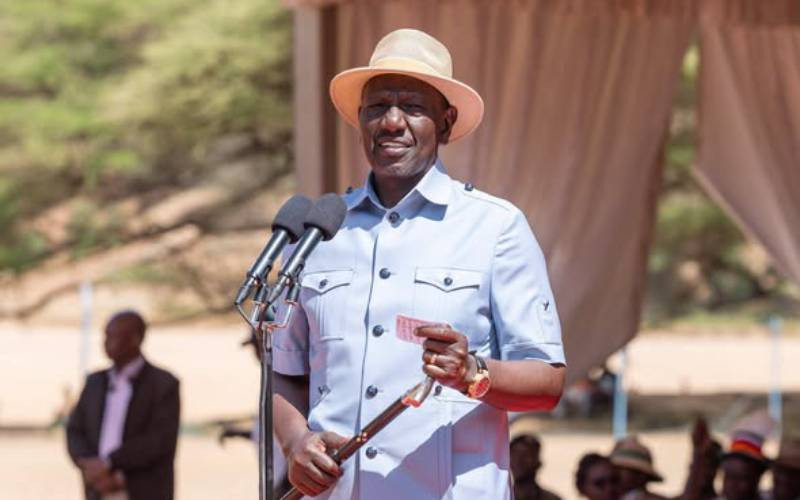
President Ruto: Kenya To End Raw Mineral Exports For Value Addition
Summary
- President William Ruto announced Kenya will cease exporting raw minerals, mandating local processing instead.
- This policy aims to create jobs, add value, and reduce poverty by processing resources within Kenya.
- The declaration follows the controversial suspension of Tata Chemicals' operations at Lake Magadi, which Ruto justified by citing insufficient value for Kenya.
- Minerals like gold, oil, limestone, and soda ash are targeted for in-country processing before export.
- The government seeks to attract new investors for local refining, citing the planned oil refinery in Lamu with a confirmed groundbreaking date of September 30, 2026, as an example.
Kenya to Halt Raw Mineral Exports
President William Ruto has declared that Kenya will no longer permit its mineral resources to be exported in their raw form, signaling a profound shift towards mandatory local processing to enhance national economic benefits.
President William Ruto has declared that Kenya will no longer permit its mineral resources to be exported in their raw form, signaling a profound shift towards mandatory local processing to enhance national economic benefits. This significant policy announcement follows closely on the heels of a contentious dispute involving Tata Chemicals' operations at Lake Magadi, which has brought the issue of value addition in the extractive sector to the forefront of national discourse.
Speaking at a thanksgiving service in South Horr, Samburu County, President Ruto articulated a comprehensive government strategy aimed at transforming Kenya's economic model. He emphasized that the decision applies universally, stating that whether it concerns Magadi Soda, oil, or any other mineral, the government has resolved to cease raw material exports. Instead, all minerals available within Kenya are slated for in-country processing.
The Lake Magadi Precedent and Policy Rationale
The President's declaration directly addresses the recent suspension of Tata Chemicals' activities at Lake Magadi in Kajiado County. Operations at the site were halted on July 28, 2026, following a directive from the Ministry of Mining, Blue Economy and Maritime Affairs, citing issues related to compliance and licensing. President Ruto defended this action, arguing that Kenya has not been deriving sufficient value from the natural resources extracted there. He advocated for a model where multiple investors—potentially five, six, or even ten companies—are given opportunities to utilize these resources, thereby fostering job creation, generating wealth, and alleviating poverty.
This move places the long-standing Tata Chemicals Lake Magadi dispute at the heart of a much broader economic agenda. Tata Chemicals has been involved in soda ash production at the lake for over a century, with its Kenyan operations tracing back to 1911 when the Magadi Soda Company commenced trona extraction. President Ruto criticized the existing framework, which he believes allows valuable resources to leave the country without Kenya receiving its rightful economic share, underscoring the need for a robust Kenya mineral value addition policy.
Broader Extractive Sector Strategy and Investment Goals
The government's new stance aims to transform Kenya's extractive sector from a mere supplier of raw commodities into a hub for manufacturing and value-added production. Under this proposed approach, a range of minerals including gold, limestone, iron ore, graphite, titanium, and soda ash would undergo processing or refining within Kenya before being exported. This Kenya local mineral processing law is expected to stimulate industrial job growth, fortify local supply chains, and significantly increase the value of the nation's exports.
President Ruto highlighted planned cooperation with Nigerian businessman Aliko Dangote as an example of the kind of investment model the government intends to pursue. He also mentioned the planned establishment of an oil refinery and petrochemical complex in Lamu, with a groundbreaking date confirmed for September 30, 2026, alongside efforts to attract investors into mineral refining. The President underscored the imprudence of any government exporting raw materials, thereby creating jobs and value in other countries, especially when Kenya possesses a large youth population in need of employment opportunities, reinforcing the President Ruto extractive sector strategy.
Practical Implications
Lawyers advising clients in Kenya's extractive sector must anticipate forthcoming legislation or regulations mandating local processing of minerals and prohibiting raw material exports. This signals a need to review existing export contracts, assess investment strategies for local value addition, and monitor for new compliance requirements to avoid operational disruptions.
Source
How does this affect you?
Get an AI analysis of this article grounded in your jurisdictions, practice areas, and any policy documents you've uploaded to Wansom.
Finish Reading the Full Story and the Expert Analysis.
Wansom is AI and can make mistakes.