
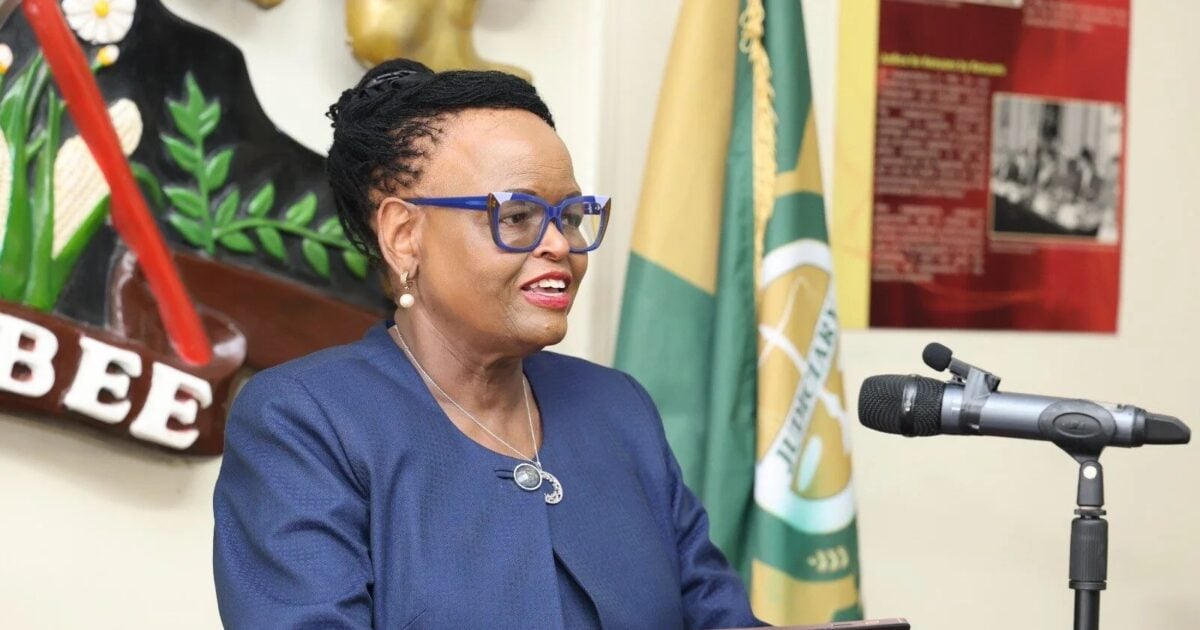
Kenya PPDT: CJ Koome Swears In New Members For 2027 Elections
Summary
- Chief Justice Martha Koome has emphasized early preparations to strengthen political party dispute resolution for Kenya's 2027 General Election.
- Eighteen new ad hoc members were sworn into the Political Parties Disputes Tribunal (PPDT) to boost its capacity.
- The PPDT handled 314 disputes in the 2022 pre-election period, supported by 18 ad hoc members and eight panels.
- A comprehensive 2027 readiness plan is being developed by key judicial bodies, covering training, staffing, and technology.
- CJ Koome urged new members to act with independence and integrity, guided solely by law and evidence, despite political pressures.
Strengthening Electoral Justice Ahead of 2027
Chief Justice Martha Koome has underscored the critical need for proactive measures to enhance the resolution of political party disputes in anticipation of Kenya's 2027 General Election.
Chief Justice Martha Koome has underscored the critical need for proactive measures to enhance the resolution of political party disputes in anticipation of Kenya's 2027 General Election. Emphasizing that the integrity of the electoral process hinges on the independence, efficiency, and readiness of the institutions tasked with handling such disagreements, Koome recently presided over a significant ceremony aimed at bolstering the capacity of the Political Parties Disputes Tribunal (PPDT).
During the event, held on Tuesday, eighteen new ad hoc members were officially sworn into the PPDT, a move specifically designed to strengthen the tribunal's ability to manage the increased caseload expected during the upcoming election cycle. The swearing-in proceedings were administered by Chief Registrar of the Judiciary Winfridah Mokaya. Koome highlighted that the foundational elements of fair elections are established within political parties themselves, particularly through their internal operations, nomination processes, methods of resolving disagreements, and commitment to safeguarding members' rights.
Lessons from the 2022 Electoral Cycle
Drawing upon the experiences from the 2022 electoral period, Chief Justice Koome urged the Political Parties Disputes Tribunal to leverage its past performance to cultivate greater public trust in the electoral justice system and guarantee that all disputes are settled within stipulated timeframes. The PPDT demonstrated its capacity during the 2022 pre-election phase by hearing and adjudicating 314 disputes, a feat made possible by the deployment of 18 ad hoc members and the establishment of eight specialized panels across seven different locations.
Technological advancements, including the implementation of electronic filing systems, the Case Tracking System, and the adoption of virtual hearings, were cited by Koome as key factors that significantly improved access to justice and augmented the Tribunal's overall capacity to manage disputes effectively. Looking forward to the 2027 polls, the Chief Justice advocated for comprehensive early preparation, continuous training for Tribunal members, more robust case management protocols, sustained decentralization of operations, and a commitment to improving the quality of judicial decisions. She firmly stated that electoral justice must be both prompt and legally sound, characterized by well-reasoned rulings that align with established legal precedent and offer effective remedies.
PPDT's Mandate and New Appointments
The Political Parties Disputes Tribunal holds a crucial mandate to adjudicate a broad spectrum of disagreements. This includes disputes arising between members of the same political party, conflicts between political parties and their members, and clashes between different political parties. Furthermore, its jurisdiction extends to disputes involving independent candidates and political parties, as well as disagreements stemming from coalition agreements, all as prescribed by law. The PPDT serves as a specialized forum for resolving internal party disputes, playing an indispensable role in fostering internal party democracy, ensuring accountability, and upholding compliance with constitutional and statutory requirements.
These 18 new PPDT ad hoc members were appointed under two distinct provisions of the Political Parties Act: nine individuals under Section 39A(1)(a) and another nine under Section 39A(1)(b). The appointees under Section 39A(1)(a) are Brian Nyabuti Onderi, George Ngugi Gathuka, Joyann Makena Mbwiria, Maulline Gragau, Ogada Alvin Meso, Ruth Akoth Otieno, Abigael Buyanzi Samin, Bennette Wamwene Nzamba, and Jane Wanjiku Ngochi. Those appointed under Section 39A(1)(b) include Victor Kiari Machoka, Mohamed Omar Haji, Antony Mmbaya Lumula, Alfred Otieno Onde, Namae Rose Sitati, Boaz Oyoo Were, Andrew G. Waruhiu, Joseph Riwongole Ngoriakou, and Isaiah Sifuna Walubengo.
Call for Impartiality and Preparedness
In her address to the newly sworn-in members, Chief Justice Koome issued a strong caution against succumbing to political pressure, personal interests, or external influences. She implored them to execute their duties with unwavering independence, impartiality, and integrity, emphasizing that their decisions must be guided exclusively by the Constitution, the law, and the presented evidence, particularly given the often politically charged nature of electoral disputes. This directive highlights the critical importance of judicial fortitude in maintaining public trust.
To ensure robust Kenya Judiciary election preparedness, Koome also called upon political parties to fortify their internal dispute resolution mechanisms and advocated for enhanced coordination among various institutions to minimize ambiguities in handling electoral disputes. A comprehensive 2027 readiness plan is currently being developed by the Registrar of Tribunals, in collaboration with the PPDT, the Judiciary Committee on Elections, and the Kenya Judiciary Academy. This strategic plan is set to encompass crucial areas such as training, staffing, technological integration, regional operations, public communication strategies, and performance standards, all designed to ensure a more efficient and just electoral process.
Practical Implications
Lawyers advising political parties or candidates in Kenya should anticipate a more robust and efficient Political Parties Disputes Tribunal (PPDT) process for the 2027 elections, necessitating stricter adherence to internal party dispute resolution mechanisms and thorough preparation of cases, given the increased capacity and focus on timely, legally sound decisions.
Source
How does this affect you?
Get an AI analysis of this article grounded in your jurisdictions, practice areas, and any policy documents you've uploaded to Wansom.
Finish Reading the Full Story and the Expert Analysis.
Get the latest legal & regulatory intelligence in Kenya
Wansom is AI and can make mistakes.