
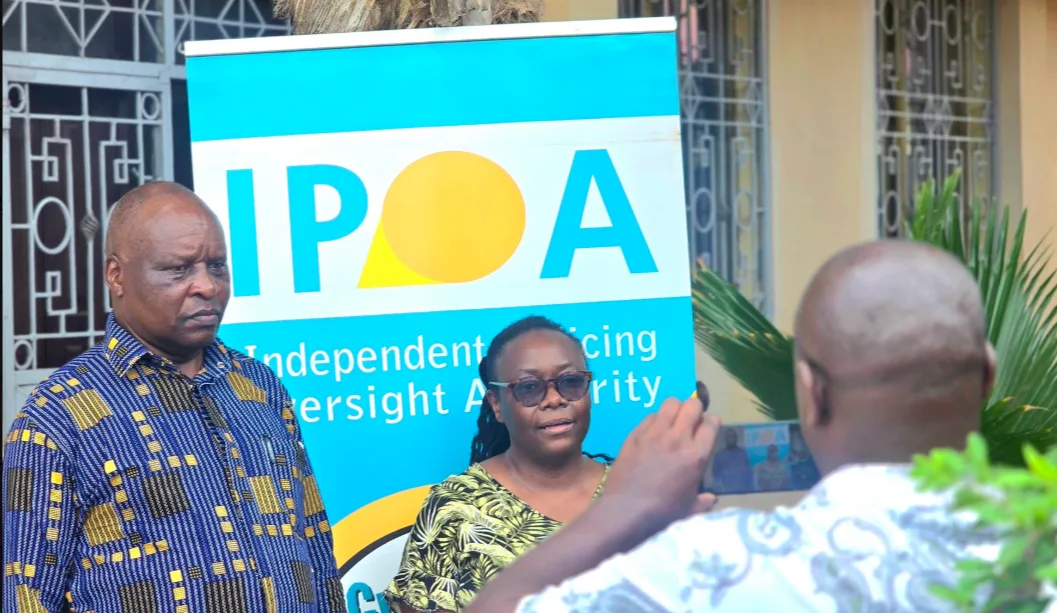
Kenya IPOA: Complaint Process Challenges Hinder Police Accountability
Summary
- Citizens reporting police misconduct in Kenya face a lengthy and often unclear accountability process involving multiple agencies.
- The Independent Policing Oversight Authority (IPOA) investigates complaints but does not control all stages of prosecution or disciplinary action.
- A referral from IPOA to another body, such as the Internal Affairs Unit or the Office of the Director of Public Prosecutions (ODPP), is not a final resolution.
- Human rights advocates argue that the main challenge to police reform is the failure to effectively implement existing laws and institutions.
- IPOA received over 20,000 complaints between 2018 and 2024, but a significantly smaller number of cases were forwarded for prosecution.
The Complex Path to Police Accountability in Kenya
This disparity between the volume of complaints and the ultimate legal outcomes perpetuates a cycle where police misconduct complaints in Kenya often fail to result in definitive accountability, thereby undermining public confidence and reinforcing a perception of impunity.
Citizens in Kenya seeking justice for police misconduct, such as brutality, unlawful arrests, extortion, or deaths in custody, often encounter a protracted and opaque process after lodging a complaint. While numerous institutions exist to investigate such allegations, oversee disciplinary actions, and pursue criminal charges, the journey from initial report to actual accountability is frequently lengthy and involves multiple agencies. This extended timeline, coupled with a lack of clear communication, leaves victims and their families in a troubling state of uncertainty, questioning the status of investigations, whether files have reached prosecutors, and what recourse remains when updates cease.
Hussein Khalid, chief executive of VOCAL Africa and a prominent human rights advocate, highlights that the primary obstacle to police reform in Kenya is no longer the absence of legal frameworks or oversight bodies. Instead, he contends that the fundamental challenge lies in the consistent and effective implementation of these existing structures. Khalid observes that a significant disparity exists between the announcement of investigations and the actual achievement of meaningful consequences, which erodes public trust in the accountability mechanisms. He points out that while complaints are filed and inquiries initiated, the rates of arrests, prosecutions, and convictions remain insufficient, thereby fostering a culture of impunity among officers who are not held to account. This situation raises critical questions for both citizens and the responsible institutions regarding the post-complaint process and available actions when progress stagnates.
The Role and Limitations of the Independent Policing Oversight Authority
Central to Kenya's police accountability framework is the Independent Policing Oversight Authority (IPOA), an entity established under the Independent Policing Oversight Authority Act, 2011. IPOA's core mission is to provide independent civilian oversight of the National Police Service, specifically tasked with investigating complaints concerning police misconduct. Its mandate prioritizes serious incidents, including deaths and severe injuries resulting from police actions or occurring while individuals are in police custody. Citizens can submit complaints through various channels, including direct visits to offices, telephone calls, written correspondence, email, and the official website.
Upon receiving a complaint, IPOA undertakes an assessment to determine if the matter falls within its jurisdiction and to decide on the appropriate course of action. Some cases proceed to a full investigation by IPOA itself, while others may be referred to alternative bodies, such as the police service’s Internal Affairs Unit (IAU) for matters more suitably handled internally, or to another relevant authority based on the nature of the allegation. While IPOA possesses the authority to recommend criminal prosecution, disciplinary measures, compensation, and other forms of redress, it is crucial to understand that the Authority does not independently control every subsequent stage of the accountability process. Therefore, a referral from IPOA should not be misconstrued as a final resolution. Complainants are advised to actively ascertain which specific institution is managing their case, what steps are anticipated, and how updates on progress will be communicated. IPOA clarifies that only cases meeting the legal threshold for prosecution are subsequently forwarded to the Office of the Director of Public Prosecutions (ODPP).
Systemic Challenges and Performance Metrics
The operational data from the Independent Policing Oversight Authority underscores the immense scale of its responsibilities and the persistent challenges in achieving full police accountability. In the latter half of 2025, specifically between July and December, IPOA documented and received 2,360 complaints. During this period, the Authority successfully concluded 763 investigations, yet only 63 case files were subsequently transmitted to the Office of the Director of Public Prosecutions (ODPP) for potential prosecution.
Looking at a broader timeframe, IPOA's end-term report covering 2018 to 2024 reveals a significant volume of activity: 20,112 complaints were received and processed, 12,732 complaints were reported as resolved, and 4,865 investigations were conducted. Despite these considerable efforts in processing complaints and conducting investigations, the relatively smaller number of cases reaching the ODPP, and by extension, leading to arrests, prosecutions, and convictions, highlights the systemic implementation failures identified by human rights advocates. This disparity between the volume of complaints and the ultimate legal outcomes perpetuates a cycle where police misconduct complaints in Kenya often fail to result in definitive accountability, thereby undermining public confidence and reinforcing a perception of impunity.
Practical Implications
Lawyers advising clients on police misconduct or brutality in Kenya must be prepared for a lengthy, multi-agency accountability process, understand that a referral from IPOA is not a resolution, and actively track complaint progress across institutions like the IAU and ODPP due to systemic implementation failures and delays.
Source
Source: Facts reported by a news outlet
How does this affect you?
Get an AI analysis of this article grounded in your jurisdictions, practice areas, and any policy documents you've uploaded to Wansom.
Finish Reading the Full Story and the Expert Analysis.
Get the latest legal & regulatory intelligence in Kenya
Wansom is AI and can make mistakes.