
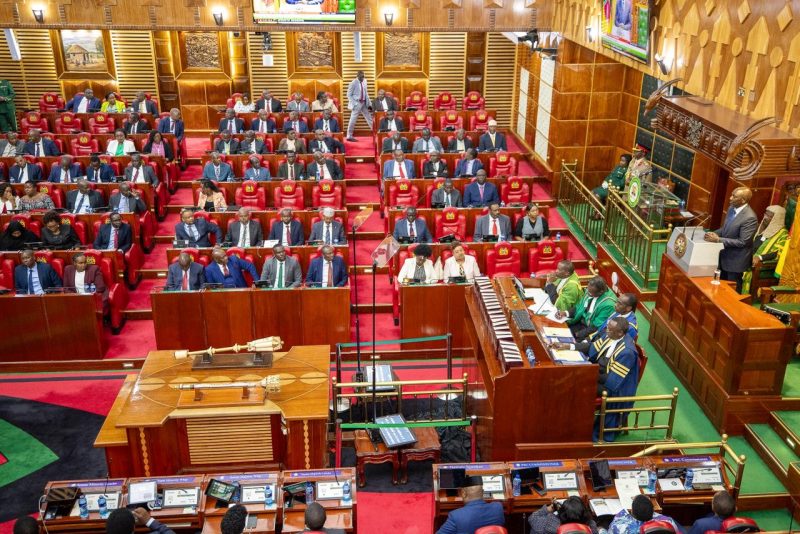
Kenya High Court: Tertiary Education Placement and Funding Bill 2026 Gets Green Light
Summary
- The National Assembly is set to consider six Bills proposing far-reaching reforms across Kenya's education sector.
- The proposed Tertiary Education Placement and Funding Bill would establish a single entity, TEFA, to consolidate funding mechanisms for students in tertiary institutions.
- The Kenya National Educational Assessments Council Bill marks a shift towards Competency-Based Education reform, introducing electronic assessment methods and a broader competency-based approach.
Tertiary Education Placement and Funding Bill: A Shift in Financing
The proposed changes come as the education sector continues to transition towards Competency-Based Education, with policymakers seeking to address gaps in access, administration, and delivery of education services.
The proposed Tertiary Education Placement and Funding Bill, 2026, is set to revolutionize the way students are financed and placed in tertiary institutions. Currently, financing for students in universities, colleges, and technical and vocational education and training institutions is fragmented across multiple entities, including the Higher Education Loans Board, the Universities Fund, and the TVET Fund. The new legislation seeks to establish a single entity, the Tertiary Education Funding Authority (TEFA), which would consolidate these functions and provide a more coordinated framework for financing students in tertiary institutions.
The establishment of TEFA is seen as a significant step towards improving access to education and reducing financial barriers for students. By bringing together the various funding mechanisms under one roof, TEFA would be able to streamline processes, reduce administrative costs, and increase efficiency in the allocation of funds. This could lead to more targeted support for students from disadvantaged backgrounds and a more equitable distribution of resources across institutions.
However, some experts have raised concerns about the potential impact of the new legislation on existing funding mechanisms and the role of private sector providers in tertiary education.
Competency-Based Education Reform: A New Approach to Assessment
The proposed Kenya National Educational Assessments Council Bill, 2026, marks a significant shift towards Competency-Based Education (CBE) reform. The existing examination-centred model is being replaced with a broader competency-based approach that focuses on assessing students' skills and knowledge in real-world contexts. This new framework aims to strengthen the integrity of national examinations and curb examination malpractices.
The CBE reform also introduces electronic assessment methods, which would enable more efficient and accurate evaluation of student performance. By moving away from traditional paper-based exams, the new system would reduce costs, increase accessibility, and provide more timely feedback to students and educators.
While the CBE reform has the potential to improve education outcomes, some stakeholders have expressed concerns about the need for adequate infrastructure and technical support to implement the new assessment methods.
Education Sector Reforms: A Broader Context
The six Bills proposed by Leader of the Majority Party Kimani Ichung'wah are part of a broader effort to reform Kenya's education sector. The reforms aim to address gaps in access, administration, and delivery of education services, particularly in basic education. The Basic Education Bill, 2026, seeks to overhaul the legal framework governing basic education, including the administration and governance of learning institutions.
The proposed changes come as the education sector continues to transition towards Competency-Based Education, with policymakers seeking to address gaps in access, administration, and delivery of education services. By establishing clearer responsibilities within institutions involved in curriculum development and implementation, the reforms aim to improve oversight and ensure compliance with established standards.
Practical Implications
Lawyers advising clients on university placements in Kenya should watch for the potential impact of the Tertiary Education Placement and Funding Bill, which could lead to significant changes in how students are financed and placed in tertiary institutions.
Source
Source: Original reporting via The Star
How does this affect you?
Get an AI analysis of this article grounded in your jurisdictions, practice areas, and any policy documents you've uploaded to Wansom.
Wansom is AI and can make mistakes.