
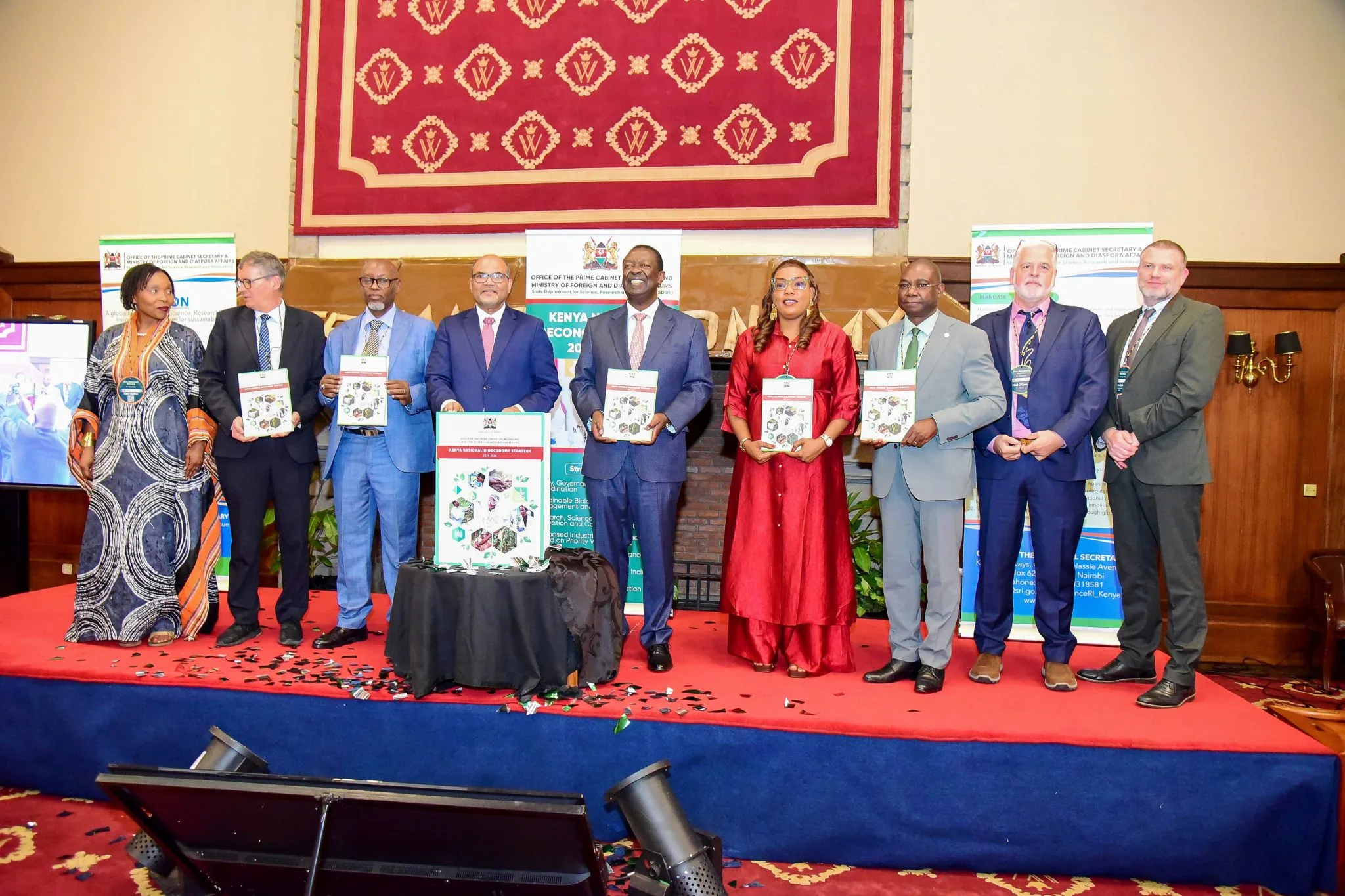
Kenya: Launches National Bioeconomy Strategy 2026-2036
Summary
- Kenya launched its 10-year National Bioeconomy Strategy 2026-2036 to transform biological resources into a knowledge-driven economy.
- Prime Cabinet Secretary Musalia Mudavadi stated the plan aims to increase domestic value addition, commercialize innovations, and create jobs.
- The strategy seeks to address youth unemployment, climate change, and low value addition by leveraging science, technology, and innovation.
- The government plans to progressively increase research and development spending to 2% of GDP and establish a new investment mechanism.
- This initiative will also strengthen Kenya's standing within the East African Community, aligning with the regional Bioeconomy Strategy 2022–2032.
Kenya Unveils Ambitious Bioeconomy Strategy
The strategy aims to transform the nation's abundant biological resources, scientific research, and innovation capacity into a vibrant knowledge-driven economy, moving beyond the traditional export of raw materials.
Kenya has officially launched its comprehensive 10-year Kenya National Bioeconomy Strategy 2026-2036, a pivotal initiative designed to leverage the nation's biological assets, scientific research, and innovative capabilities. Unveiled in Nairobi, this strategy marks a significant shift from an economy reliant on exporting raw materials towards a sophisticated, knowledge-driven model. The core objective is to foster new industries, attract investments, and generate employment opportunities across various sectors.
Prime Cabinet Secretary Musalia Mudavadi articulated the strategy's central aim: to transcend the traditional role of merely producing and exporting primary biological resources. Instead, the focus is squarely on enhancing domestic value addition and successfully commercializing scientific innovations. This forward-looking plan positions the bioeconomy at the heart of Kenya's broader economic transformation agenda, creating crucial linkages between agriculture, manufacturing, healthcare, energy, biotechnology, and research.
Mudavadi emphasized that Kenya can no longer afford to view its biological resources as mere commodities for extraction and export. The strategic mission is clear: to significantly boost domestic value addition, cultivate competitive bio-based products and industries, facilitate the commercialization of innovations, and provide robust support for enterprises capable of thriving in both regional and global markets. This approach is intended to harness Kenya's inherent advantage, which lies not only in its abundant biological resources but also in its capacity to apply science, technology, and innovation to create higher-value products and businesses.
Addressing Key Economic Challenges
The government is banking on the Kenya National Bioeconomy Strategy 2026-2036 to effectively tackle some of the country's most persistent economic hurdles. These include the pressing issue of youth unemployment, vulnerability to external trade shocks, the pervasive impact of climate change, and the historically low levels of value addition across critical sectors. By transforming biological resources into higher-value products through scientific and technological application, the strategy aims to build resilience and create sustainable economic growth.
A crucial component of this strategy involves forging stronger connections between research institutions, universities, innovators, and industry players. This addresses a long-standing challenge where promising scientific ideas often struggle to transition from laboratory settings into commercially viable enterprises. The success of the Kenya bioeconomy plan launch will ultimately be measured not by the policy document itself, but by the tangible outcomes: the number of businesses established, the volume of investments mobilized, the innovations successfully commercialized, and, most importantly, the jobs and livelihoods created for Kenyans.
Investment, Innovation, and Regional Integration
To fuel this ambitious transformation, the government has committed to progressively increasing research and development (R&D) spending, targeting 2 percent of the gross domestic product. This significant investment underscores the recognition of research and innovation as fundamental drivers of productivity and industrial competitiveness within the emerging bioeconomy. Public funding will be strategically deployed to attract private capital into nascent bio-based industries, with concerted efforts to dismantle barriers faced by innovators and enterprises.
Further bolstering this initiative, a proposed bioeconomy investment and financing mechanism is slated for development. This mechanism will play a critical role in identifying promising investment opportunities, mobilizing essential partnerships, and connecting priority value chains and enterprises with appropriate sources of finance. This proactive approach to Kenya biotechnology investment policy reflects a global trend where nations are increasingly seeking sustainable alternatives to resource-intensive economic models, while simultaneously addressing challenges like food insecurity, climate change, and the growing demand for sustainable products.
The Kenya National Bioeconomy Strategy 2026-2036 also holds significant implications for regional cooperation. It aims to strengthen Kenya's position within the East African Community (EAC) and the broader African market. This aligns with the East African Community Bioeconomy Strategy 2022–2032, which provides a regional framework for leveraging science, technology, innovation, and shared biological resources to support sustainable development. Regional collaboration is seen as vital, enabling countries to combine research capabilities, production capacity, market access, and entrepreneurial expertise for collective advancement.
Practical Implications
Lawyers and compliance officers should monitor the implementation of this strategy for new regulatory frameworks, investment incentives, and intellectual property considerations in Kenya's emerging bio-based industries. This presents opportunities for advising clients on corporate structuring, funding mechanisms, and compliance within these growing sectors.
Source
How does this affect you?
Get an AI analysis of this article grounded in your jurisdictions, practice areas, and any policy documents you've uploaded to Wansom.
Wansom is AI and can make mistakes.