
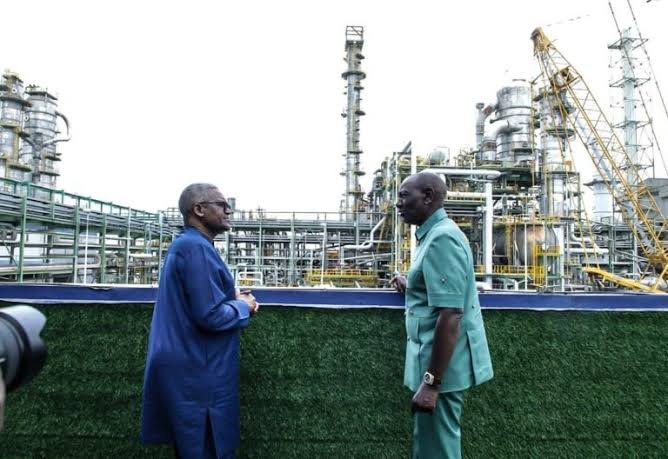
Kenya: Ruto Dangote Lamu Oil Refinery Groundbreaking Commences
Summary
- President William Ruto and Nigerian billionaire Aliko Dangote presided over the groundbreaking for the East Africa Oil Refinery in Lamu this Wednesday.
- The industrial project is valued at an estimated Sh2.2 trillion.
- The refinery aims to serve Kenya and the broader East African petroleum market.
- The groundbreaking proceeds amidst an ongoing land dispute concerning the project site.
What Happened
The Ruto Dangote Lamu Oil Refinery groundbreaking marked a significant step in the development of a project valued at an estimated Sh2.2 trillion, underscoring its immense scale and potential economic impact.
President William Ruto and Nigerian business magnate Aliko Dangote officiated a pivotal groundbreaking ceremony for the East Africa Oil Refinery in Lamu this Wednesday. This event signifies the official commencement of a monumental industrial undertaking, poised to reshape the energy landscape across Kenya and the broader East African region. The Ruto Dangote Lamu Oil Refinery groundbreaking marked a significant step in the development of a project valued at an estimated Sh2.2 trillion, underscoring its immense scale and potential economic impact.
The planned facility in Lamu is envisioned as a cornerstone of the regional petroleum market, designed to cater to the burgeoning energy demands of Kenya and its neighboring countries. The involvement of both the head of state and a prominent international investor like Aliko Dangote highlights the strategic importance and high-level commitment behind this ambitious venture. This groundbreaking ceremony is not merely symbolic; it represents the tangible start of construction and development for what is projected to be one of East Africa's most significant industrial assets.
Legal and Regulatory Context
The initiation of such a massive undertaking, however, is not without its complexities, particularly as the project proceeds amid an ongoing land dispute. This specific challenge surrounding the Lamu refinery land dispute introduces a critical legal dimension that will require careful navigation throughout the project's lifecycle. Large-scale infrastructure developments in Kenya, especially those of this magnitude, frequently encounter issues related to land acquisition, compensation for affected communities, and securing clear title deeds.
Addressing these land-related legal hurdles is paramount for the long-term viability and smooth operation of the East Africa Oil Refinery. Beyond the immediate land dispute, the project will also be subject to a rigorous framework of Kenya energy infrastructure law, encompassing environmental impact assessments, regulatory approvals from various government agencies, and adherence to international best practices for industrial development. Legal teams involved will need to meticulously manage compliance, mitigate risks associated with potential litigation, and ensure equitable resolutions for all stakeholders impacted by the project's footprint. The successful resolution of the current land dispute will be an early indicator of the project's ability to manage complex legal and social challenges.
Strategic Importance and Future Outlook
The East Africa Oil Refinery in Lamu represents a strategic Kenya petroleum industrial project with far-reaching implications for regional energy security and economic growth. The substantial Sh2.2 trillion investment, partly driven by Dangote Kenya investment, underscores a commitment to enhancing domestic refining capacity and reducing reliance on imported refined petroleum products. This move is expected to stabilize fuel prices, create numerous employment opportunities, and stimulate ancillary industries within the region.
From a broader perspective, the refinery's development aligns with Kenya's long-term vision for industrialization and energy independence. It positions Lamu as a critical industrial hub, potentially attracting further foreign direct investment and fostering technological transfer. For legal professionals, this project signals a significant pipeline of future work in areas such as project finance, environmental law, corporate governance, and international trade law, as the refinery moves from groundbreaking to full operational capacity. The successful execution of this project, despite its initial legal challenges, could set a precedent for future large-scale infrastructure developments across East Africa.
Practical Implications
This groundbreaking signals significant future legal work in project finance, environmental impact assessments, land acquisition, and regulatory compliance for firms advising clients in Kenya's energy and infrastructure sectors. Lawyers should monitor developments for opportunities and potential compliance exposures related to this large-scale industrial project.
Source
How does this affect you?
Get an AI analysis of this article grounded in your jurisdictions, practice areas, and any policy documents you've uploaded to Wansom.
Finish Reading the Full Story and the Expert Analysis.
Get the latest legal & regulatory intelligence in Kenya
Wansom is AI and can make mistakes.