
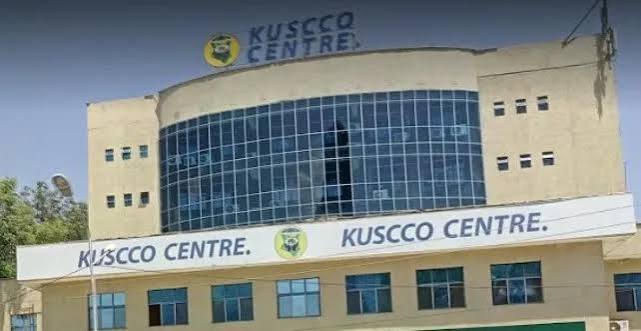
Kenya KUSCCO Liquidation Gazetted: Commissioner Cites Billions in Losses
Summary
Commissioner David K. Obonyo has gazetted the liquidation of Kenya Union of Savings and Credit Co-operatives Union Limited (KUSCCO) due to internal mismanagement and liquidity challenges leading to the collapse
KUSCCO members had previously passed a resolution for the union's dissolution, leading to the cancellation of its registration under the Co-operative Societies Act.
A PwC forensic audit two years ago uncovered an estimated financial hole of Sh12 billion to Sh13.3 billion, attributed to ghost loans, falsified commissions, and executive mismanagement.
Three liquidators from the State Department for Co-operatives have been appointed for up to one year to manage the process.
Several member SACCOs, including Stima DT, Balozi, and Afa, were forced to write off millions of shillings in investments due to KUSCCO's financial losses.
KUSCCO Liquidation Gazetted
The Commissioner for Co-operative Development, David K. Obonyo, has formally gazetted the liquidation of the Kenya Union of Savings and Credit Co-operatives Union Limited (KUSCCO), marking the end of an institution that served for over five decades.
The Commissioner for Co-operative Development, David K. Obonyo, has formally gazetted the liquidation of the Kenya Union of Savings and Credit Co-operatives Union Limited (KUSCCO), marking the end of an institution that served for over five decades. This significant action follows the accumulation of billions of shillings in losses attributed to internal mismanagement within the union, which had also been grappling with severe liquidity challenges.
The decision to dissolve KUSCCO was not unilateral; its members had previously passed a resolution advocating for the union's dissolution. Consequently, Commissioner Obonyo proceeded to cancel KUSCCO's registration and ordered its liquidation, citing the union's failure to achieve its objectives due to its financial difficulties. This move aligns with the legal provisions governing co-operative entities in Kenya.
To oversee this complex process, three individuals have been appointed as liquidators for a period not exceeding one year. These include CPA Peter Wanjohi Kiama, who serves as Deputy Commissioner for Co-operative Development; Habil Olembo Jesse, a Principal Co-operative Officer; and Mariam Adam Abubakar, a Deputy Chief State Counsel. All three appointees are affiliated with the State Department for Co-operatives, and their mandate includes taking custody of all KUSCCO's properties, alongside essential books and documents required for the completion of the liquidation.
Financial Mismanagement and Forensic Findings
The severe financial distress leading to the Kenya KUSCCO liquidation gazetted stemmed from substantial losses, which a forensic investigation approximately two years prior had brought to light. Conducted by PwC, the audit uncovered an estimated financial deficit ranging between Sh12 billion and Sh13.3 billion within the union. This extensive financial hole was directly linked to a series of illicit activities and poor governance.
The investigation specifically identified ghost loans and falsified commissions as major contributors to the losses. Furthermore, the audit report pointed to executive mismanagement as a critical factor in the union's financial downfall. These findings underscore the systemic issues that ultimately led to the Kenya Sacco union insolvency and its subsequent dissolution.
Legal Framework for Dissolution
The legal basis for the KUSCCO dissolution Kenya is firmly rooted in the Co-operative Societies Act. Commissioner David K. Obonyo's order to cancel KUSCCO's registration and initiate liquidation was made pursuant to section 62 (1) (c) of this Act, following the members' resolution for dissolution as provided under section 61. The appointment of the liquidators, including CPA Peter Wanjohi Kiama, Habil Olembo Jesse, and Mariam Adam Abubakar, was also carried out under the authority of section 65 of the same Act.
According to the Business Registration Service, liquidation is a process where a company's assets are seized to recover debts owed to creditors, ultimately culminating in the closure of the firm. This legal framework ensures a structured approach to winding down the affairs of an insolvent entity, aiming to settle outstanding obligations and distribute any remaining assets in an orderly manner.
Impact on Member SACCOs
The extensive financial losses at KUSCCO had significant repercussions for its member Savings and Credit Co-operative Societies (SACCOs). Several of these SACCOs were compelled to write off substantial amounts of money they had invested in the union, reflecting the direct impact of the mismanagement and the subsequent KUSCCO forensic audit PwC revealed.
Among the affected institutions, Stima DT SACCO recorded a write-off of Sh108 million. Balozi SACCO faced an even larger loss, writing off Sh437.5 million, while Afa SACCO had to write off Sh361.6 million. These figures highlight the widespread financial damage inflicted upon the co-operative sector by KUSCCO's internal issues, underscoring the importance of robust oversight and financial integrity within such umbrella organizations.
Practical Implications
Lawyers advising SACCOs or other co-operative entities in Kenya should monitor the KUSCCO liquidation process, especially regarding potential recovery of funds for affected clients. Compliance officers within SACCOs must review their investment due diligence and internal controls to mitigate similar financial risks.
Source
How does this affect you?
Get an AI analysis of this article grounded in your jurisdictions, practice areas, and any policy documents you've uploaded to Wansom.
Finish Reading the Full Story and the Expert Analysis.
Wansom is AI and can make mistakes.