
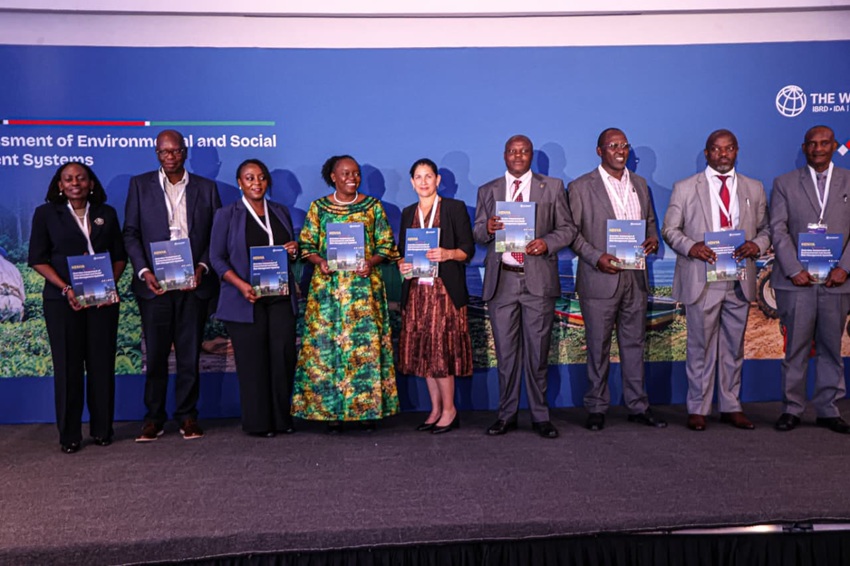
World Bank: Kenya Environmental Social Safeguards Assessment Launched
Summary
- The World Bank Group has launched an assessment report on Kenya's environmental and social risk management systems.
- The report aims to identify and address weaknesses in the implementation of Kenya's environmental and social safeguards.
- Despite established laws and institutions, weak implementation currently exposes communities and ecosystems to risks from development projects.
- The assessment proposes reforms to strengthen the practical application of these safeguards.
- This initiative seeks to enhance the effectiveness of environmental protection and social equity in Kenya's development projects.
World Bank Initiative in Kenya
With a focus on strengthening the implementation of environmental and social safeguards, future initiatives are likely to face increased scrutiny and potentially stricter enforcement measures.
The World Bank Group has recently initiated a comprehensive assessment focused on Kenya's existing environmental and social risk management frameworks. This significant undertaking involves a detailed examination of the nation's systems designed to protect both communities and natural habitats from the potential adverse effects of development initiatives. The primary objective of this assessment is to identify current deficiencies and propose actionable reforms aimed at bolstering the efficacy of these crucial safeguards.
The launch of this assessment report underscores a concerted effort to enhance the robustness of Kenya environmental social safeguards World Bank collaboration. By scrutinizing the current state of affairs, the World Bank seeks to provide a clear roadmap for strengthening the mechanisms that govern environmental protection and social equity within the country's development landscape. This proactive approach is designed to ensure that future projects are executed with a higher degree of responsibility and accountability.
The report specifically delves into the operational aspects of Kenya environmental risk management, analyzing how effectively existing policies and institutions mitigate potential harms. The findings are expected to inform a series of recommendations intended to close the gaps in safeguard implementation, thereby fostering more sustainable and equitable development outcomes across Kenya.
Addressing Implementation Gaps
Despite Kenya possessing a well-established legal framework and a network of regulatory institutions dedicated to environmental protection, a critical challenge persists in the weak implementation of these vital environmental and social safeguards. This deficiency in enforcement and application creates a significant vulnerability, potentially exposing both local communities and sensitive ecosystems to undue risks stemming from various development projects undertaken throughout the country.
The identified gaps in the practical application of these safeguards mean that the protective measures, though present on paper, may not be adequately preventing negative Kenya development project environmental impact. This situation highlights a disconnect between policy formulation and its real-world execution, leading to scenarios where the intended benefits of development could be overshadowed by unforeseen environmental degradation or social disruption.
It is precisely these implementation weaknesses that the World Bank Kenya safeguards assessment aims to rectify. By pinpointing where the system falters, the assessment provides a foundation for targeted interventions and Kenya environmental law implementation reforms. The goal is to transform theoretical protections into tangible, effective barriers against environmental harm and social injustice, ensuring that development proceeds responsibly.
Implications for Future Development
The findings and proposed reforms from the World Bank's assessment are poised to significantly influence the landscape of development projects in Kenya. With a focus on strengthening the implementation of environmental and social safeguards, future initiatives are likely to face increased scrutiny and potentially stricter enforcement measures. This shift will necessitate a more rigorous approach to project planning and execution from all stakeholders involved.
For legal professionals and compliance officers advising on development projects within Kenya, this signals a need for enhanced due diligence and a proactive re-evaluation of existing compliance frameworks. The emphasis on robust Kenya environmental social safeguards World Bank standards will require comprehensive environmental and social impact assessments that go beyond mere procedural adherence, focusing instead on substantive risk mitigation and sustainable practices.
Ultimately, the success of these proposed reforms will hinge on their effective integration into national policy and practice, ensuring that Kenya's expanding development agenda is pursued in a manner that consistently prioritizes the well-being of its communities and the preservation of its natural environment. This initiative represents a critical step towards embedding stronger environmental and social accountability into the fabric of Kenya's economic growth.
Practical Implications
Lawyers and compliance officers advising on development projects in Kenya should anticipate increased scrutiny and potentially stricter enforcement of environmental and social safeguards following the World Bank's assessment and proposed reforms. This may necessitate more rigorous due diligence, updated compliance frameworks, and a proactive approach to environmental and social impact assessments to mitigate project risks.
Source
How does this affect you?
Get an AI analysis of this article grounded in your jurisdictions, practice areas, and any policy documents you've uploaded to Wansom.
Finish Reading the Full Story and the Expert Analysis.
Get the latest legal & regulatory intelligence in Kenya
Wansom is AI and can make mistakes.