
Kenya Parliament Confirms Elections Act Livestreaming Intact
Summary
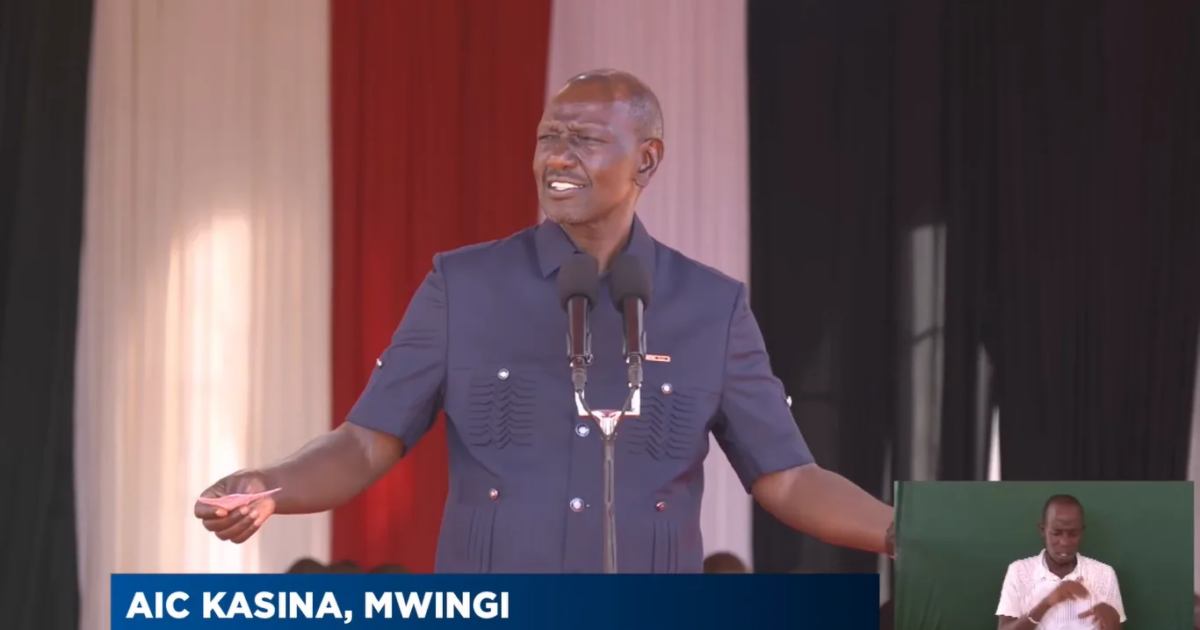
- President William Ruto has dismissed claims of a ban on election results livestreaming as propaganda, emphasizing early access for Kenyans.
- Parliament clarified that the existing provision requiring the IEBC to livestream results from polling stations remains intact, despite proposed amendments to the Elections Act.
- The National Assembly deleted a clause that sought to amend Section 39 of the Elections Act, not the livestreaming requirement itself.
- Opposition leaders, lawyers, and civil society groups remain concerned that proposed changes could weaken public scrutiny of election results.
- Advocate John Muremi Njomo has filed an urgent petition challenging aspects of the amendments concerning results transmission and livestreaming.
What Happened
The ultimate resolution of both the legislative process, which involves the Bill's return to the Senate, and the judicial review initiated by John Muremi Njomo's petition, will be closely monitored.
President William Ruto recently dismissed allegations regarding a ban on the livestreaming of election results, characterizing such claims as mere propaganda. He emphasized the importance of citizens receiving electoral outcomes as swiftly as possible. These remarks from President Ruto emerge amidst a broader public discussion concerning proposed modifications to the Elections Act, with particular attention to their potential impact on transparency leading up to the General Election scheduled for August 10, 2027. Government officials have consistently echoed the President's stance, refuting assertions that parliamentary actions have eliminated the Independent Electoral and Boundaries Commission's (IEBC) obligation to livestream results declared at polling stations.
The controversy gained momentum following parliamentary deliberations on amendments to the Elections Act, which sparked apprehension that changes to the legislation might diminish public access to results as they are announced. However, National Assembly Majority Leader Kimani Ichung’wah has countered reports suggesting that Members of Parliament (MPs) removed the livestreaming mandate. He clarified that the House instead deleted a specific clause that had aimed to amend Section 39 of the Elections Act. This official clarification from Parliament asserts that the existing legal provision, which requires the IEBC to establish a mechanism for livestreaming results from polling stations, remains fully intact. The State Department for Parliamentary Affairs has also affirmed that the livestreaming requirement was preserved after the National Assembly completed its amendments.
Legal and Regulatory Framework
The legal framework governing electoral outcomes in Kenya is primarily outlined in Section 39 of the Elections Act. This crucial section details the procedures for the determination, transmission, and declaration of election results. Central to this framework is the Independent Electoral and Boundaries Commission (IEBC), which holds the responsibility for conducting and supervising all elections within Kenya, including the comprehensive management of results transmission and their official declaration. The provision for livestreaming results is specifically designed to enhance public access to the outcomes announced directly at polling stations, fostering greater transparency in the electoral process.
The legislative journey of the proposed amendments is still ongoing. Following the National Assembly's review and changes, the Bill is now slated to return to the Senate. This step is integral to the established legislative process, allowing the Senate to consider the modifications introduced by the MPs. The clarification provided by parliamentary bodies aims to reassure the Kenyan populace that the fundamental legal requirement for livestreaming election results has not been rescinded. Despite these assurances, the broader discourse surrounding electoral transparency continues to be a significant point of public and political engagement.
Persistent Concerns and Judicial Intervention
Despite official reassurances, a coalition of opposition leaders, legal professionals, and civil society organizations has voiced considerable apprehension regarding the proposed legislative changes. Their primary concern revolves around the potential for these amendments to weaken existing safeguards that enable public scrutiny of election results. Critics contend that the ability to livestream results is vital, as it allows voters, political parties, journalists, and election observers to directly witness the announcement of outcomes at polling stations. This real-time observation, they argue, is indispensable for comparing these figures against official records and ensuring accuracy.
Furthermore, these stakeholders emphasize that merely transmitting results electronically to central tallying centers does not equate to the public's ability to watch these announcements unfold in real time. They have collectively urged both the government and Parliament to ensure that the legal framework unequivocally protects and enhances public access to the entire results process in anticipation of the 2027 polls. This debate has also prompted direct legal action. Advocate John Muremi Njomo has filed a petition challenging specific aspects of the amendments, particularly those pertaining to the transmission and livestreaming of election results. The High Court has acknowledged the urgency of Njomo's petition, and the matter is now scheduled for further procedural directions, indicating its significance in the ongoing legal landscape.
Why It Matters for 2027
The ongoing discussions and legal challenges surrounding the Elections Act are profoundly significant for the future of democratic processes in Kenya, particularly as the nation gears up for the 2027 General Election. Electoral transparency is poised to remain a central and contentious issue as political parties and various institutions commence preparations for the upcoming polls. President Ruto's insistence on early access to results for Kenyans underscores the high stakes involved in this debate, especially as he dismisses claims of a livestreaming ban as mere propaganda.
The ultimate resolution of both the legislative process, which involves the Bill's return to the Senate, and the judicial review initiated by John Muremi Njomo's petition, will be closely monitored. These outcomes are crucial for clarifying the definitive rules that will govern public access to election results. The clarity and robustness of these regulations will play a pivotal role in shaping public confidence and ensuring the integrity of the 2027 election, reinforcing the principle that the Kenya Elections Act livestreaming intact is a cornerstone of transparent governance.
Practical Implications
Lawyers advising political parties, candidates, or election observers in Kenya should note that the legal requirement for the IEBC to livestream election results from polling stations remains intact, contrary to claims of a ban. While monitoring the ongoing legal challenge and the Bill's return to the Senate is prudent, the current framework ensures continued public access to real-time results for the 2027 General Election.
Source
How does this affect you?
Get an AI analysis of this article grounded in your jurisdictions, practice areas, and any policy documents you've uploaded to Wansom.
Finish Reading the Full Story and the Expert Analysis.
Get the latest legal & regulatory intelligence in Kenya
Wansom is AI and can make mistakes.