
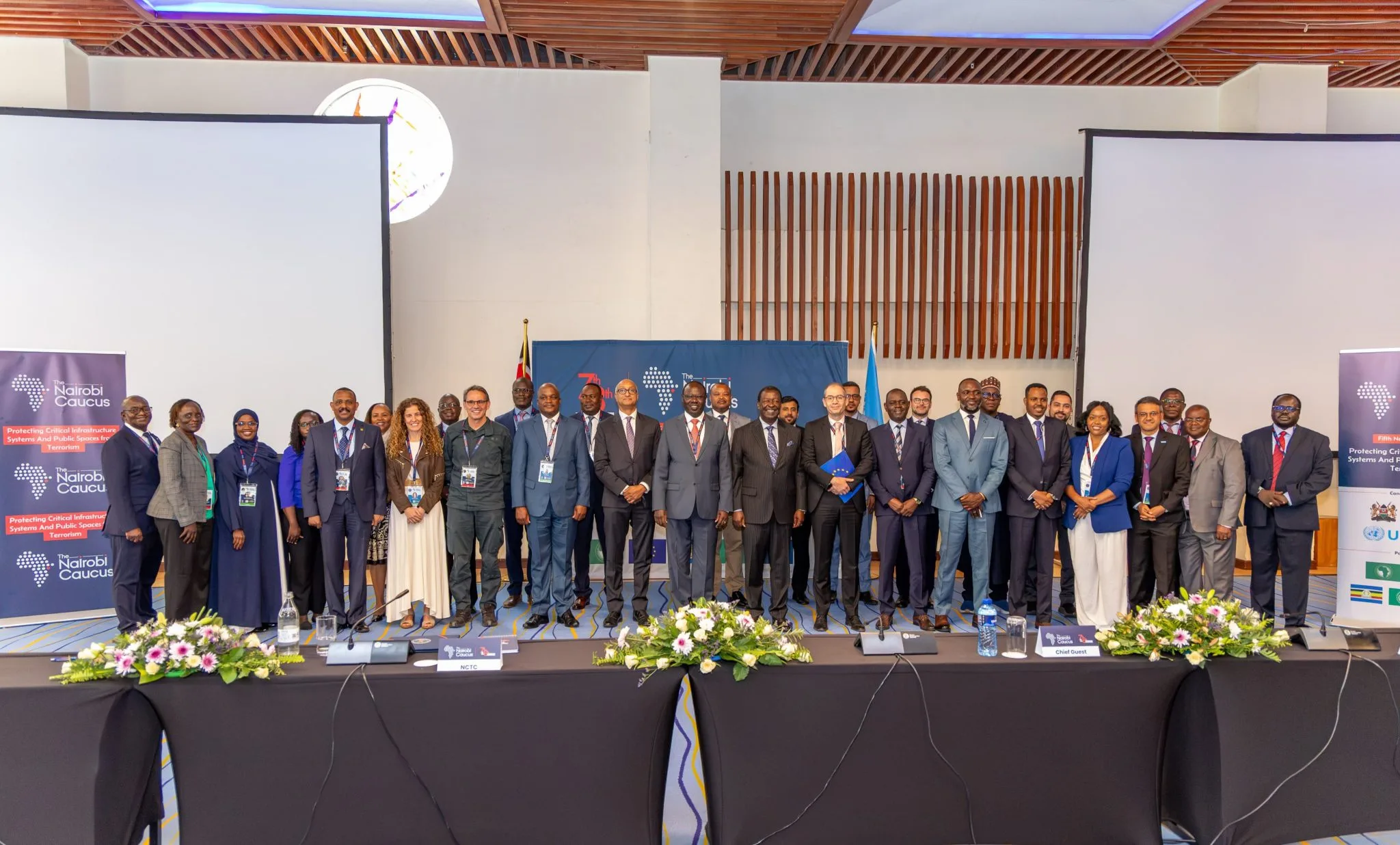
Kenya: Critical Infrastructure Terror Protection Intensified After Nairobi Caucus
Summary
- Kenya is increasing efforts to protect critical infrastructure and public spaces from terror threats.
- The Fifth Nairobi Caucus, co-convened by NCTC and UNOCT, brought together 200 participants from 24 countries to discuss enhanced security measures.
- Prime Cabinet Secretary Musalia Mudavadi highlighted the urgency of protecting Kenya's rapidly developing infrastructure, including dams, railways, and digital assets.
- Experts called for a shift from site-specific security to integrated systems encompassing risk assessment, preparedness, and inter-agency coordination.
- The forum emphasized the crucial role of public-private partnerships and security-by-design principles in bolstering national resilience against terrorism.
Kenya Bolsters Critical Infrastructure Security
Compliance officers and legal counsel for entities managing critical infrastructure in Kenya should therefore anticipate future regulatory frameworks or increased government scrutiny regarding terror threat preparedness, prompting a review of existing risk assessments and security protocols to mitigate potential liability and ensure compliance with evolving standards.
Kenya is intensifying its efforts to safeguard vital infrastructure and public areas against the persistent threat of terrorism. This renewed focus emerged from the Fifth Nairobi Caucus, a significant gathering held in the nation's capital from September 7 to 8. The event, co-hosted by the National Counter Terrorism Centre (NCTC) and the United Nations Office of Counter Terrorism (UNOCT), convened approximately 200 participants from 24 countries. Its central theme, "Protecting Critical Infrastructure Systems and Public Spaces from Terrorism," underscored a collective commitment to enhancing cooperation in securing essential services and facilities that underpin national economies and daily existence.
Prime Cabinet Secretary and Cabinet Secretary for Foreign and Diaspora Affairs, Musalia Mudavadi, highlighted the critical timing of these discussions. He emphasized that the issue holds particular importance given Kenya's rapid pace of infrastructure development. Mudavadi specifically identified dams, railways, digital assets, energy infrastructure, health systems, and stadia as crucial national assets requiring robust protection from terrorist attacks. He reiterated that the forum's theme was both "timely and relevant" in light of the country's expanding infrastructure network, stressing the imperative to adequately shield both new and existing facilities from terror threats.
A Strategic Shift Towards Integrated Protection
The recent Nairobi Caucus served as a platform for policymakers, security practitioners, and experts to assess evolving terrorist threats, exchange national experiences, and explore practical strategies for protecting critical infrastructure and public spaces. A key takeaway from the discussions was a strong call for governments to transition from isolated, site-specific security measures to comprehensive, integrated systems. These advanced systems are envisioned to encompass a broader spectrum of protective elements, including thorough risk assessment, robust protective security, proactive preparedness, streamlined inter-agency coordination, ensuring operational continuity, effective emergency response, and comprehensive recovery protocols.
Steven Sequeira, Deputy Director of UNOCT, underscored that securing critical infrastructure extends beyond merely guarding physical locations. He articulated that effective protection necessitates safeguarding the intricate systems and services upon which societies depend daily. Sequeira further stressed the importance of "risk-informed preparedness" and the establishment of "strong public-private partnerships" as foundational pillars for preventing, mitigating, responding to, and recovering from terrorist attacks. This emphasis on collaborative frameworks and proactive design principles signals a significant evolution in Kenya's counter-terrorism infrastructure policy. Compliance officers and legal counsel for entities managing critical infrastructure in Kenya should therefore anticipate future regulatory frameworks or increased government scrutiny regarding terror threat preparedness, prompting a review of existing risk assessments and security protocols to mitigate potential liability and ensure compliance with evolving standards.
Fostering Collaboration and Future Resilience
Discussions at the Caucus also prominently featured the expanding role of the private sector in national security. Participants advocated for stronger collaboration among governments, businesses, regional organizations, and international partners to fortify collective defenses. Breakout and plenary sessions delved into various critical areas, including risk management, the integration of security-by-design principles, multi-agency coordination, business continuity planning, and effective incident response and recovery strategies. The implications of new and emerging technologies for safeguarding critical infrastructure and public spaces were also a significant topic, reflecting the dynamic nature of security challenges faced by both public and private entities.
This latest meeting marks the fifth iteration of the Nairobi Caucus, an initiative launched in 2022. This annual forum serves as an informal and consultative platform, enabling Member States, regional organizations, and international partners to share counter-terrorism experiences, evaluate emerging regional priorities, and identify avenues for enhanced cooperation. The recent gathering brought together representatives from 24 Member States, 11 regional organizations, various UN entities, international partners, and other stakeholders, underscoring a growing international consensus on the necessity of coordinated approaches to Kenya critical infrastructure terror protection.
Practical Implications
Compliance officers and legal counsel for entities managing critical infrastructure in Kenya should anticipate future regulatory frameworks or increased government scrutiny regarding terror threat preparedness. This signals a growing emphasis on 'security-by-design' principles and public-private partnerships, prompting a review of existing risk assessments and security protocols to mitigate potential liability and ensure compliance with evolving standards.
Source
How does this affect you?
Get an AI analysis of this article grounded in your jurisdictions, practice areas, and any policy documents you've uploaded to Wansom.
Finish Reading the Full Story and the Expert Analysis.
Wansom is AI and can make mistakes.