
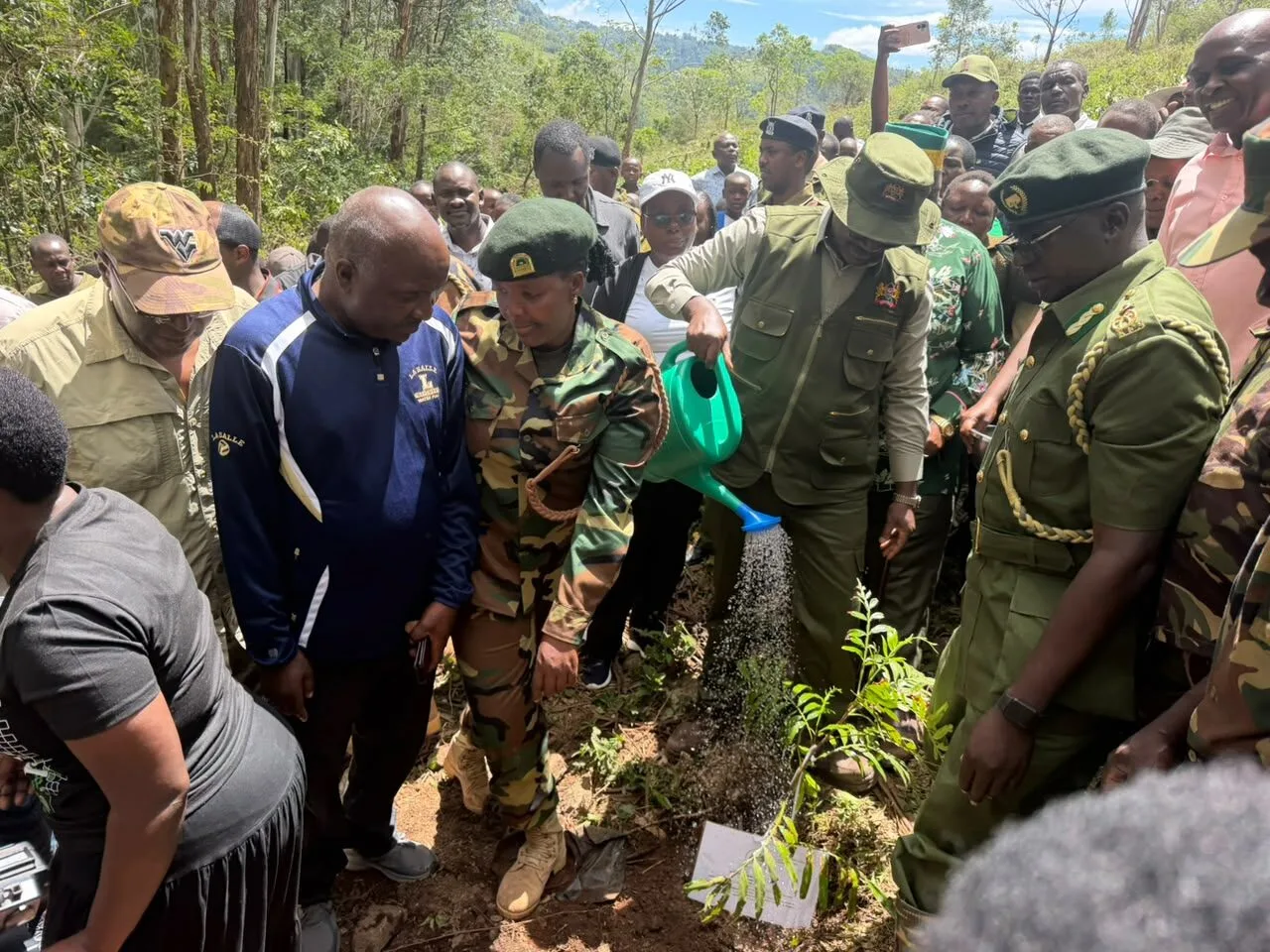
CS Ogamba: Kenya Carbon Credit Education Funding Launched
Summary
- Education Cabinet Secretary Julius Migos Ogamba announced plans to fund education through carbon credit revenue generated from tree planting.
- The initiative aims to transform Kenya's afforestation campaign into an economic opportunity while simultaneously addressing climate change.
- During Mazingira Day celebrations, 30,000 tree seedlings were planted at Nyangweta Forest, a vital water catchment area that has experienced degradation.
- Successful revenue generation from carbon credits depends on meeting international standards for carbon sequestration measurement and verification.
- This plan contributes to Kenya's national goal of increasing its tree cover to 30 percent by 2032, providing a new stream of Kenya climate change funding education.
Government Initiative for Education Funding
This vision positions Kenya's afforestation revenue education as a key component of its national development strategy.
Kenya's Education Cabinet Secretary, Julius Migos Ogamba, recently unveiled a government strategy to generate financial resources for the nation's education sector through participation in the global carbon credits market. This announcement was made during the national Mazingira Day festivities on October 10, held at Nyangweta Forest within the South Mugirango Constituency. The initiative aims to transform the country's extensive afforestation efforts into a significant economic advantage, simultaneously addressing pressing climate change concerns.
During the event, CS Ogamba spearheaded a large-scale tree planting exercise, where 30,000 tree seedlings were planted. He was joined by various community leaders, students, educators, forest officials, and local residents. Nyangweta Forest, a vital water catchment area, has suffered from degradation due to historical encroachment and logging activities, making its restoration crucial. Ogamba also urged educational institutions to utilize their available land for tree cultivation, advocating for the integration of environmental conservation into curricula and encouraging students to become active environmental advocates. He further appealed to local communities to safeguard the newly planted seedlings, emphasizing that planting without ensuring their survival would undermine the broader conservation objectives. Local leaders present at the event expressed their support for the initiative, underscoring Nyangweta Forest's critical role in rainfall generation and water provision for South Mugirango and surrounding regions.
Leveraging Carbon Credits for National Development
The core of this new strategy involves leveraging the natural process by which trees absorb atmospheric carbon dioxide, thereby contributing to carbon stocks. These sequestered carbon assets can then be traded as carbon credits on international markets, with the resulting revenue specifically earmarked to bolster education funding across Kenya. Cabinet Secretary Ogamba explicitly stated that this approach would enable Kenya to become a prominent player in the carbon credits market, directly channeling the generated funds to support educational endeavors nationwide. This vision positions Kenya's afforestation revenue education as a key component of its national development strategy.
However, the successful generation of revenue from these carbon credits is contingent upon meeting stringent international requirements. These include precise measurement of carbon sequestration, thorough verification of the claimed climate benefits, and ensuring that the carbon credits adhere to recognized market standards. These conditions are crucial for establishing the credibility and value of Kenya's carbon assets, particularly as the nation seeks to develop robust carbon sequestration Kenya standards. The proposed initiative offers a dual benefit: providing an additional financial stream for education while simultaneously incentivizing communities and institutions to actively engage in forest restoration and broader climate action.
Addressing Climate Change and National Goals
This ambitious plan is set against the backdrop of significant climate change impacts already affecting Kenya, manifested through prolonged droughts and increasingly unpredictable rainfall patterns. CS Ogamba highlighted tree planting as an essential intervention for mitigating global warming and combating these adverse effects. He stressed the urgency of action for future generations, declaring that "Climate change is real. Planting trees will also reduce global warming and help in fighting climate change. We must act now for the sake of the next generation."
The government's broader environmental agenda includes an ambitious target to increase the country's tree cover to 30 percent by 2032. Mazingira Day, observed annually on October 10, serves as a national platform to promote environmental conservation through tree planting, clean-up campaigns, and public awareness initiatives. This year's celebrations, which saw activities across all 47 counties, underscore the widespread commitment to these goals. The integration of Kenya carbon credit education funding into this national effort represents a strategic move to secure sustainable financing for critical social services while advancing crucial climate objectives.
Practical Implications
Lawyers and compliance officers should monitor the development of Kenya's carbon credit framework and associated regulations, particularly regarding verification standards and revenue distribution, to advise clients on participation in afforestation projects for carbon revenue generation or compliance with ESG reporting requirements.
Source
How does this affect you?
Get an AI analysis of this article grounded in your jurisdictions, practice areas, and any policy documents you've uploaded to Wansom.
Finish Reading the Full Story and the Expert Analysis.
Get the latest legal & regulatory intelligence in Kenya
Wansom is AI and can make mistakes.