
Kebbi Government: Denies Malami Property Demolition Claims
Summary
- The Kebbi State Government denied involvement in the demolition of a property linked to former AGF Abubakar Malami in Birnin Kebbi.
- The government asserts the incident was a private land ownership dispute, not political persecution.
- Allegations regarding the demolition were made by Abubakar Malami and the African Democratic Congress.
- The Kebbi government challenged Malami to pursue his ownership claims through the court system.
The Allegations and Denial
The Kebbi government has publicly urged the former AGF to present any ownership claims he possesses before a court of law, emphasizing the appropriate legal channel for resolution.
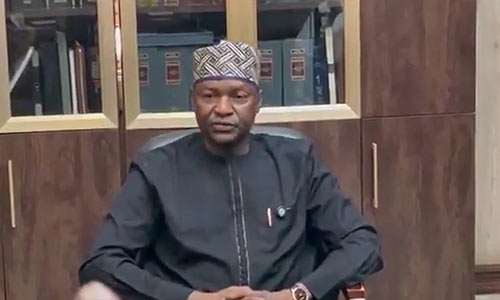
A property situated in Birnin Kebbi, which is notably associated with Abubakar Malami, SAN, the former Attorney-General of the Federation and Minister of Justice, recently underwent demolition. This incident quickly became a subject of public contention, drawing immediate allegations of governmental involvement. Malami himself, alongside the African Democratic Congress (ADC), publicly attributed responsibility for the demolition to the state authorities, framing it as an act potentially driven by political motives.
However, the Kebbi State Government has vehemently denied any role in the destruction of the former AGF Malami property. In a clear and unequivocal statement, the state administration disavowed all responsibility, directly refuting the claims made by Malami and the ADC. This firm denial sets the stage for a significant dispute over the true nature and perpetrators of the property's demolition.
The Government's Stance on Ownership
The official position of the Kebbi State Government is that the demolition in question did not originate from any state-sanctioned action or political directive. Instead, the government maintains that the incident is purely a private land ownership dispute. This classification is crucial, as it shifts the narrative away from governmental culpability and towards a civil disagreement between private parties over land rights. The state explicitly rejected any insinuation that the demolition was an act of political persecution, asserting that such claims are unfounded.
In light of the ongoing Abubakar Malami property dispute, the Kebbi government has publicly urged the former AGF to present any ownership claims he possesses before a court of law, emphasizing the appropriate legal channel for resolution. This challenge underscores the government's belief that the judiciary is the proper forum for adjudicating such complex land matters, particularly when title and legitimate possession are contested. By directing Malami to the courts, the state reinforces its stance that it is not a party to the dispute but rather an advocate for due legal process in resolving the Kebbi land ownership dispute.
Upholding Legal Process in Property Disputes
The government's insistence on judicial resolution for the Birnin Kebbi property demolition highlights a fundamental principle of property law: that claims of ownership and grievances over property rights should be settled through established legal mechanisms. This approach is particularly significant in cases involving high-profile individuals, where allegations can quickly escalate and be misconstrued as political rather than purely legal matters. The call for court action serves as a reminder that proper documentation and legal standing are paramount in asserting property rights.
This situation underscores the complexities inherent in land ownership disputes across Nigeria, especially when prominent political figures and state entities become tangentially involved. The Kebbi government's challenge to Malami to seek judicial redress reinforces the importance of the rule of law and the independent role of the courts in arbitrating such disagreements. It suggests that even in politically charged environments, the legal system remains the ultimate arbiter for establishing facts and ensuring justice in property-related conflicts.
Practical Implications
This case highlights the complexities of land ownership disputes in Nigeria, especially when prominent political figures and state entities are involved. Lawyers should note the emphasis on private dispute resolution through court action, reinforcing the need for clear title documentation and robust evidence when advising clients on property claims or alleged unlawful demolitions.
Source
How does this affect you?
Get an AI analysis of this article grounded in your jurisdictions, practice areas, and any policy documents you've uploaded to Wansom.
Wansom is AI and can make mistakes.