
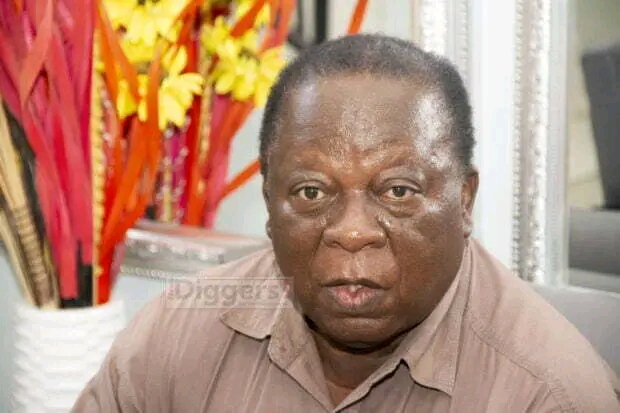
Kavindele: HH Re-election Petition Zambia Deemed Futile
Summary
- Former Zambian Vice-President Enock Kavindele stated on August 30, 2026, that petitioning President Hakainde Hichilema's re-election would be pointless.
- Kavindele argued that the massive votes garnered by President Hakainde Hichilema demonstrate widespread citizen approval.
- He noted that President Hakainde Hichilema received more votes even in areas that [...], indicating broad-based support.
- Kavindele's comments suggest that the overwhelming electoral mandate would render any legal challenge by figures like Brian Mundubile futile.
Kavindele's Stance on Re-election Petition
His assessment underscores the perceived strength of the President's mandate and its potential to deter legal challenges, thereby contributing to the stability and acceptance of electoral results.
Former Zambian Vice-President Enock Kavindele recently offered his perspective on the potential for a legal challenge to President Hakainde Hichilema's re-election. Speaking on August 30, 2026, Kavindele asserted that any attempt by figures such as Brian Mundubile to petition the President's re-election would ultimately prove futile.
Kavindele's reasoning centered on the overwhelming public support demonstrated for President Hichilema. He highlighted that the substantial number of votes secured by the President served as clear evidence of widespread citizen approval for his continued leadership. This significant mandate, according to the former Vice-President, would render any legal contestation largely pointless.
He further elaborated that President Hichilema's electoral success was not confined to traditional strongholds, noting that he garnered increased support even in areas that [...]. This broad-based appeal, in Kavindele's view, underscored the depth of the President's mandate and the unlikelihood of successfully overturning such a result through a petition.
Legal Context of Election Challenges
In democratic systems like Zambia's, election petitions serve as a crucial legal mechanism for challenging the validity of electoral outcomes. These petitions typically allege irregularities, fraud, or non-compliance with electoral laws, providing an avenue for aggrieved parties to seek redress through the courts. The process is designed to uphold the integrity of the electoral system and ensure that results accurately reflect the will of the voters.
However, the practical efficacy of such petitions can be significantly influenced by the margin of victory. While the legal right to petition remains, the sheer scale of an electoral mandate, as described by Kavindele, often presents a formidable hurdle for petitioners. Overwhelming vote counts can make it exceedingly difficult to demonstrate that alleged irregularities were substantial enough to alter the overall outcome of an election.
Kavindele's remarks implicitly touch upon this aspect, suggesting that the magnitude of President Hichilema's support would effectively negate the grounds for a successful legal challenge. His comments highlight the interplay between legal avenues for dispute resolution and the political reality of a decisive popular vote.
Why the Comments Matter
The pronouncements from a seasoned political figure like former Vice-President Enock Kavindele carry weight, offering insight into the political landscape surrounding President Hichilema's re-election. His assessment underscores the perceived strength of the President's mandate and its potential to deter legal challenges, thereby contributing to the stability and acceptance of electoral results.
Such statements can influence public perception regarding the legitimacy of an election, particularly when they come from respected voices outside the immediate political fray. By emphasizing the "massive votes" and "citizens' approval," Kavindele reinforces the idea that the electoral outcome was a clear expression of the populace's will, making any petition seem contrary to that widely accepted sentiment.
Ultimately, Kavindele's perspective on the futility of petitioning President Hichilema's re-election points to the significant role that a strong electoral mandate plays in shaping post-election dynamics. It suggests that when a leader secures such widespread support, the avenues for legal challenge, while technically available, may be viewed as practically unviable, solidifying the electoral outcome in the public and political consciousness.
Source
How does this affect you?
Get an AI analysis of this article grounded in your jurisdictions, practice areas, and any policy documents you've uploaded to Wansom.
Finish Reading the Full Story and the Expert Analysis.
Wansom is AI and can make mistakes.