
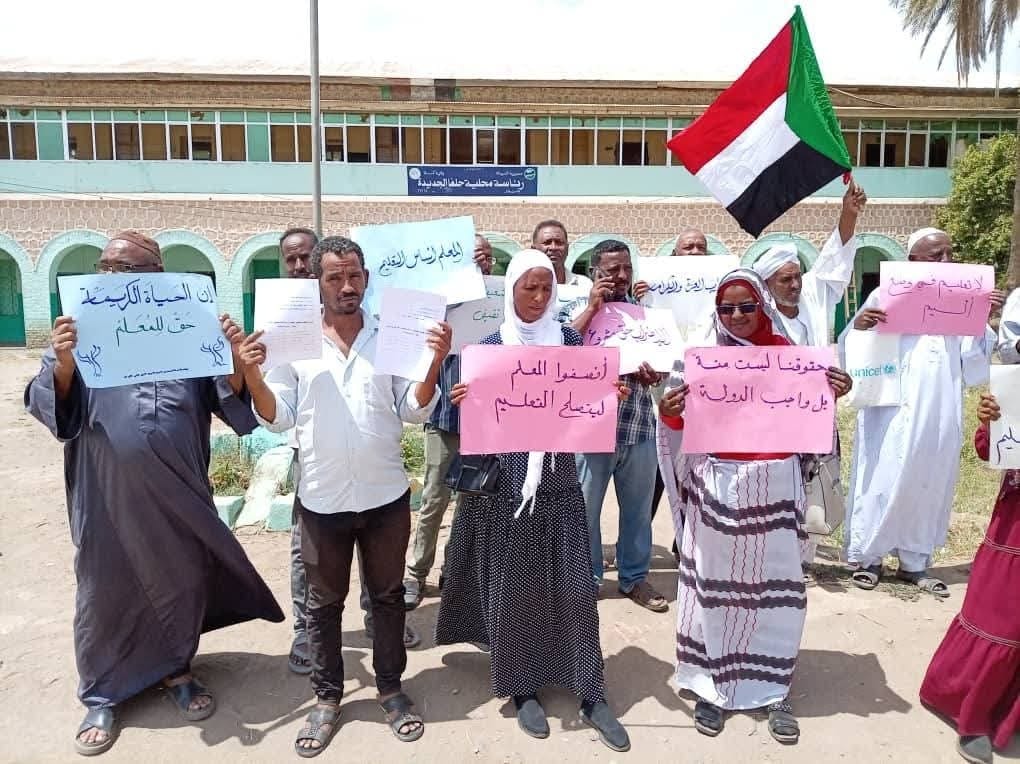
Kassala Teachers Committee: Rejects Illegal Salary Deductions, Demands Full Pay
Summary
- On September 4, 2026, the Kassala Teachers Committee demanded the immediate implementation of increased employee entitlements by the Kassala state government.
- The committee rejected an unauthorized 3,000 Sudanese Pound deduction from teachers' salaries, reportedly for a trade union without consent.
- Key entitlements, including a 120,000 Sudanese Pound disparity allowance, meal allowance, and retroactive differences, remain unpaid in Kassala despite being mandated by Cabinet Resolutions 20/2025, 68/2025, and 78/2026.
- These adjustments have been applied to federal employees, but not fully in Kassala state, despite a Civil Service Affairs Bureau circular and Prime Minister Directive 51/2026.
- The dispute highlights broader issues of Sudan public sector pay and compliance amidst high living costs and economic deterioration.
What Happened
The committee explicitly rejected an unauthorized deduction of 3,000 Sudanese Pounds from teachers' salaries, which was reportedly allocated to a trade union without the explicit consent or authorization of the affected educators.
On September 4, 2026, the Kassala Teachers Committee publicly challenged the Kassala state government, demanding the immediate enforcement of cabinet decisions aimed at increasing employee benefits. The committee explicitly rejected an unauthorized deduction of 3,000 Sudanese Pounds from teachers' salaries, which was reportedly allocated to a trade union without the explicit consent or authorization of the affected educators. This firm stance underscores a broader grievance regarding what the committee describes as illegal salary deductions.
The teachers' advocacy group highlighted that their recent paychecks did not reflect several crucial adjustments. These omitted entitlements include a significant disparity allowance of 120,000 Sudanese Pounds, a meal allowance, and various retroactive financial differences. The committee's statement emphasized that these benefits are mandated by official government resolutions and circulars, yet remain unimplemented for Kassala state employees, contrasting with their application in federal institutions. This ongoing dispute forms part of a larger Sudan public sector pay dispute, exacerbated by the nation's severe economic challenges.
Regulatory Non-Compliance
The core of the dispute centers on the non-implementation of several key governmental directives. The Kassala Teachers Committee specifically cited Cabinet Resolution No. (20) of 2025, which mandated adjustments to the meal allowance and addressed housing allowance provisions. Furthermore, Cabinet Resolution No. (68) of 2025 outlined the scheduling for retroactive financial differences, while Cabinet Resolution No. (78) of 2026 was issued to resolve existing pay disparities. These resolutions collectively represent a comprehensive framework for enhancing public sector compensation.
Despite these clear mandates, the committee noted that the state government in Kassala has failed to fully implement these changes. A circular from the Civil Service Affairs Bureau, issued in April 2026, provided detailed procedures for the execution of these entitlements. Additionally, Prime Minister Directive No. (51) of 2026 specifically addressed issues pertinent to teachers. While these adjustments have been reflected in the salaries of employees within federal institutions, their full application for Kassala state employee entitlements remains outstanding, pointing to a significant gap in Sudan labour law compliance at the state level.
Broader Economic and Social Impact
The Kassala Teachers Committee's persistent demands for improved wages and the full implementation of financial entitlements are set against a backdrop of severe economic hardship in Sudan. The country is grappling with a sharp increase in the cost of living and a general deterioration of economic conditions, making the timely and complete payment of salaries and allowances critical for public sector workers. The unauthorised salary deductions Sudan, particularly the 3,000 Sudanese Pounds taken without consent, further compound the financial strain on teachers.
This situation highlights a critical need for transparency and adherence to established legal frameworks governing public sector remuneration. The committee’s rejection of the illegal salary deductions and their call for adherence to Cabinet Resolution 20 68 78 2025 underscore the importance of protecting employee rights and ensuring that government directives are uniformly applied across all administrative levels. The ongoing struggle for fair pay and the resolution of the Kassala Teachers Committee illegal salary deductions are indicative of wider challenges in public sector management and accountability within the region.
Practical Implications
Compliance officers and legal counsel for public sector entities in Sudan should review salary deduction policies and ensure full implementation of cabinet resolutions on employee entitlements to avoid legal disputes and potential liabilities.
Source
How does this affect you?
Get an AI analysis of this article grounded in your jurisdictions, practice areas, and any policy documents you've uploaded to Wansom.
Finish Reading the Full Story and the Expert Analysis.
Get the latest legal & regulatory intelligence in Sudan
Wansom is AI and can make mistakes.