
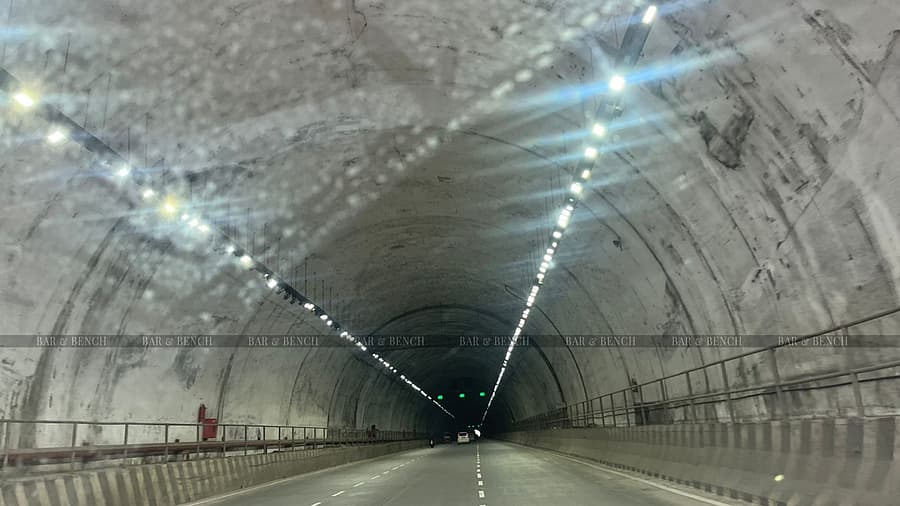
Karnataka HC: Orders GSI Report on Lalbagh Peninsular Gneiss
Summary
- The Karnataka High Court has directed authorities to produce the Geological Survey of India (GSI) report on the Peninsular Gneiss rock at Lalbagh Botanical Garden.
- This directive is part of the court's review of challenges to the proposed 16.7-kilometer Bengaluru Twin Tunnel Road project.
- Petitions allege the project lacks adequate approvals and proper environmental impact assessments.
- Actor Prakash Belawadi's plea, represented by Advocate Tejasvi Surya, specifically raises concerns about the tunnel passing beneath the significant Peninsular Gneiss geological monument.
- The GSI report is deemed crucial for assessing the project's potential impact on this important natural formation.
High Court Demands Geological Report for Bengaluru Tunnel Project
The court's demand for the GSI report underscores the rigorous scrutiny applied to large-scale urban development projects, particularly those with potential environmental and geological implications.
The Karnataka High Court has issued a directive to authorities, compelling them to present the Geological Survey of India's (GSI) report pertaining to the Peninsular Gneiss rock located within the Lalbagh Botanical Garden. This order came from a Division Bench, comprising Chief Justice Vibhu Bakhru and Justice KS Hemalekha, as they deliberated on various challenges brought against the proposed 16.7-kilometer Bengaluru Twin Tunnel Road project.
The ambitious infrastructure initiative, designated as the North–South Tunnel Road, is designed to span from Hebbal to the Central Silk Board. The court's demand for the GSI report underscores the rigorous scrutiny applied to large-scale urban development projects, particularly those with potential environmental and geological implications. The outcome of this review could significantly influence the future trajectory of the Bengaluru Twin Tunnel Road challenge.
The directive highlights the judiciary's commitment to ensuring that major public works are underpinned by thorough scientific assessment and regulatory compliance. The GSI report on the Peninsular Gneiss rock formation Lalbagh is now a pivotal document in the ongoing legal proceedings, central to understanding the project's potential impact on a significant natural landmark.
Legal Challenges Highlight Environmental and Geological Concerns
Several petitions have been lodged against the proposed 16.7-kilometer Bengaluru Twin Tunnel Road project, raising substantial questions about its planning and potential repercussions. Among these, one plea specifically alleges that the project commenced without obtaining the necessary approvals and failed to adequately assess its environmental consequences before launch. This points to a broader concern regarding the due diligence exercised in the initial phases of such large-scale infrastructure undertakings.
Actor Prakash Belawadi is among those who have filed a plea, specifically voicing apprehension that the planned tunnel route is slated to pass directly beneath the Peninsular Gneiss rock formation at Lalbagh. Representing Belawadi, Bengaluru South Member of Parliament and Advocate Tejasvi Surya informed the court that this rock formation holds status as a significant geological monument. Surya further emphasized that the Geological Survey of India (GSI) has already compiled and submitted a report concerning this formation, urging the court to review it.
Surya articulated that the GSI report would be instrumental in assisting the Karnataka High Court Twin Tunnel project review by providing crucial insights into whether the proposed twin tunnel construction would adversely affect this vital geological monument. In addition to these challenges, the court also considered a public interest litigation (PIL) petition filed by Bengaluru residents Guruprasad R K and Rish, further broadening the scope of public and legal opposition to the project.
The Critical Role of the GSI Report
The court's insistence on examining the Geological Survey of India report concerning the Peninsular Gneiss rock formation Lalbagh is a testament to the critical importance placed on scientific evidence in environmental litigation. This document is expected to provide an authoritative assessment of the geological stability and unique characteristics of the rock formation, which is a designated geological monument. Its findings will be crucial for the Karnataka HC GSI report Lalbagh Peninsular Gneiss case.
The GSI report Bengaluru will serve as a key reference point for the Division Bench in evaluating the validity of the concerns raised by petitioners, particularly those related to the structural integrity and ecological impact of excavating beneath such a significant natural feature. The court's decision to seek this report underscores a commitment to a fact-based judicial review, ensuring that environmental safeguards are not overlooked in the pursuit of urban development.
Ultimately, the detailed analysis within the GSI report will inform the court's judgment on whether the proposed Bengaluru Twin Tunnel Road project can proceed as planned without compromising the geological heritage of the region. This development highlights the increasing judicial scrutiny on environmental and geological impact assessments for major infrastructure projects, setting a precedent for comprehensive due diligence.
Practical Implications
This development underscores the Karnataka High Court's rigorous scrutiny of environmental and geological impact assessments for large-scale infrastructure projects. Lawyers advising developers or compliance officers in construction firms should ensure comprehensive GSI reports and regulatory approvals are secured and robustly defended to mitigate legal challenges.
Source
How does this affect you?
Get an AI analysis of this article grounded in your jurisdictions, practice areas, and any policy documents you've uploaded to Wansom.
Finish Reading the Full Story and the Expert Analysis.
Wansom is AI and can make mistakes.