
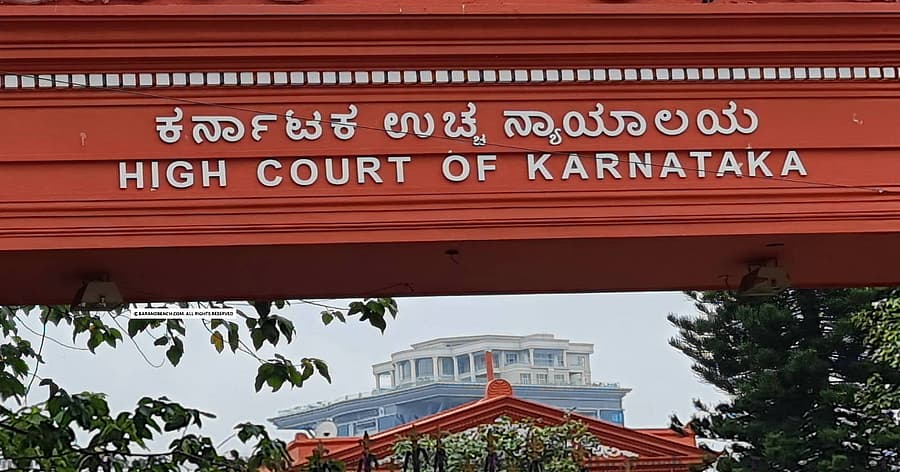
Karnataka High Court: Quashes FIR Against Dissent Posters on SC Judgment
Summary
- The Karnataka High Court quashed a criminal case against 13 individuals for putting up dissent posters.
- The posters in Mangaluru described a Supreme Court judgment as a "denial of justice" and urged people to raise their voices.
- Justice HP Sandesh ruled that these slogans constituted protected freedom of speech and expression under Article 19 of the Constitution of India.
- The Court found that the posters did not attract charges under Sections 153A and 295A of the Indian Penal Code.
- This ruling reinforces the right to express dissent against judicial decisions without inciting disharmony.
What Happened
This ruling serves as a crucial safeguard against the misuse of stringent penal provisions like Sections 153A and 295A IPC to stifle legitimate dissent against judicial decisions.
The Karnataka High Court recently issued a significant ruling, quashing a criminal case that had been initiated against thirteen individuals. These individuals faced charges for allegedly displaying posters in Mangaluru that characterized a Supreme Court judgment as a a "denial of justice" and urged the public to advocate for justice. The case, formally known as Mahammed Hanif & others Vs State of Karnataka, saw Justice HP Sandesh preside over the proceedings.
The allegations against the thirteen individuals stemmed from a complaint filed in 2019, which claimed that the posters were affixed to roadside walls. This complaint further asserted that the Popular Front of India was responsible for putting up these materials. Following the complaint, police registered a case against the accused under Sections 153A (promoting enmity between different groups) and 295A (deliberate and malicious acts intended to outrage religious feelings) of the Indian Penal Code (IPC). The High Court's decision effectively dismantled these charges, providing a crucial precedent regarding public expression.
Legal Context
In his October 15 ruling, Justice HP Sandesh meticulously analyzed the content of the posters, concluding that the slogans constituted an expression of dissent against a judicial decision. This form of expression, the Court determined, falls squarely within the ambit of the fundamental right to freedom of speech and expression, as enshrined in Article 19 of the Constitution of India. The ruling explicitly stated that such dissent, which merely highlights a perceived denial of justice and encourages public discourse, does not transgress constitutional limits.
The Karnataka High Court further clarified that the nature of the slogans did not meet the criteria for attracting the criminal offenses cited in the First Information Report (FIR). Specifically, the Court found that the posters did not promote enmity between different groups, as defined by Section 153A IPC, nor did they involve deliberate and malicious acts intended to outrage religious feelings under Section 295A IPC. Justice Sandesh emphasized that the posters simply conveyed disagreement with a Supreme Court judgment and called for a collective voice, which is distinct from inciting disharmony or religious offense. This interpretation is vital for understanding the boundaries of permissible criticism of Supreme Court judgment India.
Why It Matters
This judgment by the Karnataka High Court holds significant implications for the scope of freedom of speech and expression in India, particularly concerning public criticism of judicial decisions. By quashing the FIR against the individuals, the Court has reinforced the principle that expressing disagreement with a Supreme Court judgment, even in strong terms like "denial of justice," is a protected constitutional right, provided it does not incite violence or disharmony. This ruling serves as a crucial safeguard against the misuse of stringent penal provisions like Sections 153A and 295A IPC to stifle legitimate dissent against judicial decisions.
The decision in Mahammed Hanif & others Vs State of Karnataka underscores the importance of allowing citizens to voice their opinions on matters of public interest, including the outcomes of legal proceedings. It clarifies that merely expressing a view that justice has been denied, or encouraging others to speak up for justice, is an exercise of fundamental rights under Article 19 of the Constitution of India, and not a criminal act. This precedent is vital for maintaining a robust democratic discourse where judicial pronouncements, like all other public actions, can be subject to peaceful and lawful scrutiny.
Practical Implications
Lawyers should note this precedent as it clarifies the scope of freedom of speech and expression in India, particularly regarding dissent against judicial pronouncements. It provides a strong defense against charges under Sections 153A and 295A IPC for clients expressing disagreement with court judgments, provided such expression does not incite disharmony.
Source
How does this affect you?
Get an AI analysis of this article grounded in your jurisdictions, practice areas, and any policy documents you've uploaded to Wansom.
Finish Reading the Full Story and the Expert Analysis.
Get the latest legal & regulatory intelligence in India
Wansom is AI and can make mistakes.