
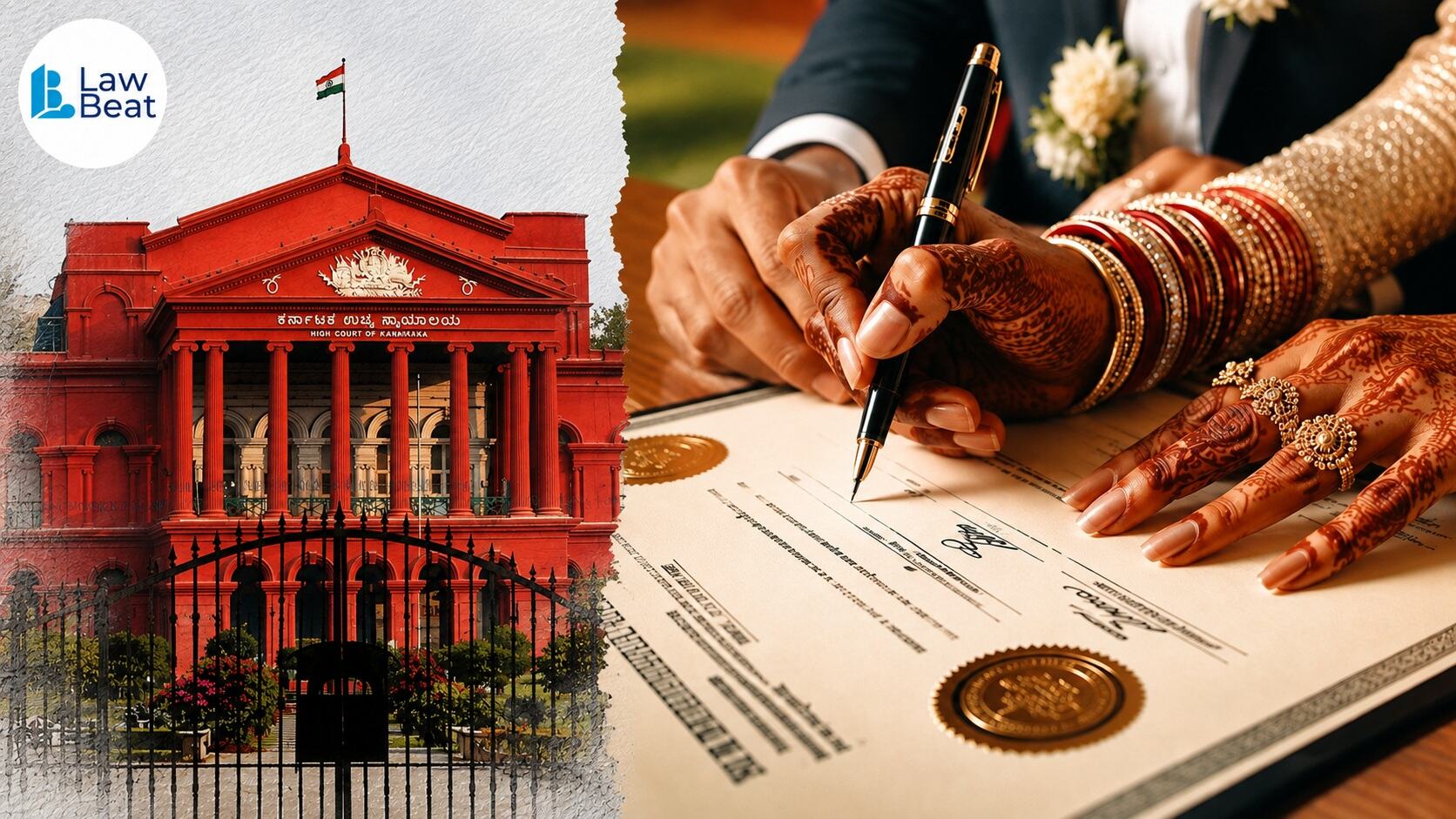
Karnataka High Court: Shariat Law Prevalent Despite Special Marriage Act Registration
Summary
- A Muslim couple's Nikah registered under the Special Marriage Act (SMA) remains governed by Shariat law.
- Mere registration under SMA does not alter the legal character of a marriage solemnized under Shariat law or make its divorce provisions applicable.
- This ruling emphasizes harmonious interpretation of SMA and personal laws, recognizing distinct nature of marriages solemnized under different laws.
What Happened
We are of the considered view, that mere registration of a marriage which has been performed in accordance with the law of the community i.e. Shariat law for the Muslims or Hindu Marriage Act for the Hindus or Christian Marriage Act for the Christians etc., will not lose its colour of being marriage under such law merely on the act of registration.
A Muslim couple had solemnized their Nikah on April 4, 2015, under Shariat law. They later registered their marriage under the Special Marriage Act (SMA) on December 21, 2015, to facilitate travel abroad. The husband subsequently filed a divorce petition under Section 27 of the SMA, which was rejected by the Family Court as not maintainable. The couple's case reached the Karnataka High Court, where a Division Bench dismissed their appeal and upheld the Family Court's decision.
Legal Context
The Karnataka High Court clarified that a marriage solemnized under Shariat law continues to be governed by that law even if it is subsequently registered under the SMA. The court held that mere registration under the SMA does not alter the legal character of such a marriage or make its divorce provisions applicable. This ruling emphasizes a harmonious interpretation of the SMA and personal laws, recognizing the distinct nature of marriages solemnized under different laws.
Why It Matters
This decision has significant implications for Muslim couples who wish to register their marriages under the SMA while maintaining their personal law. Lawyers advising these couples must note that a Nikah registered under the SMA does not alter the legal character of a marriage solemnized under Shariat law, and its subsequent registration under SMA does not make the Act's divorce provisions applicable. This ruling underscores the importance of understanding the nuances of personal laws and statutory marriages in India.
Practical Implications
Lawyers advising Muslim couples on marriage and divorce should note that the Karnataka HC has clarified that a Nikah registered under the Special Marriage Act does not alter the legal character of a marriage solemnised under Shariat law, and its subsequent registration under SMA does not make the Act's divorce provisions applicable.
Source
Source: Original reporting via [Source]
How does this affect you?
Get an AI analysis of this article grounded in your jurisdictions, practice areas, and any policy documents you've uploaded to Wansom.
Wansom is AI and can make mistakes.