
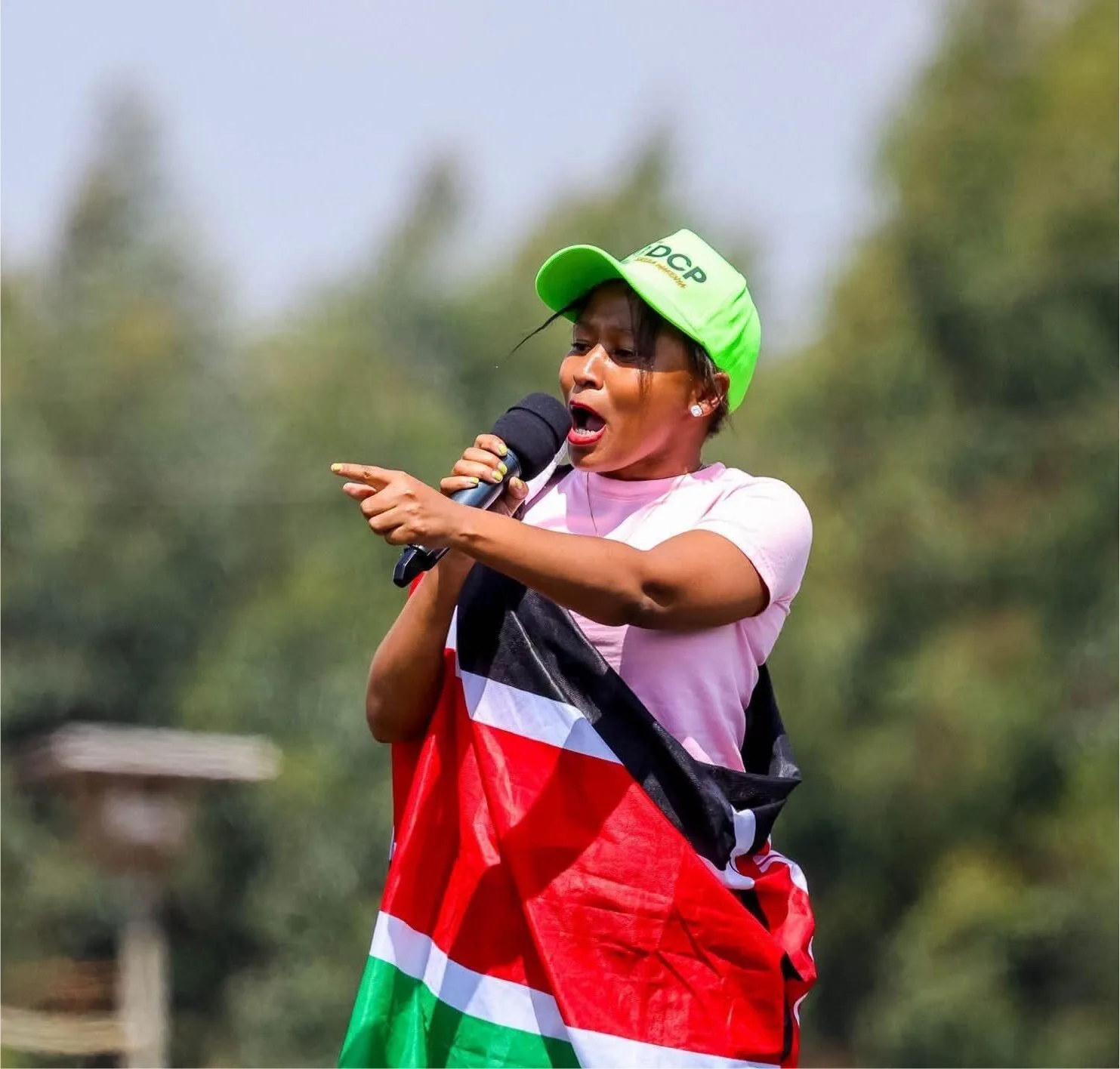
Kirinyaga Woman Rep Challenges Kaluma Hate Speech Arrest
Summary
- Kirinyaga Woman Representative Njeri Maina called on authorities to investigate and arrest Homa Bay Town MP Peter Kaluma over alleged hate speech.
- Maina cited Article 27 of the Constitution, which guarantees equality before the law, to argue that politicians should be held accountable for their actions.
- The challenge comes amid heightened political tensions and renewed debate over the use of inflammatory language by politicians.
What Happened
Because even if we are living in an animal kingdom, our Constitution of Kenya 2010 says in Article 27 that every person is equal before the law
A recent church service in Gatundu South, Kiambu County, turned into an impromptu platform for criticism of the government's handling of political violence. Kirinyaga Woman Representative Njeri Maina joined former Deputy President Rigathi Gachagua and other leaders to condemn the incidents of violence that have plagued Homa Bay. During her remarks, Maina specifically targeted Homa Bay Town MP Peter Kaluma, accusing him of making inflammatory comments against those who do not support the government. According to Maina, Kaluma's statements could incite hostility against government critics, and she called on authorities to investigate and arrest him if necessary.
Maina cited recent incidents in Homa Bay where politicians and their supporters clashed, resulting in injuries and hospitalizations. She mentioned that some individuals were accused of inciting violence, but the authorities' response was inconsistent, with some being arrested quickly while others were left untouched.
Legal Context
Maina's call to action is rooted in Article 27 of the Constitution, which guarantees equality before the law. She argued that political affiliation should not influence how authorities enforce the law, and that politicians like Kaluma should be held accountable for their actions if they amount to hate speech or incitement. The legislator invoked the National Cohesion and Integration Commission (NCIC), the Directorate of Criminal Investigations (DCI), and the Office of the Director of Public Prosecutions (ODPP) to demonstrate their commitment to upholding the law equally.
Maina's remarks come amid a renewed debate over the use of inflammatory language by political leaders, with growing calls for security and oversight agencies to take action against politicians whose statements could fuel violence or hostility. The legislator directly addressed the NCIC chairman, urging him to act against Kaluma and demonstrate that the law applies equally to government allies and critics.
Why It Matters
Maina's challenge to authorities has significant implications for the country's political landscape. If successful, it could set a precedent for holding politicians accountable for their actions, potentially leading to more leaders being held responsible for hate speech or incitement. The case also highlights the need for consistency in enforcing the law, with Maina arguing that authorities should not pick and choose who to prosecute based on political affiliation.
The outcome of this challenge will be closely watched by lawyers and observers, who are eager to see how the courts interpret Article 27 of the Constitution and its application to politicians. The case has the potential to shape the country's approach to addressing hate speech and inflammatory language in politics.
Practical Implications
Lawyers should watch for potential precedent in Maina's call to apply Article 27 of the Constitution equally, potentially leading to more politicians being held accountable for hate speech.
Source
Source: Original reporting via The Star
How does this affect you?
Get an AI analysis of this article grounded in your jurisdictions, practice areas, and any policy documents you've uploaded to Wansom.
Wansom is AI and can make mistakes.