
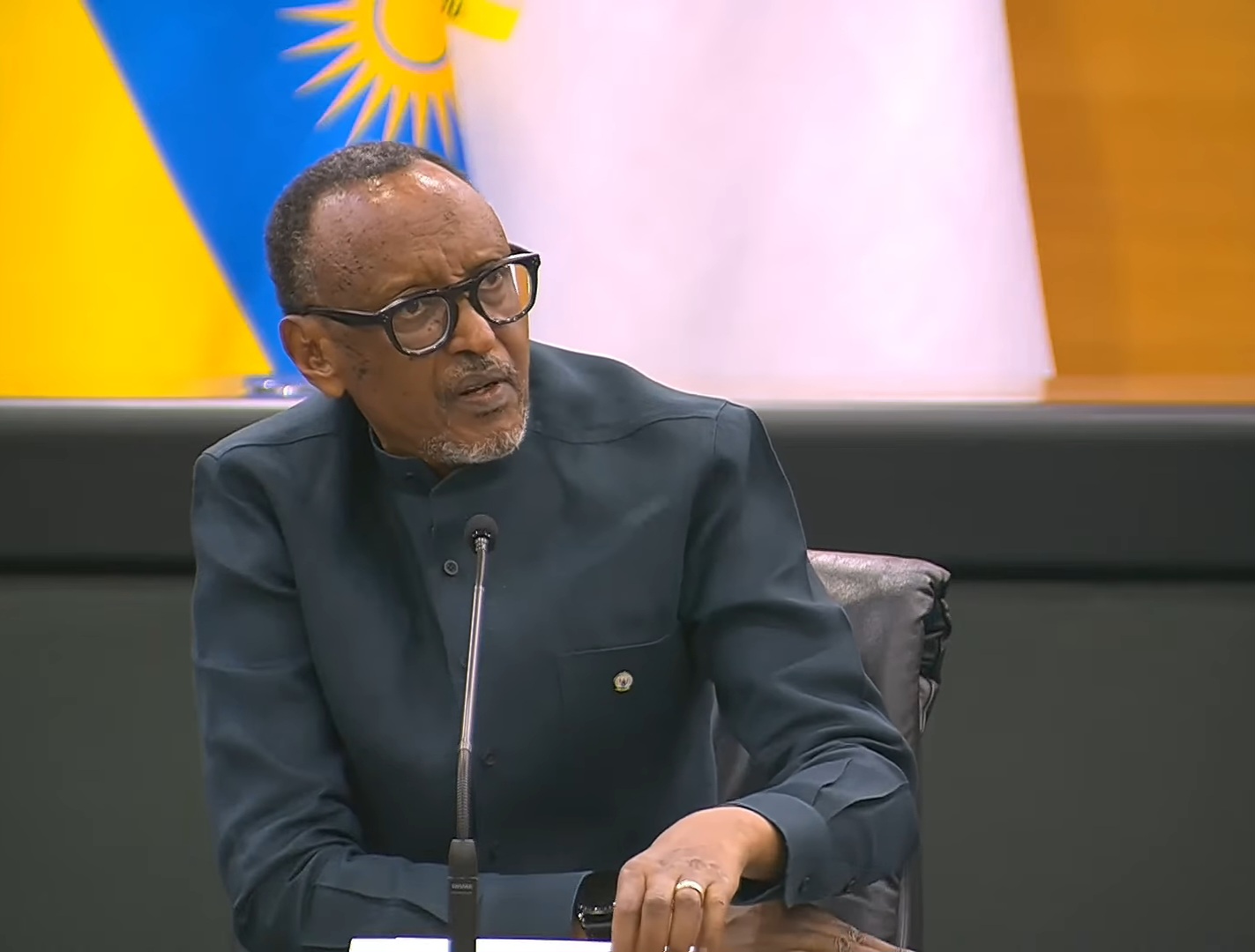
Kagame: Rwanda Government Decisions Must Consider Culture
Summary
- President Paul Kagame stated that effective state management requires considering culture, not just laws.
- He emphasized that government institutions must pay attention to how policies interact with cultural aspects.
- This suggests a move towards a more holistic approach in Rwandan government decision-making.
- The statement implies that cultural factors should inform policy formulation and implementation.
- Kagame's remarks highlight the importance of societal norms alongside formal procedures in governance.
A New Directive on Governance
President Paul Kagame has recently articulated a significant perspective on the management of state affairs, asserting that effective governance necessitates more than just adherence to established laws and formal procedures.
President Paul Kagame has recently articulated a significant perspective on the management of state affairs, asserting that effective governance necessitates more than just adherence to established laws and formal procedures. He underscored the importance of government institutions actively considering how their policies interact with the cultural fabric of the nation. This statement, delivered by the head of state, highlights a belief that successful administration extends beyond purely legalistic or bureaucratic approaches, advocating for a deeper engagement with societal norms and values.
This pronouncement by President Kagame signals a potential re-evaluation of the foundational principles guiding government decision-making in Rwanda. By emphasizing culture as a critical input, he suggests that policy formulation and implementation should not occur in a vacuum of legal technicalities. Instead, the Rwandan government is being encouraged to adopt a more holistic lens, where the social and cultural context plays an equally vital role in shaping state initiatives and ensuring their efficacy and public acceptance.
Beyond Legal Frameworks: The Role of Culture
The President's remarks implicitly challenge a governance model that might solely prioritize the Rwanda legal framework and administrative protocols. While laws and formal procedures remain indispensable for maintaining order and ensuring accountability, Kagame's statement introduces culture as an essential, complementary dimension. This suggests that future policy developments and regulatory interpretations within Rwanda may increasingly be evaluated not just on their legal soundness but also on their cultural resonance and appropriateness.
This emphasis on cultural considerations could lead to a more nuanced understanding of how government decision-making Rwanda operates. It implies a directive for institutions to move beyond a superficial application of rules, urging them to delve into the underlying societal values that influence public behavior and policy reception. Such an approach could foster a more adaptive and responsive government, capable of crafting policies that are not only compliant with national statutes but also deeply integrated into the lived experiences and traditions of the Rwandan populace.
Implications for Rwandan Policy and Society
President Paul Kagame's policy statement carries substantial weight, indicating a potential shift in the strategic orientation of the Rwandan government. By advocating for the integration of cultural insights into governance, he is signaling a move towards a more comprehensive and context-sensitive approach to national development. This perspective suggests that the cultural impact policy Rwanda might have will become a more explicit consideration in the design and execution of state programs, potentially leading to initiatives that are more sustainable and widely embraced by citizens.
The directive for government institutions to consider culture alongside laws has broad implications for various sectors. It could influence how public services are delivered, how economic policies are framed, and how social programs are implemented, ensuring they align with the nation's unique cultural identity. This emphasis on cultural considerations in government decision-making Rwanda underscores a commitment to fostering policies that are not merely technically correct but also deeply reflective of and responsive to the aspirations and values of the Rwandan people, thereby enhancing their overall effectiveness and legitimacy.
Practical Implications
This statement signals a potential shift in the Rwandan government's approach to policy formulation and implementation. Lawyers advising clients operating in Rwanda should consider how cultural factors might influence future regulatory interpretations, policy developments, or government engagements, moving beyond purely legalistic arguments.
Source
Source: Original reporting via KT PRESS
How does this affect you?
Get an AI analysis of this article grounded in your jurisdictions, practice areas, and any policy documents you've uploaded to Wansom.
Finish Reading the Full Story and the Expert Analysis.
Get the latest legal & regulatory intelligence in Rwanda
Wansom is AI and can make mistakes.