
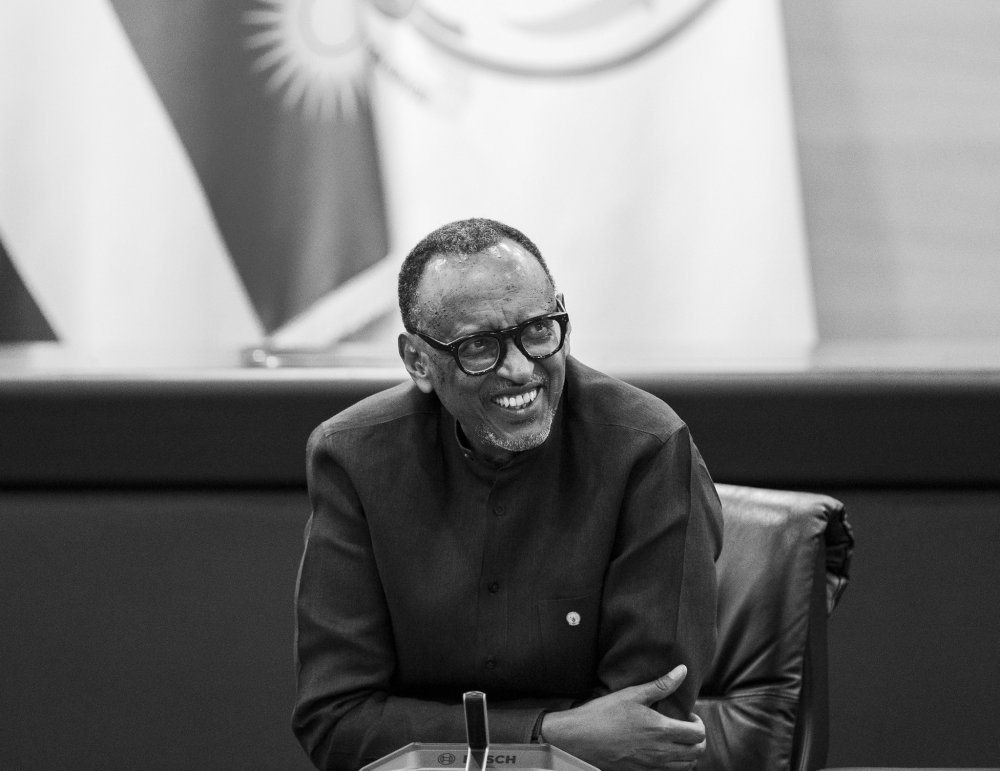
Kagame: AfCFTA Implementation Criticism Targets Slow Progress
Summary
- President Paul Kagame criticized the slow implementation of the African Continental Free Trade Area (AfCFTA), stating the main challenge is follow-through, not the framework itself.
- He highlighted that persistent non-tariff barriers, such as diverse regulations and customs, continue to hinder intra-African trade despite the agreement's goals.
- Kagame acknowledged the widespread frustration over the pace but urged African nations to move beyond complaints and take concrete action.
- He noted that the difficulty lies in getting countries to move together after agreeing on the broader objective.
- Despite the slow progress, Kagame affirmed the AfCFTA's foundational value while stressing the need to convert its potential into practical business conditions.
AfCFTA Implementation Under Scrutiny
The critical challenge now lies in translating these established commitments into practical, usable conditions for businesses operating across the continent.
President Paul Kagame has voiced strong criticism regarding the pace of implementation for the African Continental Free Trade Area (AfCFTA), asserting that Africa's primary trade hurdle is no longer the creation of a continental framework, but rather the commitment of member states to follow through on agreed-upon measures. The AfCFTA, which commenced trading in 2021, was designed with the ambitious goal of expanding commerce among African nations by systematically reducing barriers to the movement of both goods and services across the continent.
Kagame acknowledged the significant achievement of establishing the agreement itself, recognizing it as a crucial step that united countries around a shared vision for continental trade. He expressed satisfaction that a framework was put in place to facilitate broader intra-African trade. However, he lamented that the continent has fallen short in the critical aspect of actualizing these commitments, emphasizing that "doing it is the most important thing." His remarks underscore a growing concern that while the legal and structural foundations are laid, the practical application remains sluggish.
Persistent Hurdles to Intra-African Trade
The slow progress in implementing the AfCFTA is particularly concerning given the agreement's foundational purpose: to address Africa's historical economic weakness of low intra-African trade relative to its potential. For businesses operating across the continent, the obstacles extend far beyond traditional tariffs. A myriad of non-tariff barriers, including disparate national regulations, complex customs requirements, and varying standards, continue to complicate cross-border commerce, even between neighboring countries.
President Kagame openly acknowledged the understandable frustration stemming from this slow pace, stating that the continent is "not moving at the right pace" and that "Africans must be frustrated" for valid reasons. He cautioned, however, that mere frustration cannot substitute the diligent work required to make the agreement effective. Kagame urged nations to move beyond complaints, emphasizing the necessity of collective action to fulfill their obligations. He suggested that part of the difficulty lies in coordinating countries to advance together, even after a broad objective has been mutually agreed upon, noting that nations often "keep nudging each other and trying to find the excuses some people have or reasons for not contributing to it full."
A Vision Unfulfilled, Yet Still Valued
Despite his pointed criticism of the implementation speed, President Kagame refrained from characterizing the AfCFTA as a failed initiative. Instead, he drew a clear distinction between the inherent value of the continental framework that African countries have successfully established and their subsequent failure to rapidly realize its full potential. This distinction holds particular significance for Rwanda, a nation that has consistently advocated for stronger regional and continental economic integration.
For Rwandan producers and businesses, a truly functional African market, as envisioned by the AfCFTA, promises access to markets far exceeding the country's relatively small domestic economy. The critical challenge now lies in translating these established commitments into practical, usable conditions for businesses operating across the continent. This necessitates that member states actively confront the underlying reasons for the slow progress, rather than simply viewing the agreement's existence as the ultimate achievement. Kagame's perspective highlights that while the continental framework is firmly in place, the essential work of compelling countries to act upon it remains unfinished.
Practical Implications
This article signals to lawyers and compliance officers that while the AfCFTA framework is established, its practical implementation remains slow, meaning businesses engaging in intra-African trade must still navigate significant non-tariff barriers and varying national regulations. Legal advice should focus on current operational realities rather than solely on the agreement's aspirational goals.
Source
How does this affect you?
Get an AI analysis of this article grounded in your jurisdictions, practice areas, and any policy documents you've uploaded to Wansom.
Wansom is AI and can make mistakes.