
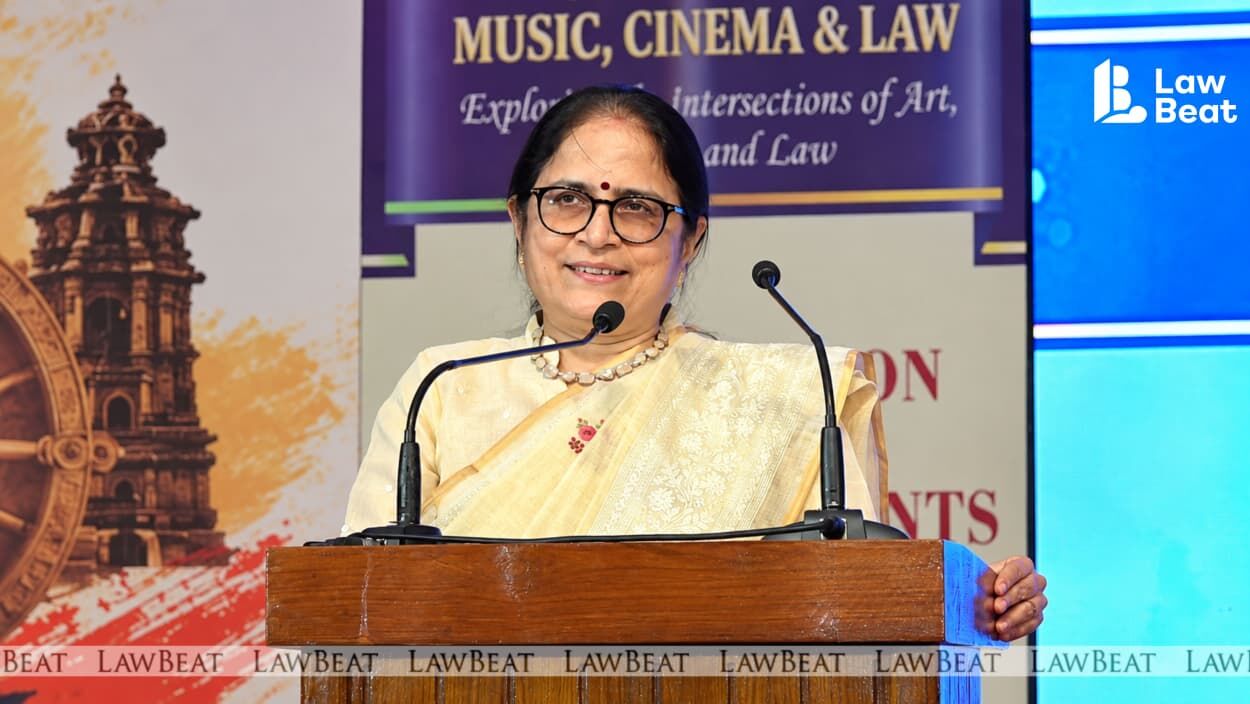
Justice V Mohana: Art Law Intersection Crucial Amid AI Challenges
Summary
- Supreme Court Justice V Mohana spoke at a three-day seminar in Kochi, jointly organized by the Kerala Judicial Academy and NUALS.
- She highlighted that art and culture profoundly shape societal values like empathy and morality in ways law cannot replicate.
- Justice Mohana addressed the growing complexity of art and law due to technology, citing challenges like voice copying, AI-generated music, and ownership of machine-assisted creations.
- She emphasized that these emerging legal questions, particularly concerning AI intellectual property, require interdisciplinary solutions beyond just lawyers.
- The Justice drew parallels between legal interpretation and artistic expression, noting that judges must faithfully interpret law while adapting to a constantly changing world.
Justice Mohana Highlights Art's Societal Role
Justice Mohana stressed that these complex legal dilemmas, especially concerning AI intellectual property art law and Copyright AI generated content, cannot be resolved solely by legal professionals.
Supreme Court Justice V Mohana delivered a keynote address at the inaugural ceremony of a three-day seminar in Kochi. The event, titled 'Three-day Seminar on Music, Cinema and Law: Exploring the Intersections of Art, Culture and Law,' was a joint initiative by the Kerala Judicial Academy and the National University of Advanced Studies (NUALS) Kochi. Justice Mohana underscored the profound influence of art and culture on societal values, asserting that they shape our understanding of empathy, beauty, courage, power, and morality through the stories, music, and films we encounter. She posited that this formative power of art transcends the capabilities of law.
During her speech, Justice Mohana emphasized the critical relevance of art to the legal profession. While judges frequently engage with established categories, principles, and precedents, she noted that every legal dispute ultimately stems from a human experience, involving real individuals. Art, she explained, serves as a vital reminder of this underlying human dimension, offering perspectives that legal frameworks alone cannot fully capture. The seminar itself brought together a distinguished assembly, including Kerala Chief Minister VD Satheesan, Kerala High Court Chief Justice Soumen Sen, Justice Anil K Narendran, and Minister of Higher Education Roji M John, alongside other judges, lawyers, academics, and members of the creative community.
Navigating AI's Impact on Creative Industries
Justice Mohana further elaborated on the increasingly intricate relationship between artistic expression and legal frameworks, particularly in the context of rapid technological advancements. She highlighted how modern technology introduces unprecedented challenges, citing examples such as the ability to copy a person's voice or recreate their face. The Supreme Court Justice pointed to the emergence of machine-generated music and scenarios where actors can appear on screen without physically performing a scene, illustrating the new frontiers of the **Justice V Mohana art law intersection**.
These developments, she explained, compel the legal system to confront novel questions that were unimaginable just a few years prior. Key inquiries include discerning the boundary between inspiration and imitation, determining when technology genuinely assists an artist versus when it replaces them, and establishing ownership over creations developed with the aid of machines. Furthermore, the challenge lies in protecting creativity without inadvertently stifling innovation. Justice Mohana stressed that these complex legal dilemmas, especially concerning **AI intellectual property art law** and **Copyright AI generated content**, cannot be resolved solely by legal professionals. They necessitate a collaborative approach involving artists, musicians, filmmakers, technologists, historians, and academics, emphasizing the crucial need for interdisciplinary dialogue.
The Art of Legal Interpretation
Drawing insightful parallels, Justice Mohana explored the common ground between courtrooms and cinema, noting that both serve as venues for listening to stories. The fundamental distinction, she observed, lies in the audience's expectation: cinema offers a narrative with a predictable three-hour conclusion and a clear message, whereas a courtroom proceeding unfolds in fragments, with judges piecing together conflicting accounts, documents, memories, facts, and silences without foreknowledge of the story's ultimate direction. In this intricate process, the court's role is to construct a coherent narrative from disparate elements and arrive at a conclusion that aligns with legal principles. This discussion was a central theme of the **Music Cinema Law Seminar India**.
Justice Mohana also used music as an analogy for understanding legal interpretation. She pointed out that while music adheres to rules of rhythm, structure, and harmony, merely following these rules does not inherently create music; true artistry emerges from interpretation, pauses, improvisation, and unexpected notes within that framework. Similarly, the law operates within a framework provided by the Constitution, legislation, and established procedures, which define its boundaries. Judges, she concluded, are tasked with the delicate balance of faithfully interpreting the law while simultaneously acknowledging and adapting to the constantly evolving world in which it operates.
Practical Implications
This speech highlights the emerging legal challenges posed by AI and technology in creative industries, particularly concerning intellectual property, originality, and ownership. Lawyers advising clients in media, entertainment, and tech sectors should anticipate evolving legal frameworks and the need for interdisciplinary approaches to address these complex issues.
Source
How does this affect you?
Get an AI analysis of this article grounded in your jurisdictions, practice areas, and any policy documents you've uploaded to Wansom.
Finish Reading the Full Story and the Expert Analysis.
Wansom is AI and can make mistakes.