
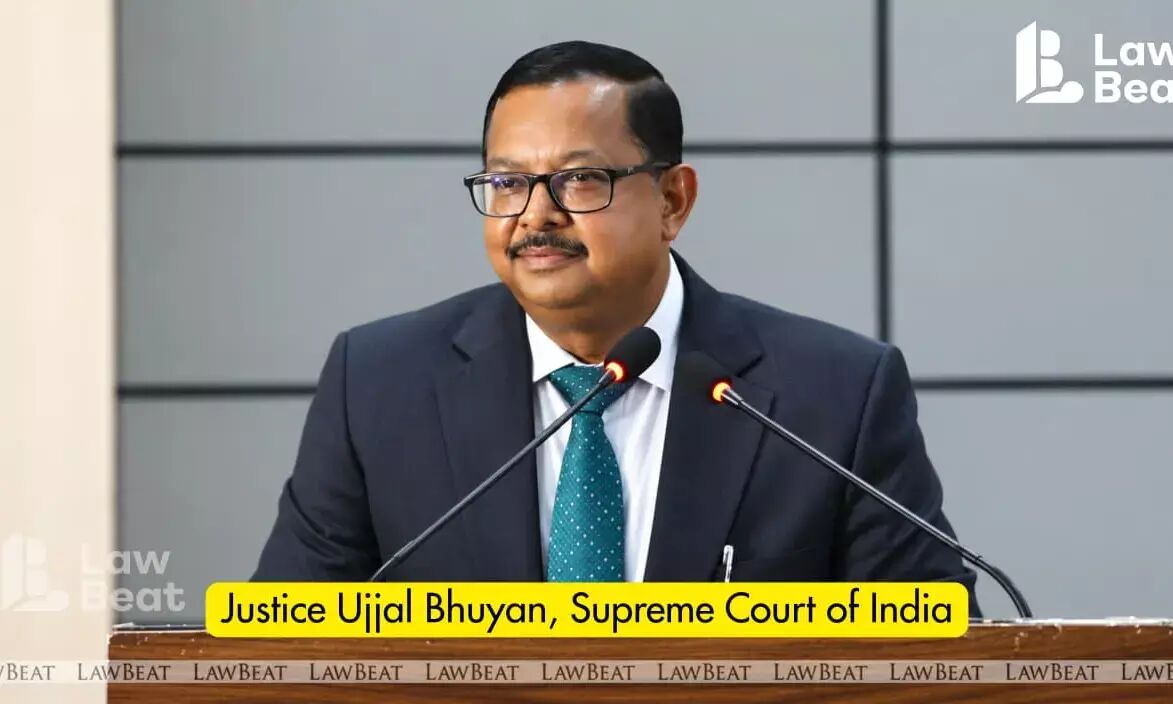
Supreme Court India: Justice Ujjal Bhuyan SIR Remarks Draw Criticism
Summary
- Supreme Court Justice Ujjal Bhuyan's public comments on the Special Intensive Revision (SIR) of electoral rolls have drawn criticism from former judges.
- Justice Bhuyan stated that any process leading to widespread disenfranchisement would be "intrinsically arbitrary" and a "negation" of the constitutional order.
- Former CJI BR Gavai and retired Delhi High Court Justices SN Dhingra and RS Sodhi criticized the remarks as a breach of judicial propriety, given that new challenges related to the SIR matter are pending before the Supreme Court.
- Critics emphasized that sitting judges should refrain from commenting on sub judice matters and that voting rights are governed by statutory frameworks, not broad constitutional assertions.
- The controversy highlights ongoing debates about judicial conduct and the ethical boundaries for judges discussing sensitive legal issues publicly.
Controversial Remarks Spark Debate
The core of the criticism centers on the principle of judicial propriety, specifically the ethical imperative for sitting judges to refrain from commenting publicly on matters that are actively pending before the Supreme Court.
Justice Ujjal Bhuyan, a sitting judge of the Supreme Court of India, recently ignited a significant debate following public comments he made regarding the Special Intensive Revision (SIR) of electoral rolls. Speaking at NALSAR University of Law during the valedictory address for the 19th Justice Bodh Raj Sawhney Memorial Moot Court Competition, Justice Bhuyan characterized any process leading to the disenfranchisement of millions of citizens as "intrinsically arbitrary" and a "negation" of the constitutional order. He further asserted that the Constitution does not contemplate a distinction between citizens based on their voting rights, adding that no amount of "whataboutery" could justify such a process.
These remarks quickly drew sharp criticism from prominent legal figures, including former Chief Justice of India BR Gavai and retired Delhi High Court Justices SN Dhingra and RS Sodhi. Their primary concern revolved around the principle of judicial propriety, particularly given that while the Supreme Court upheld the legality of the Special Intensive Revision (SIR) of electoral rolls in May 2026, new petitions challenging the Election Commission's decision-making process and changes to Form 6 related to SIR are currently awaiting adjudication before the Supreme Court.
The Principle of Judicial Propriety
Former Chief Justice of India BR Gavai was unequivocal in his stance, stating that judicial propriety strictly prohibits a sitting Supreme Court judge from publicly commenting on a matter that is sub judice before the apex court. He emphasized that judges are expected to maintain restraint when an issue is actively under judicial consideration. Justice Gavai underscored that a sitting Supreme Court judge should not express public views on a matter awaiting adjudication by the same court. The core of the criticism centers on the principle of judicial propriety, specifically the ethical imperative for sitting judges to refrain from commenting publicly on matters that are actively pending before the Supreme Court.
Retired Delhi High Court Justice SN Dhingra echoed these sentiments, describing Justice Bhuyan's statements as inappropriate for a sitting judge. Dhingra suggested that Justice Bhuyan should have exercised extreme caution, remarking that he "should have thought a thousand times" before making such a statement. Justice Dhingra also asserted that Justice Bhuyan did not possess all the relevant facts concerning the matter when he made his observations. Furthermore, Dhingra dismissed the notion that judges need to intervene in reports of internal differences within the Election Commission concerning the SIR exercise, noting that top bureaucrats are capable of speaking for themselves. He concluded that Justice Bhuyan's statement went "way beyond the limits of a sitting top court judge," especially with the matter pending before the Supreme Court.
Substantive Critiques of Bhuyan's Stance
Beyond the procedural concerns of judicial propriety, retired Delhi High Court Justice RS Sodhi also challenged the substantive content of Justice Ujjal Bhuyan's remarks. Justice Sodhi specifically questioned the characterization of the electoral roll revision as disenfranchisement. He clarified that the right to vote is governed by a statutory framework, and an individual's eligibility must be determined in accordance with existing law. Sodhi explained that whether one possesses a vote depends entirely on falling within the parameters of the relevant statute.
Justice Sodhi further pointed out that electoral rolls can contain inaccuracies, such as names that do not meet statutory requirements or the exclusion of otherwise eligible persons. However, he stressed that statutory mechanisms are in place to correct such errors, facilitating both the deletion and inclusion of names as necessary. Sodhi also expressed skepticism regarding the suggestion that the revision exercise effectively creates "second class" citizens, dismissing such assertions as "hardline thinking and these hardline statements" that he found problematic. This multifaceted criticism underscores the complex interplay between judicial conduct, constitutional principles, and statutory implementation in India's electoral processes.
Practical Implications
This development highlights the critical debate surrounding judicial propriety and the ethical boundaries for sitting judges commenting publicly on matters pending before the Supreme Court. Lawyers should note these discussions as they inform the standards of judicial conduct and may influence arguments concerning perceived bias or the integrity of the judicial process, particularly in sensitive areas like electoral law.
Source
How does this affect you?
Get an AI analysis of this article grounded in your jurisdictions, practice areas, and any policy documents you've uploaded to Wansom.
Finish Reading the Full Story and the Expert Analysis.
Get the latest legal & regulatory intelligence in India
Wansom is AI and can make mistakes.