
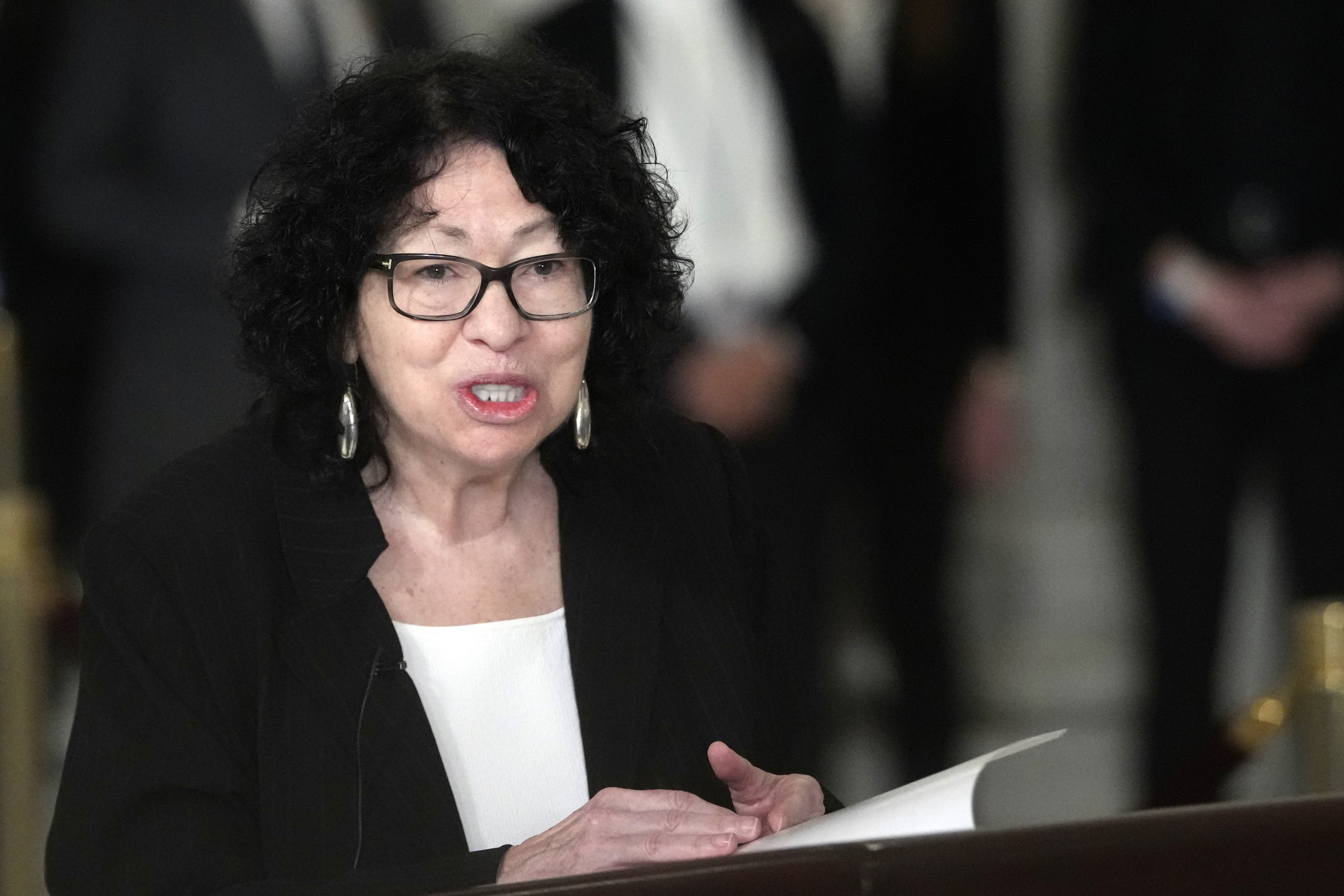
Justice Sotomayor: Trump v. Slaughter Dissent Warns on Executive Power
Summary
- Justice Sonia Sotomayor expressed deep concerns about the American government's system of checks and balances during a recent address in Tulsa, Oklahoma.
- She highlighted her "greatest fear" that both the public and some of her Supreme Court colleagues do not fully comprehend how the government should function.
- Sotomayor specifically referenced her dissent in the 2026 case *Trump v. Slaughter*, which affirmed presidential removal authority over independent agency officers.
- She stated that the unitary executive theory, which she believes is supported by the *Trump v. Slaughter* decision, is actively "overturning that balance" of power.
- The Justice also noted a shift in her dissenting style, indicating she no longer invariably uses the phrase "I respectfully dissent," emphasizing the courage required for judicial disagreement.
Justice Sotomayor's Public Concerns
She stated that the unitary executive theory is actively "overturning that balance" of power, a development she finds profoundly troubling for the future of democratic institutions.
U.S. Supreme Court Justice Sonia Sotomayor recently shared her profound concerns regarding the functioning of American government and the critical role of checks and balances. Speaking to an audience in Tulsa, Oklahoma, on a Wednesday, the Justice, who was confirmed to the nation's highest court in 2009, articulated her "greatest fear": that the public, and indeed some of her own colleagues, do not fully grasp how the governmental system is designed to operate. Her remarks were delivered at an event sponsored by the Northern/Eastern Oklahoma Chapter of the Federal Bar Association.
During her address, Justice Sotomayor characterized the Supreme Court's appellate process as akin to a "perpetual en banc" session, highlighting the continuous deliberation among her fellow justices. She emphasized the significant courage required for a justice to articulate disagreement with their colleagues. In a telling comment, she revealed a change in her approach to dissenting opinions, noting that she no longer consistently begins them with the customary phrase, "I respectfully dissent." This shift underscores her conviction in the necessity of robust judicial disagreement.
Legal Context: The *Trump v. Slaughter* Dissent
A central point of Justice Sotomayor's apprehension revolves around the 2026 Supreme Court decision in *Trump v. Slaughter*. In this landmark case, the Court affirmed the President's authority to remove officers serving in independent federal agencies. Justice Sotomayor, who penned a dissent in the case, explicitly linked this outcome to her deep-seated worries about the unitary executive theory.
Her dissent in *Trump v. Slaughter* serves as a clear indicator of her judicial philosophy concerning executive power and the autonomy of independent agencies. The ruling, which bolsters presidential removal authority over these bodies, directly challenges her understanding of the separation of powers. She stated that the unitary executive theory is actively "overturning that balance" of power, a development she finds profoundly troubling for the future of democratic institutions.
Sotomayor's Judicial Philosophy and Checks and Balances
Justice Sotomayor's recent public statements offer a window into her judicial philosophy, particularly her steadfast commitment to the principles of checks and balances and the inherent value of judicial disagreement. Her assertion that her "greatest fear" is a lack of understanding about governmental mechanics, coupled with her pointed observation that "some of my colleagues don’t either," underscores a profound concern for the integrity of the constitutional framework. This perspective highlights her belief in the judiciary's role as a critical bulwark against potential overreach by other branches.
The Justice's willingness to openly discuss the courage required to dissent, and her personal evolution in how she articulates those dissents, speaks to a broader commitment to intellectual honesty and rigorous debate within the Court. Her remarks about the unitary executive theory, and its perceived threat to the balance of power, are not isolated comments but rather consistent with a judicial outlook that prioritizes structural safeguards against concentrated authority. This stance is particularly relevant for lawyers practicing in constitutional and administrative law, as it signals a continued judicial scrutiny of executive actions and the independence of federal agencies.
Why These Concerns Matter
Justice Sotomayor's candid remarks carry significant weight for the legal community and the broader public. Her explicit concerns about the unitary executive theory and its impact on presidential removal authority over independent agencies highlight an ongoing, high-stakes debate within the Supreme Court regarding the separation of powers. Her dissent in *Trump v. Slaughter* is not merely an academic disagreement but a public declaration of her apprehension about the erosion of institutional safeguards.
For legal professionals, particularly those engaged in constitutional or administrative law, Justice Sotomayor's articulated views serve as crucial indicators of potential future arguments and areas of judicial focus. Her consistent emphasis on the importance of checks and balances and her public critique of the unitary executive theory suggest that these principles will remain central to her jurisprudence. Her statements underscore the vital role of judicial disagreement in maintaining the integrity of the Supreme Court and ensuring robust oversight of executive power, reinforcing the idea that courage in judicial dissent is essential for the health of the republic.
Practical Implications
Justice Sotomayor's public concerns about the unitary executive theory and presidential removal authority over independent agencies highlight ongoing judicial scrutiny of executive power. Lawyers practicing constitutional or administrative law should note her stated views as indicators of potential future arguments and dissents in cases challenging the separation of powers.
Source
How does this affect you?
Get an AI analysis of this article grounded in your jurisdictions, practice areas, and any policy documents you've uploaded to Wansom.
Finish Reading the Full Story and the Expert Analysis.
Get the latest legal & regulatory intelligence in United States
Wansom is AI and can make mistakes.