
Justice Sichale: Kenyans, Not Just EACC and Courts, Must Lead Graft Fight
What Happened
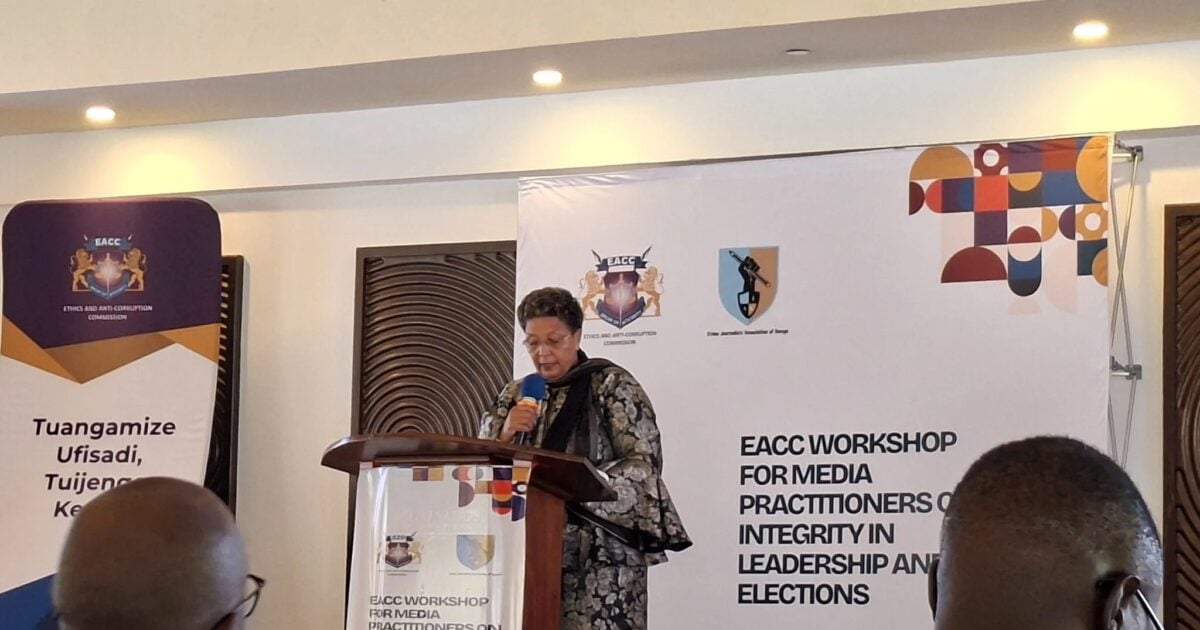
NAIROBI, Kenya, Nov 24 – Court of Appeal Judge Fatuma Sichale has warned that Kenya’s fight against corruption will remain unsuccessful unless citizens take personal responsibility for confronting graft, saying the burden cannot be left to investigative agencies and the Judiciary. Sichale said institutional efforts by the Ethics and Anti-Corruption Commission (EACC), the courts and the media had helped advance accountability, but lasting change would depend on Kenyans rejecting corruption in their everyday dealings. Speaking on Tuesday during the second day of an EACC workshop for media practitioners on integrity in leadership and elections in Mombasa, the judge said corruption had become deeply entrenched across public institutions and society, undermining efforts to build a culture of accountability. Drawing from her experience as a former EACC commissioner and her involvement in the establishment of the countrys anti-graft institutions, Sichale said she had initially believed that the commission could lead the country towards defeating corruption. However, she said her five-year experience at the commission left her with the realisation that no single institution could win the fight without broader public commitment. At the end of the five years, as I walked outside, as I left the Integrity Centre, I think I came to one conclusion: that the fight against corruption cannot be fought by one institution, she said. The Anti-Corruption Commission will lead the fight against corruption, but it is upon all of us to fight corruption. Unless and until the Kenyan people are ready to fight corruption, you as an institution fighting corruption cannot succeed. Sichale challenged Kenyans to examine their individual contribution to the fight against graft, regardless of their positions in society, arguing that personal accountability must begin within the spaces people occupy. She invoked the late musician Michael Jacksons message that change begins with the person in the mirror, saying the principle applied to the countrys struggle against corruption. The judge also warned that dishonesty had spread beyond senior public officials, citing a case involving a magistrate who allegedly colluded with an applicant to fraudulently obtain letters of administration to access Sh15 million belonging to a person who was still alive. She described how the scheme allegedly involved several actors, including a local chief, guarantors, officials responsible for civil registration and a doctor whose medical report was used to justify the applicants absence from court. The case, she said, illustrated how corruption could thrive when different actors across institutions participated in or facilitated fraudulent transactions. We live in such a rotten society. It is the chief, it is the applicant, it is the guarantors, it is the registrar of births and deaths. It is the doctor. Who will save us? she posed. Sichale said the example demonstrated why the fight against corruption must go beyond targeting high-profile individuals to confronting dishonesty at every level of society. On the role of the Judiciary, Sichale said courts had progressively given effect to Chapter Six of the Constitution on leadership and integrity, reinforcing the principle that public office is a public trust rather than a privilege. She cited several landmark decisions that have shaped the interpretation of integrity requirements for individuals seeking or holding public office. Among them was the Supreme Courts decision in the impeachment case involving former Nairobi Governor Mike Sonko, which reaffirmed that constitutional provisions on leadership and integrity were not intended to be cosmetic. The court emphasised that state officers exercise authority on behalf of the public and must demonstrate transparency, accountability and commitment to good governance. Quoting the Supreme Court, Sichale said public authority carried the responsibility to serve citizens rather than the power t
Source
How does this affect you?
Get an AI analysis of this article grounded in your jurisdictions, practice areas, and any policy documents you've uploaded to Wansom.
Finish Reading the Full Story and the Expert Analysis.
Get the latest legal & regulatory intelligence in Kenya
Wansom is AI and can make mistakes.