
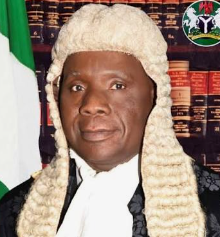
Justice Saulawa: Military Junta Smeared Nigerian Judiciary
Summary
- Supreme Court Justice Ibrahim Saulawa recently retired from active judicial service.
- During his retirement, Justice Saulawa reflected on how a military junta undermined Nigeria's judiciary and democracy.
- His remarks specifically highlighted the controversial annulment of the 1993 presidential election.
- These reflections come as Nigeria marks 66 years of independence and 27 years of uninterrupted democratic rule.
What Happened
His narrative about how the military junta smeared the judiciary and truncated democracy contributes to the ongoing national discourse on constitutionalism and the separation of powers.
Justice Ibrahim Saulawa, a distinguished jurist, recently concluded his tenure on the Supreme Court, marking his departure from active judicial service. His retirement was accompanied by significant reflections on pivotal moments in Nigeria's political and legal history. During his exit, Justice Saulawa delivered remarks that cast a spotlight on the profound challenges faced by the nation's judiciary during periods of military rule.
His commentary specifically addressed the controversial annulment of the 1993 presidential election, an event that remains a critical point of discussion in Nigeria's democratic journey. Justice Saulawa's narrative underscored how a military junta actively undermined the judiciary, leading to a significant erosion of its independence and public trust. He further elaborated on the methods through which the military regime effectively truncated the nascent democratic aspirations of the nation at that time. These statements, made by a retiring Supreme Court justice, have brought renewed attention to the historical "intrigues" surrounding these events.
Historical Context and Judicial Integrity
The remarks by Justice Ibrahim Saulawa offer a crucial perspective on the historical struggle for judicial independence in Nigeria, particularly concerning the impact of military rule on the nation's legal institutions. His observations, delivered upon his retirement from the Supreme Court, serve as a potent reminder of the era when military regimes exerted immense pressure on the judiciary, often compromising its autonomy. The 1993 presidential election annulment stands as a stark example of such interference, a period when the rule of law was severely tested.
This historical context, brought to the fore by Justice Saulawa's retirement remarks, highlights a critical chapter in Nigerian judicial independence history. The military rule impact on the Nigerian judiciary during this period was characterized by actions that Justice Saulawa described as having "smeared" the institution. The Abiola election annulment legal context, as implicitly referenced by his comments, represents a time when judicial decisions were often dictated by political expediency rather than constitutional principles, thereby truncating democratic processes.
Enduring Relevance for Nigeria's Democracy
Justice Saulawa's reflections on the military junta's actions and their consequences for the judiciary and democracy hold particular significance as Nigeria observes important national milestones. The nation is currently commemorating 66 years since achieving independence and celebrating 27 years of uninterrupted democratic governance. Against this backdrop, the Justice Ibrahim Saulawa retirement remarks serve as a timely reminder of the fragility of democratic institutions and the constant need to safeguard judicial integrity.
The insights provided by a figure of Justice Saulawa's stature underscore the enduring relevance of understanding the challenges posed by past military interventions. His narrative about how the military junta smeared the judiciary and truncated democracy contributes to the ongoing national discourse on constitutionalism and the separation of powers. These historical lessons, articulated by a retiring Supreme Court justice, are vital for reinforcing democratic principles and ensuring that the judiciary remains a steadfast pillar of justice in Nigeria.
Practical Implications
This article provides valuable historical context on the challenges to judicial independence and the rule of law during Nigeria's military regimes, which can inform legal arguments concerning constitutional history and the separation of powers. However, it does not present a new, immediate actionable legal development or compliance requirement for practitioners.
Source
How does this affect you?
Get an AI analysis of this article grounded in your jurisdictions, practice areas, and any policy documents you've uploaded to Wansom.
Finish Reading the Full Story and the Expert Analysis.
Get the latest legal & regulatory intelligence in Nigeria
Wansom is AI and can make mistakes.