
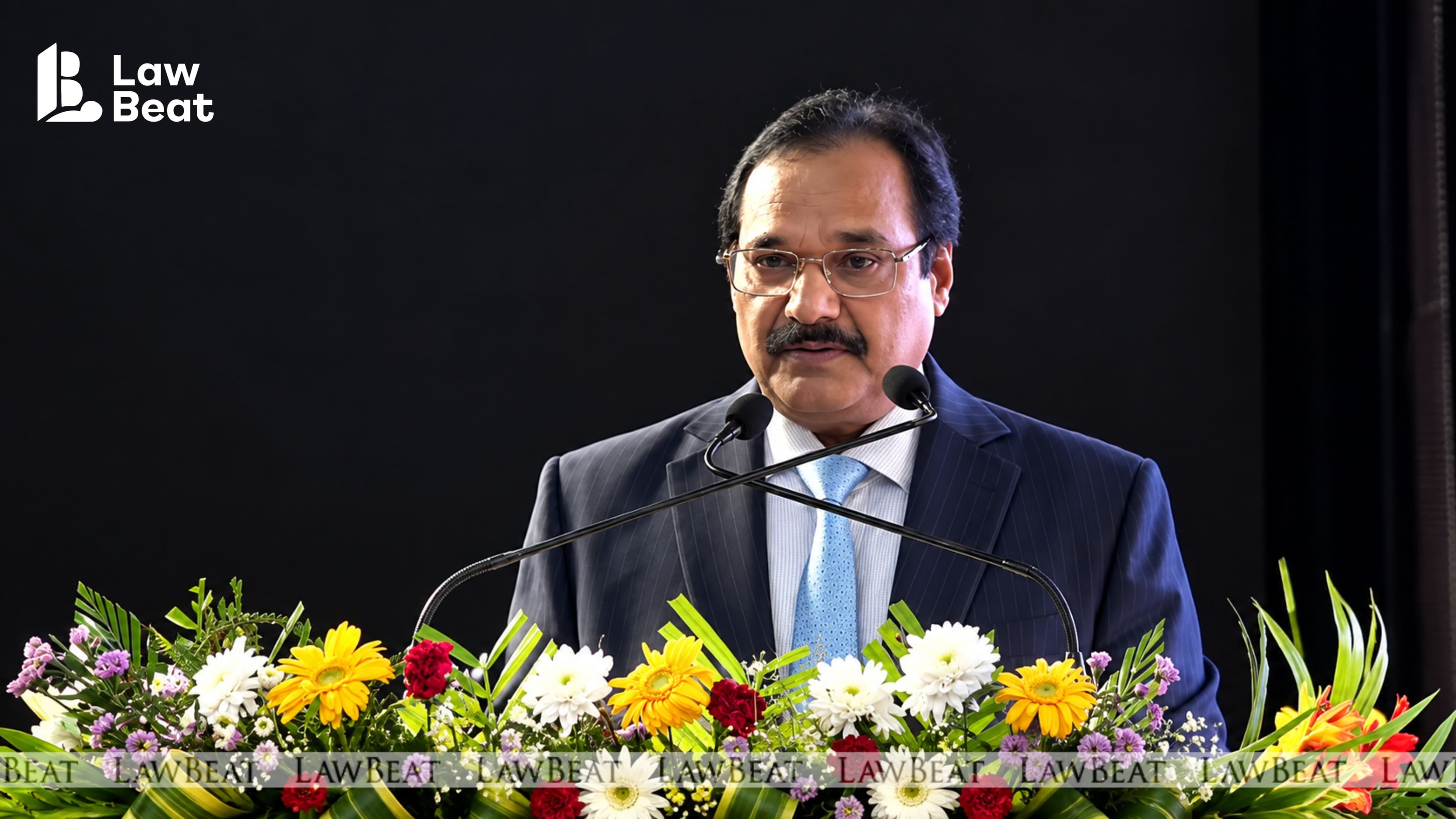
Justice Prashant Kumar Mishra: Judicial Education Views Expand Beyond Curriculum
Summary
- Supreme Court Judge Prashant Kumar Mishra stated that judicial education is defined by a judge's expanding understanding, not a syllabus.
- He emphasized the critical distinction between knowing legal principles and understanding how to apply them to specific factual situations.
- Emerging technologies, such as deepfakes, present significant challenges by making it difficult to discern real from unreal evidence and litigants.
- The judiciary must continuously evolve its learning process to address complex disputes and interpret existing laws for novel scenarios.
- These views were shared at the West Zone Regional Conference on “Expanding Horizons of Judicial Education” in Gwalior.
Redefining Judicial Education
The true scope of judicial education, according to Justice Mishra, is not confined by a curriculum but is instead shaped by a judge's continually evolving comprehension.
Supreme Court Judge Prashant Kumar Mishra recently articulated a progressive vision for judicial education, asserting that its true scope is not confined by a curriculum but is instead shaped by a judge's continually evolving comprehension. Speaking at the inaugural session of the two-day West Zone Regional Conference on “Expanding Horizons of Judicial Education” in Gwalior, Justice Mishra underscored a crucial distinction between merely knowing legal principles and genuinely understanding how to apply them to specific factual situations. This event was collaboratively organized by the National Judicial Academy, the High Court of Madhya Pradesh, and the Madhya Pradesh State Judicial Academy.
He elaborated that while knowledge can remain an abstract concept, understanding necessitates the practical application of what is known to a particular context. The judicial process, in his view, demands that judges first ascertain the facts, then grasp the underlying problem, identify the applicable law, and finally comprehend how that law must be judiciously applied to the unique circumstances presented before the court. This perspective highlights that the boundary of judicial education should constantly expand, mirroring the judge's growing insight.
Justice Mishra further emphasized that the act of judging transcends a simple exercise in recalling legal tenets. It requires a profound understanding of the law's implications, the institutional framework within which it operates, and, most critically, the human beings who appear before the court. He noted that even when two litigants face an identical set of facts, their individual needs and circumstances may diverge significantly, necessitating a nuanced judicial approach.
Navigating Technological and Societal Shifts
The contemporary legal landscape, according to Supreme Court Judge Prashant Kumar Mishra, is increasingly shaped by rapid technological advancements, shifting economic relationships, novel forms of evidence, profound social transformations, and intricate institutional structures. This dynamic environment means that the courtroom of today bears little resemblance to the one many judges encountered at the start of their careers, necessitating a fundamental shift in judicial education India technology integration.
Justice Mishra specifically highlighted the challenges posed by emerging technologies, particularly concerning the veracity of evidence. He cited platforms like YouTube and the proliferation of deepfakes as examples where technological developments make it progressively difficult for the judiciary to ascertain what is real and what is fabricated. He observed that in such scenarios, not only can the evidence itself be unreal, but the individuals creating it, and at times even the litigants, can present an unreal facade in court.
These complex factual situations demand that judges expand their understanding beyond traditional legal frameworks. Justice Mishra stressed that the judiciary cannot simply rely on existing precedents to resolve every emerging dispute, as new factual scenarios often lack direct historical parallels. This calls for a proactive approach to applying law to complex facts, where judges must interpret established legal principles in innovative ways to address novel challenges.
The Imperative for Continuous Judicial Learning
Justice Mishra underscored that judicial education must be an ongoing, continuous process, with judges actively expanding their knowledge through every case and every argument presented before them. He drew a clear distinction between mere experience and genuine learning, noting that judicial experience alone does not automatically equate to education. Experience, he posited, informs us about what we have encountered, whereas education compels us to consider what insights those past experiences offer for situations yet to be faced.
This distinction has become particularly vital because society is in a constant state of flux, and the law, consequently, cannot remain static. The challenges posed by deepfakes evidence judiciary and other technological advancements exemplify why judges must continuously update their understanding. This dynamic environment necessitates that judges move beyond reliance on established precedents, actively innovating in their interpretation of existing laws to address novel factual scenarios.
Ultimately, Supreme Court Judge Prashant Kumar Mishra's judicial education views advocate for a judiciary that is not only knowledgeable in law but also deeply understanding of its practical application, its societal consequences, and its human impact, ensuring it remains relevant and effective in an ever-changing world.
Practical Implications
This article signals that the Indian judiciary is actively grappling with the impact of technology and evolving societal norms on legal interpretation. Lawyers and compliance officers should anticipate that courts will require arguments that address the practical application of existing laws to novel, technologically-driven factual scenarios (e.g., deepfakes), rather than solely relying on established precedents. This necessitates a forward-looking approach to litigation strategy and evidence presentation.
Source
How does this affect you?
Get an AI analysis of this article grounded in your jurisdictions, practice areas, and any policy documents you've uploaded to Wansom.
Finish Reading the Full Story and the Expert Analysis.
Get the latest legal & regulatory intelligence in India
Wansom is AI and can make mistakes.