
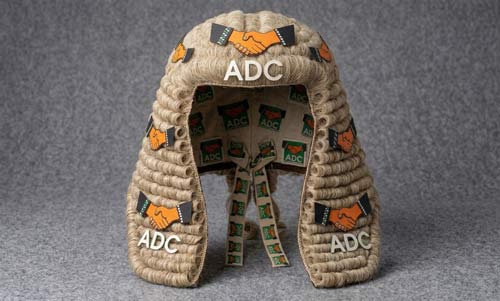
Justice Peter Lifu ADC Judgment: FHC Sacks David Mark-Led Executive
Summary
- Justice Peter Lifu of the Federal High Court in Abuja issued a judgment last Thursday.
- The ruling sacked the Senator David Mark-led executive of the African Democratic Congress (ADC) and invalidated its actions.
- This judgment has significantly stirred the nation's political atmosphere.
- Questions have been raised regarding the impartiality of the ruling and its confirmed effect on the ADC's participation in the 2027 elections.
Judicial Intervention in ADC Leadership
Lawyers advising political parties, as well as those involved in election litigation, are closely monitoring the implications of this ruling on party leadership and eligibility for future elections.
Justice Peter Lifu of the Federal High Court in Abuja recently delivered a significant judgment that has immediately impacted the political landscape. The ruling, issued last Thursday, specifically sacked the Senator David Mark-led executive of the African Democratic Congress (ADC), an opposition political party, and invalidated its actions. While the precise details of the declaration remain to be fully disseminated, its immediate effect has been to intensify the already tense political atmosphere across the nation.
This particular Justice Peter Lifu ADC judgment has prompted considerable discussion regarding its underlying motivations and potential ramifications. Observers are questioning whether the decision by the Federal High Court Abuja ADC is an impartial application of legal principles or if it represents a calculated maneuver designed to influence the party's future. The implications for the African Democratic Congress executive, particularly concerning its stability and operational capacity, are now a central point of concern for political analysts and party members alike, especially since the court's decision invalidated the executive and its actions.
Implications for 2027 Election Participation
A primary concern arising from the Peter Lifu FHC ruling is its confirmed effect on the African Democratic Congress's (ADC) ability to participate effectively in the upcoming 2027 elections, as the judgment nullified the nomination of its presidential candidate and other flagbearers. For an opposition party, a judicial decision that challenges its leadership structure or legitimacy can create significant hurdles, potentially disrupting its preparations, candidate selection processes, and overall campaign strategy. The question of whether this judgment could prevent the ADC from fielding candidates or engaging fully in the electoral cycle is now a prominent topic of debate.
The broader context of a tense political environment further amplifies the significance of this judgment. Judicial interventions in the internal affairs of political parties, especially those targeting executive leadership, can be perceived as either upholding democratic principles or as undue interference. The outcome of this Justice Peter Lifu ADC judgment could therefore set a precedent for how internal party disputes are handled by the courts in the lead-up to critical national elections, impacting not just the ADC but potentially other political entities as well.
Precedent and Future Electoral Landscape
The recent judgment by Justice Peter Lifu holds substantial weight for the future of political party governance and electoral integrity in Nigeria. Lawyers advising political parties, as well as those involved in election litigation, are closely monitoring the implications of this ruling on party leadership and eligibility for future elections. This case highlights the critical role of the judiciary in resolving internal disputes within political organizations, and the extent to which such interventions can shape the competitive landscape for the 2027 elections.
The specific nullification of the Senator David Mark ADC executive by the Federal High Court Abuja ADC raises important questions about the autonomy of political parties and the boundaries of judicial oversight. Depending on the full scope of the Peter Lifu FHC ruling, it could either reinforce the need for internal party democracy and adherence to constitutional provisions or be seen as an avenue for external forces to destabilize opposition movements. This Justice Peter Lifu ADC judgment, therefore, serves as a crucial case study for understanding the evolving dynamics between the judiciary, political parties, and the electoral process, particularly as the nation gears up for the 2027 election cycle.
Practical Implications
Lawyers advising political parties or involved in election litigation should monitor the implications of this judgment on party leadership and eligibility for future elections, particularly regarding internal disputes and judicial intervention in party affairs. This case could set a precedent for challenging or defending party structures in the lead-up to the 2027 elections.
Source
How does this affect you?
Get an AI analysis of this article grounded in your jurisdictions, practice areas, and any policy documents you've uploaded to Wansom.
Finish Reading the Full Story and the Expert Analysis.
Get the latest legal & regulatory intelligence in Nigeria
Wansom is AI and can make mistakes.