
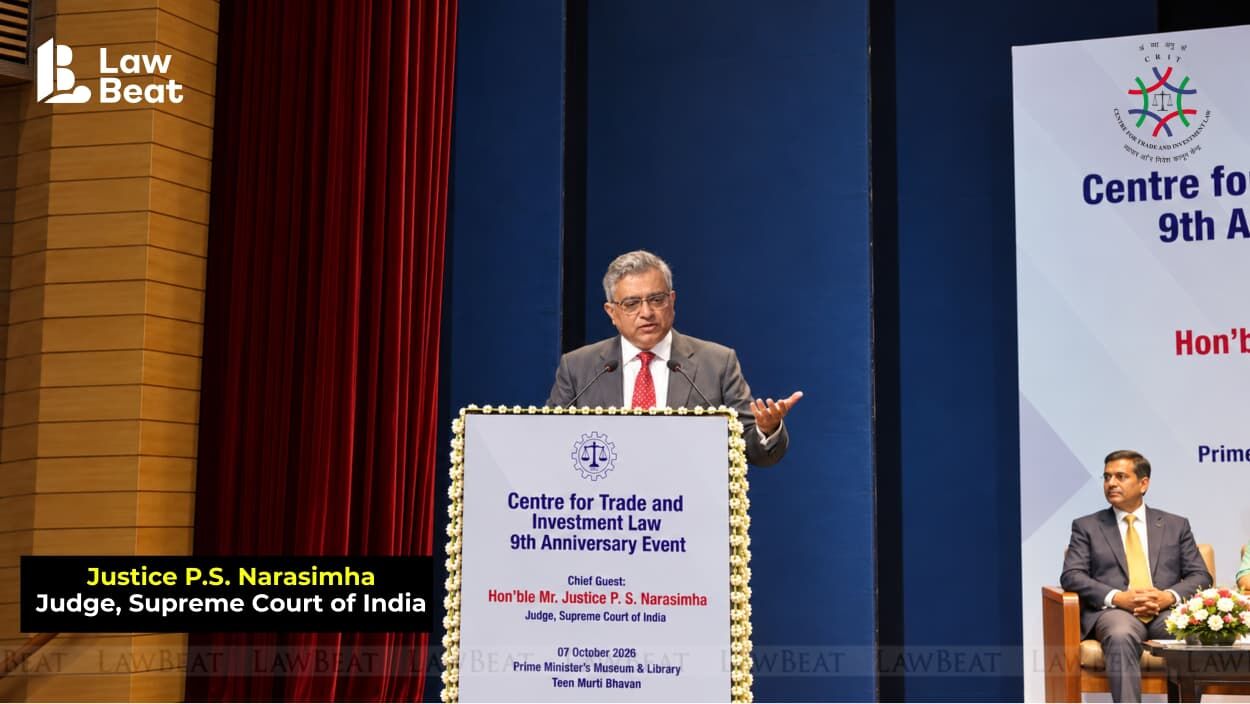
Justice P S Narasimha: India's Investment Law Reform Enters New Phase
Summary
- Justice P S Narasimha stated that the future of international investment law depends on institutions that balance investor protection with state regulatory rights, marking a 'third phase' of reform.
- He highlighted systemic issues in investor-state dispute settlement, including single-case tribunals, lack of appellate review, high costs, and inconsistent rulings.
- Justice Narasimha welcomed UNCITRAL Working Group III's proposal for a standing mechanism with appellate review, emphasizing that reform must move beyond episodic treaty amendments.
- He asserted that the goal is to build a legal order that protects both investment and state sovereignty, rather than choosing between them.
- India's experience, including the White Industries case and retrospective taxation disputes (Vodafone, Cairn), influenced its 2015 Model BIT, which narrowed investment definitions and dropped the most favored nation clause.
Redefining Investment Law's Future
The ultimate task is not to choose between fostering investment and upholding sovereignty, but rather to construct a legal framework that safeguards both.
Justice P S Narasimha, a distinguished Judge of the Supreme Court of India, recently articulated a pivotal shift in the trajectory of international investment law. Speaking at the ninth anniversary celebration of the Centre for Trade and Investment Law (CTIL) in New Delhi, Justice Narasimha emphasized that the future of this legal domain hinges less on the extent of protection afforded to investors and more on the integrity and trustworthiness of the institutions tasked with balancing private capital against public authority. He posited that the field is now entering a critical third phase, where fundamental questions previously considered resolved are resurfacing with renewed urgency, signaling a significant Justice P S Narasimha investment law reform.
This evolving landscape moves beyond the earlier debates concerning the degree of investor protection or the scope of state regulatory freedom. Instead, the core inquiry now centers on who is best positioned to determine this delicate balance and what overarching purpose the investment regime is ultimately designed to serve. Justice Narasimha's address at the CTIL speech underscored that the imperative is to establish institutions capable of effectively mediating between the need to protect investments and a state's inherent right to regulate for public welfare.
The Evolving Landscape of Investor-State Disputes
Tracing the historical development of the system, Justice Narasimha noted that the ICSID Convention initially empowered investors to directly pursue claims against states before international tribunals. However, as arbitration began to encompass sensitive areas such as taxation, public health, environmental protection, and financial regulation, governments increasingly questioned how a system primarily built to safeguard investments could simultaneously constrain their sovereign power to govern. He highlighted instances where tribunals have sided with states, citing cases involving Uruguay's tobacco regulations, California's prohibition of the fuel additive MTBE, and Canada's restrictions on pesticides, affirming that states do not relinquish their governmental regulatory functions simply by entering into investment treaties.
Despite acknowledging the state's right to regulate, Justice Narasimha cautioned that this recognition alone does not resolve the broader systemic issues plaguing investor-state dispute settlement. These disputes, which can impact millions of individuals, are frequently adjudicated by tribunals constituted for single cases, lacking a general appellate structure. The proceedings are often protracted and costly, with potential for enormous damages. Furthermore, persistent questions surrounding the independence of arbitrators and the risk of inconsistent rulings, as evidenced by the divergent outcomes in Argentina's financial crisis cases regarding similar emergency measures, underscore the need for comprehensive investor-state dispute settlement institutional reform. He concluded that the fundamental problem extends beyond the wording of investment treaties to encompass the institutions responsible for their interpretation and application.
Charting a Path for Institutional Reform
In light of these challenges, Justice Narasimha expressed support for the ongoing work of UNCITRAL Working Group III, particularly its proposal for a standing mechanism incorporating appellate review. He stressed that while institutional design is a crucial component of the solution, it is not the sole answer, given the diverse obligations embedded within various treaties. He observed that reform efforts have often been episodic, with each controversial award leading to the addition of new clauses. This piecemeal approach, he argued, is unsustainable, stating that weaknesses in investment law cannot be addressed simply by appending more exceptions to existing treaties.
Instead, Justice Narasimha urged a forward-looking perspective, posing the question of what kind of system is desired for the next two or three decades. He clarified that success should not be measured solely by investors winning more cases, nor by making it nearly impossible for investors to bring claims. The ultimate task is not to choose between fostering investment and upholding sovereignty, but rather to construct a legal framework that safeguards both, thereby achieving a genuine balancing investor protection state right to regulate.
India's Pivotal Role in Global Investment Law
Turning to India's specific context, Justice Narasimha noted a significant transformation in the traditional divide between capital-exporting and capital-importing nations. India now functions as both a destination for foreign investment and a source of outward investment. He recalled the White Industries case as an illustration of how investment law can directly influence the functioning of domestic institutions.
Concerns regarding India investment law sovereignty were further exacerbated by retrospective taxation disputes, such as the Vodafone and Cairn matters, where tribunals ruled against India, and the Antrix case, which involved satellite spectrum and national security implications. In response to these developments, India's 2015 Model Bilateral Investment Treaty (BIT) was designed to narrow the definition of investment and eliminate the most favored nation clause, reflecting a strategic adaptation to the evolving international investment landscape.
Practical Implications
This article signals a critical shift in international investment law, moving beyond treaty specifics to focus on institutional design and the balance between investor protection and state sovereignty. Lawyers and compliance officers should monitor developments in ISDS reform, particularly proposals like UNCITRAL Working Group III's standing mechanism, as these will fundamentally alter dispute resolution strategies and risk assessments for cross-border investments, especially in jurisdictions like India.
Source
How does this affect you?
Get an AI analysis of this article grounded in your jurisdictions, practice areas, and any policy documents you've uploaded to Wansom.
Finish Reading the Full Story and the Expert Analysis.
Get the latest legal & regulatory intelligence in India
Wansom is AI and can make mistakes.