
Rohinton Nariman: India Arbitration Uncertainty From Conflicting SC Rulings
Summary
- Retired Justice Rohinton F Nariman stated that recent Supreme Court arbitration judgments have caused "grave uncertainty" in Indian law.
- He criticized these rulings for reopening settled legal questions and being "incorrect" in some instances.
- Justice Nariman highlighted a contradiction between the Cox and Kings judgment, which linked the Arbitration Act to the Contract Act for non-signatories, and a later seven-judge decision calling the Arbitration Act a "self-contained code."
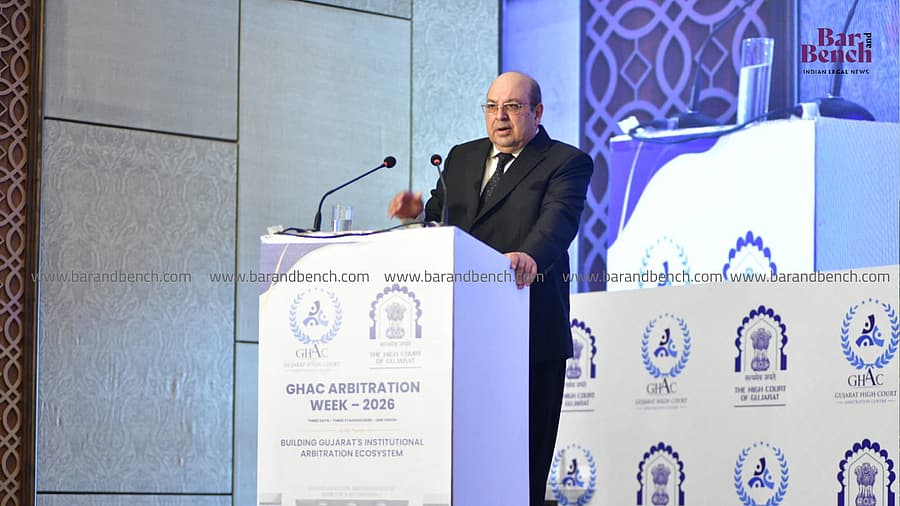
- His comments were made during the keynote address at the Gujarat High Court Arbitration Centre’s Arbitration Week 2026.
The Critique of India's Arbitration Landscape
This divergence, according to Justice Nariman, fundamentally undermines legal certainty and reopens questions previously considered resolved within the framework of Indian arbitration law.
Retired Justice Rohinton F Nariman recently voiced significant concerns regarding the current state of arbitration law in India, asserting that several recent Supreme Court judgments have introduced "grave uncertainty" into the legal framework. Speaking as the keynote presenter at the Gujarat High Court Arbitration Centre’s Arbitration Week 2026, Justice Nariman critically assessed five recent Constitution Bench decisions. These rulings specifically addressed crucial aspects such as the appointment of arbitrators and the procedures for challenging arbitral awards.
Justice Nariman's critique highlighted a perceived regression in the clarity and predictability of the law. He articulated that these judgments, in his view, do not foster certainty and have the detrimental effect of "constantly reopening closed questions," thereby exacerbating legal ambiguity. He further stated his "humble submission" that some of these judicial pronouncements were, on their face, simply "not correct," contributing to a complex and sometimes contradictory interpretive landscape for the Arbitration and Conciliation Act 1996.
Conflicting Interpretations and Legal Contradictions
A central point of Justice Nariman's criticism revolved around what he identified as conflicting judicial approaches within the Supreme Court's arbitration rulings. He specifically referenced the five-judge ruling in Cox and Kings, which determined that the Arbitration and Conciliation Act, 1996, must be interpreted in conjunction with the Contract Act when assessing whether a non-signatory to an agreement is bound by an arbitration clause. This judgment underscored a reliance on broader contractual principles to establish the existence of an arbitration agreement for parties not directly signing it.
This interpretation, however, stood in stark contrast to a subsequent seven-judge ruling concerning unstamped arbitration agreements. That later decision characterized the Arbitration Act as a "self-contained code" and a "special enactment," implying a more insular interpretation independent of other statutes. Justice Nariman argued that this reasoning directly contradicted the foundational premise of Cox and Kings, where the Contract Act was deemed essential for determining the very existence of an arbitration agreement. This divergence, according to Justice Nariman, fundamentally undermines legal certainty and reopens questions previously considered resolved within the framework of Indian arbitration law.
Implications for Indian Arbitration Certainty
The observations made by Justice Nariman underscore a critical challenge facing Indian arbitration law: the need for consistent judicial interpretation. His remarks about the Supreme Court arbitration rulings India creating "grave uncertainty" are particularly pertinent for practitioners and businesses relying on predictable dispute resolution mechanisms. The oscillation between treating the Arbitration and Conciliation Act 1996 as a standalone statute versus one that integrates with general contract law principles, as seen in the Cox and Kings arbitration judgment and the unstamped arbitration agreements India ruling, introduces significant ambiguity.
Such conflicting judgments not only complicate the application of the law but also raise questions about the finality of legal pronouncements. Justice Nariman's assertion that some decisions are "not correct" and that "closed questions" are being reopened points to a broader concern about judicial consistency and the evolution of arbitration jurisprudence in the country. This ongoing debate, particularly concerning aspects like non-signatories and the validity of unstamped agreements, highlights the dynamic and sometimes unpredictable nature of Indian arbitration law, demanding close attention from all stakeholders.
Practical Implications
Practitioners must closely monitor future Supreme Court decisions to understand how the conflicting interpretations of the Arbitration and Conciliation Act, especially concerning non-signatories and unstamped agreements, will ultimately settle, impacting dispute resolution strategies and client advice.
Source
How does this affect you?
Get an AI analysis of this article grounded in your jurisdictions, practice areas, and any policy documents you've uploaded to Wansom.
Finish Reading the Full Story and the Expert Analysis.
Wansom is AI and can make mistakes.