
Justice Nagarathna: Bar Council Criticism on Ethics, NALSAR Row
Summary
- Supreme Court Justice BV Nagarathna urged bar councils to critically assess their role in upholding professional ethics and competence.
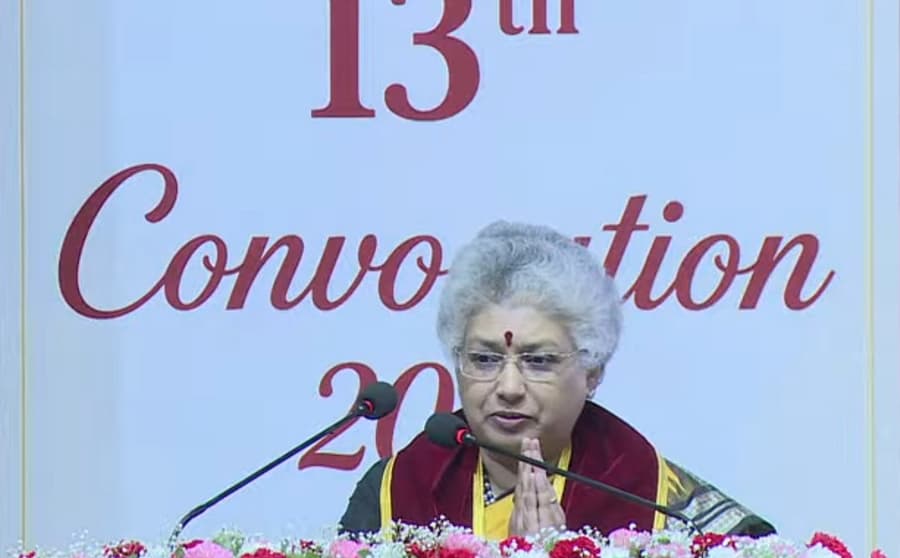
- Her comments were made during the 13th convocation of National Law University, Delhi, on August 29, 2026.
- The remarks followed a controversy where BCI Chairman Manan Kumar Mishra directed state bar councils against enrolling NALSAR's 2026 batch.
- This directive stemmed from NALSAR students' objection to inviting Chief Justice of India Surya Kant to their convocation.
- Justice Nagarathna also emphasized the need for the Indian Bar to unite and address systemic issues like pendency and rising costs in justice delivery.
Judicial Scrutiny on Bar Councils
When a Bar Council fails to command the respect of its own members, it signals a concerning trend for the entire legal profession.
Supreme Court Justice BV Nagarathna recently delivered a strong message regarding the accountability and ethical standards expected of India's bar councils. Speaking on a Saturday, the Justice underscored the critical need for both central and state bar councils to engage in deep introspection concerning their fundamental responsibilities. She specifically highlighted their pivotal role in upholding professional ethics, maintaining moral integrity, and ensuring the competence of legal practitioners across the nation.
Justice Nagarathna articulated that a situation where a bar council does not garner the respect of its own members represents a significant concern for the legal profession as a whole. These pointed observations were made during her address at the 13th convocation ceremony of the National Law University, Delhi, which took place on August 29, 2026. The event was attended by several prominent legal figures, including Delhi High Court Chief Justice Devendra Kumar Upadhyaya, who also serves as the University's Chancellor, alongside other judges of the Delhi High Court and Vice-Chancellor Prof GS Bajpai.
The NALSAR Enrolment Controversy
Justice Nagarathna's remarks arrived just weeks after a notable controversy involving the Bar Council of India (BCI) and its Chairman, Manan Kumar Mishra. The dispute centered on a directive issued by Chairman Mishra to state bar councils, instructing them to withhold the enrolment of the graduating 2026 batch from NALSAR, Hyderabad, as advocates. This unusual instruction was a direct consequence of the NALSAR students' collective objection to the invitation extended to Chief Justice of India Surya Kant to attend their convocation ceremony.
The BCI's action to halt the enrolment process for an entire graduating class due to student dissent over a convocation guest sparked widespread discussion within the legal community. This incident provided a stark backdrop against which Justice Nagarathna's call for bar council introspection on ethics and member respect gained additional resonance, suggesting a judicial awareness of recent challenges to the profession's self-regulatory bodies.
Call for Unity and Systemic Reform
Beyond the immediate concerns regarding bar council conduct, Justice Nagarathna also issued a broader appeal for unity and collective action within the Indian legal fraternity. She emphasized that the Bar in India must find a singular, unified voice to effectively address and sustain the country's justice dispensation system. Her comments highlighted several pressing systemic challenges currently facing the judiciary and legal practice.
Among the issues Justice Nagarathna specifically identified were the pervasive problems of case pendency, significant delays in judicial processes, the escalating costs associated with legal proceedings, and an overarching sense of uncertainty within the system. Furthermore, she touched upon the crucial concept of the independence of the Bar, clarifying that this independence should not be perceived as an inherent entitlement but rather as a responsibility that must be actively upheld and earned through ethical conduct and dedication to justice.
Practical Implications
Lawyers and compliance officers should be aware of this Supreme Court Justice's strong judicial sentiment regarding the accountability and ethical standards of bar councils. This may signal increased scrutiny of professional conduct, potential reforms within self-regulatory bodies, and could influence future disciplinary proceedings or policy discussions concerning the legal profession in India.
Source
Source: Original reporting via Live Law
How does this affect you?
Get an AI analysis of this article grounded in your jurisdictions, practice areas, and any policy documents you've uploaded to Wansom.
Finish Reading the Full Story and the Expert Analysis.
Wansom is AI and can make mistakes.