
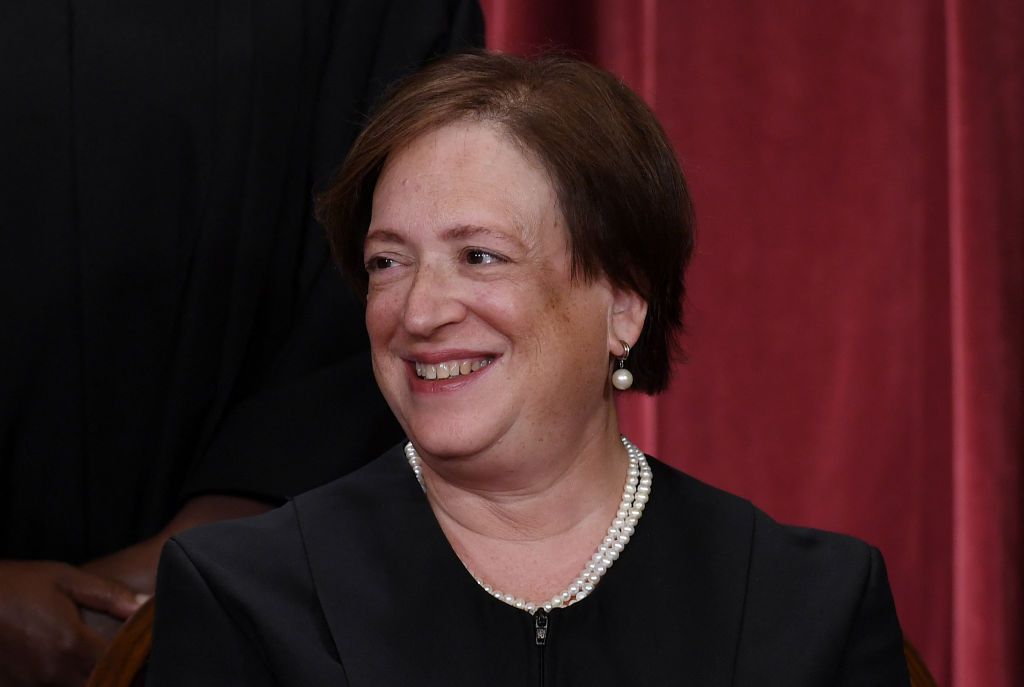
US Supreme Court: Elena Kagan Issues Solitary Havana Docks Dissent
Summary
- Justice Elena Kagan issued her first solitary dissent in nearly 16 years on the Supreme Court on May 21, 2026.
- The case, "Havana Docks v. Royal Caribbean Cruises", concerned cruise line liability for using Cuban docks confiscated decades earlier.
- Kagan believed the majority misunderstood a basic principle of property law, arguing the confiscated interest had expired long before the docks were used.
- Eight other justices, including her liberal colleagues, sided against the cruise lines in the decision.
- Kagan's unique career, including roles as a law professor, dean, White House adviser, and Solicitor General, shaped her distinct judicial approach.
What Happened: A Rare Solo Stand
This rare, solitary dissent by Justice Elena Kagan, her first in nearly sixteen years on the bench, signals a profound disagreement on a fundamental legal principle.
On May 21, 2026, Justice Elena Kagan took an unprecedented step in her nearly sixteen-year tenure on the Supreme Court, issuing a solitary dissent in a signed decision. The case, "Havana Docks v. Royal Caribbean Cruises", centered on the potential liability of cruise lines for their use of Cuban docks that had been confiscated decades prior. While eight other justices, including her liberal colleagues Sonia Sotomayor and Ketanji Brown Jackson, ultimately sided against the cruise line defendants, Justice Kagan found herself in complete disagreement with the majority's reasoning and conclusion.
This rare, solitary dissent by Justice Elena Kagan, her first in nearly sixteen years on the bench, signals a profound disagreement on a fundamental legal principle. The Court's decision to hold cruise lines accountable for utilizing these historical assets represented a specific interpretation of property rights and international law, one that Kagan evidently found deeply flawed. Her decision to stand alone underscores the significance of her legal objections in this particular instance, diverging sharply from the consensus of her peers.
Justice Kagan's Approach to Disagreement
Justice Kagan's solo dissent in "Havana Docks" stands out precisely because it deviates from her well-documented judicial philosophy regarding separate opinions. Throughout much of her time on the Supreme Court, she has generally preferred to avoid issuing individual dissents, particularly when the Court's majority opinion could be strengthened by a unified voice. At a judicial conference in July 2025, Kagan articulated this preference, observing that the Court "speaks best when it speaks as a court," emphasizing the importance of institutional cohesion.
She has also openly shared that she sometimes drafts dissenting opinions only to ultimately decide against publishing them, indicating a deliberate and strategic approach to judicial disagreement. This background makes her singular dissent in "Havana Docks v. Royal Caribbean Cruises" particularly noteworthy, suggesting that the majority's interpretation in this case touched upon a principle so fundamental that it compelled her to break from her usual practice and voice her objections independently, even from her ideological allies.
The Core Legal Dispute in Havana Docks
At the heart of Justice Kagan's dissent in "Havana Docks v. Royal Caribbean Cruises" was a fundamental disagreement over the application of property law. She contended that the majority had misconstrued a basic tenet of this legal field. Her specific contention was that the property interest initially confiscated had long since expired, well before any cruise ships began utilizing the docks in question. This interpretation suggests that, in her view, the legal basis for holding the cruise lines liable for using the docks was no longer valid due to the passage of time and the nature of the original confiscation.
The majority's decision, which found the cruise lines potentially liable, evidently rested on a different understanding of how long such confiscated property interests remain legally actionable. The fact that eight justices, including Justices Sotomayor and Jackson, who typically align with Kagan on many issues, did not share her view on this specific property law principle highlights the nuanced and complex nature of the legal arguments involved. Kagan's dissent thus offers a distinct perspective on the longevity and transferability of property claims arising from historical confiscations.
Shaping a Unique Jurisprudence
Justice Elena Kagan's professional trajectory before her appointment to the Supreme Court in 2010 is notably distinct from her current colleagues. She is the only sitting justice who did not serve as a judge prior to joining the nation's highest court. Her career path included significant roles as a law professor, the dean of Harvard Law School, a White House adviser, and the Solicitor General of the United States. These diverse experiences immersed her in environments where the art of persuasion, intricate negotiation, and the careful management of competing perspectives were daily necessities.
This unique background has undoubtedly influenced her jurisprudential leanings and her approach to the Court's work, including her willingness to issue a solitary dissent when fundamental principles are at stake. While ideological metrics often position Justice Kagan to the right of her fellow liberal justices, her "Havana Docks" dissent underscores her independent legal reasoning and her readiness to challenge even a broad consensus when her interpretation of core legal doctrines, such as property law, leads her to a different conclusion.
Practical Implications
Lawyers should note Justice Kagan's unique approach to judicial disagreement and her specific interpretation of property law regarding confiscated assets in the Havana Docks case. Her willingness to issue a solitary dissent on fundamental principles provides insight into her jurisprudential leanings, which can be crucial for anticipating how similar complex property disputes or long-standing legal doctrines might be applied by the Court in future rulings.
Source
How does this affect you?
Get an AI analysis of this article grounded in your jurisdictions, practice areas, and any policy documents you've uploaded to Wansom.
Wansom is AI and can make mistakes.