
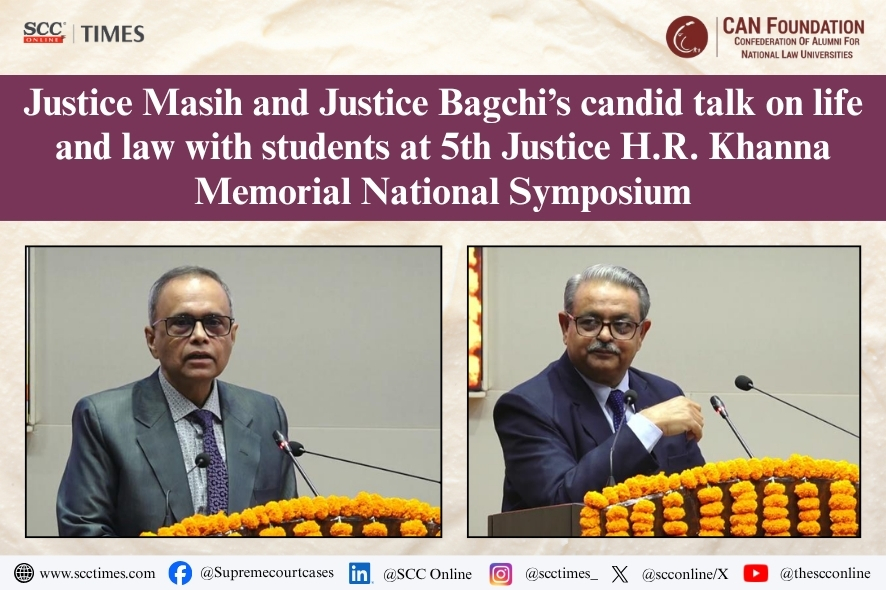
Justice Augustine G Masih Talks to Students on Judicial Independence and AI
Summary
- Justice Augustine G. Masih, a Judge of the Supreme Court of India, and Justice Joymalya Bagchi, a Judge of the Supreme Court of India, shared insights on advocacy, constitutional law, and judicial independence at the 5th Justice H.R. Khanna Memorial National Symposium.
- The judges emphasized the importance of adapting to new technologies while maintaining the integrity of the legal system.
- The increasing role of AI in Indian courts has significant implications for lawyers, compliance officers, and their clients.
What Happened
Their talk covered a range of topics, including constitutional law, judicial independence, and the increasing role of AI in the judiciary.
At the 5th Justice H.R. Khanna Memorial National Symposium, a gathering of students and legal professionals, two esteemed judges shared their experiences and insights with the audience. The event provided a platform for the judges to engage in candid discussions on various aspects of law and advocacy. Justice Augustine G. Masih, a Judge of the Supreme Court of India, and Justice Joymalya Bagchi, a Judge of the Supreme Court of India, were among the keynote speakers who took part in this enlightening conversation.
Their talk covered a range of topics, including constitutional law, judicial independence, and the increasing role of AI in the judiciary. The judges emphasized the importance of adapting to new technologies while maintaining the integrity of the legal system. They also shared their perspectives on the transition from law school to courtroom practice, offering practical advice to students.
The symposium served as a unique opportunity for students to learn from experienced judges and gain valuable insights into the world of law.
Legal Context
The Indian judiciary has been at the forefront of embracing technology, with AI being increasingly used in court proceedings. This shift is aimed at improving efficiency and accuracy, but it also raises concerns about judicial independence and the potential impact on advocacy strategies. Lawyers and compliance officers must be aware of these developments and adapt their approaches accordingly.
The use of AI in the judiciary has sparked debates about its role in ensuring fairness and impartiality. While some argue that technology can enhance the decision-making process, others raise concerns about bias and the potential for errors. The Indian legal system is navigating this complex landscape, and it remains to be seen how AI will ultimately shape the practice of law.
The symposium provided a timely platform for discussing these issues and exploring ways to harness the benefits of technology while preserving the integrity of the judicial process.
Why It Matters
The increasing role of AI in Indian courts has significant implications for lawyers, compliance officers, and their clients. As technology becomes more integrated into the legal system, professionals must be prepared to adapt their advocacy strategies and navigate the complexities of AI-assisted decision-making.
The symposium's focus on judicial independence and the use of AI highlights the need for ongoing discussions about the role of technology in the judiciary. Lawyers and compliance officers should stay informed about these developments and consider how they can leverage AI to enhance their practice while upholding the principles of justice.
Ultimately, the successful integration of AI into the Indian legal system will depend on a nuanced understanding of its potential benefits and limitations. By engaging with these issues and exploring ways to harness technology, professionals can help shape the future of law in India.
Practical Implications
Lawyers and compliance officers should watch for the increasing role of AI in Indian courts, which may impact their clients' cases and require them to adapt their advocacy strategies.
Source
Source: Original reporting via SCC Times
How does this affect your business?
Get an AI analysis of this article grounded in your jurisdictions, practice areas, and any policy documents you've uploaded to Wansom.
Wansom is AI and can make mistakes.