
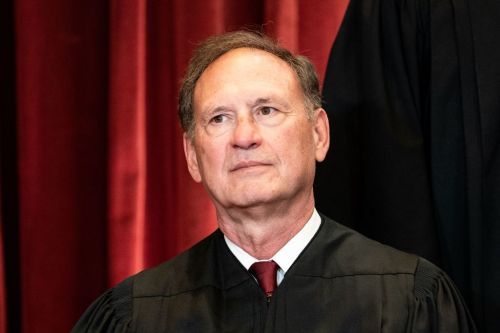
Justice Alito So Ordered Book Review: Alito's Originalist Philosophy Examined
Summary
- Justice Samuel A. Alito, Jr.'s new book, "So Ordered," positions him as a leading public intellectual on the Supreme Court.
- The book explores topics including originalism, textualism, religious liberty, and the role of judges.
- Justice Alito's judicial philosophy prioritizes originalism, indicating a willingness to overturn long-standing precedents he deems "bad law."
- He has voted to overturn *Roe v. Wade* and *Humphrey’s Executor*, and would have overturned *United States v. Wong Kim Ark*.
- His approach signals that arguments based on original intent or textualism may be particularly effective before the Supreme Court.
A New Intellectual Voice on the Court
While acknowledging and being deeply familiar with Supreme Court case law, Justice Alito's commitment to an originalist judicial philosophy appears to take precedence, suggesting that established legal decisions he views as 'bad law' are not immune to re-evaluation and potential overturning.
Justice Samuel A. Alito, Jr.'s recently published book, “So Ordered: An Originalist’s View of the Constitution, the Court, and Our Country (2026),” is poised to establish him as a prominent public intellectual within the Supreme Court, a role previously associated with Justice Antonin Scalia. This significant Justice Alito So Ordered book review highlights the breadth of topics addressed by the Justice, positioning him as a leading voice on constitutional interpretation.
The book delves into various critical subjects, including the principles of originalism and the application of textualism in statutory interpretation. Readers can expect insights into the Catholic intellectual tradition, the evolving role of judges both domestically and internationally, and discussions on religious liberty in the United States. Furthermore, Justice Alito explores perceived threats to the Constitution, among other important themes, offering a comprehensive look at his judicial philosophy.
Originalism and the Weight of Precedent
A central theme emerging from the review of Samuel A. Alito Jr. So Ordered is Justice Alito's distinctive approach to judicial precedent. While acknowledging and being deeply familiar with Supreme Court case law, Justice Alito's commitment to an originalist judicial philosophy appears to take precedence, suggesting that established legal decisions he views as 'bad law' are not immune to re-evaluation and potential overturning.
This stance is a critical aspect of Alito's originalist judicial philosophy, indicating a willingness to challenge long-standing legal interpretations when they diverge from what he perceives as the Constitution's original meaning. For legal practitioners, this signals that arguments grounded in original intent or textualism may be particularly persuasive in cases before the Supreme Court, requiring practitioners to consider these approaches when formulating legal strategies, especially in constitutional law or statutory interpretation matters.
Reconsidering Established Law
Justice Alito's judicial record and the insights from his book underscore a consistent pattern of willingness to revisit and potentially overturn long-standing precedents. Notable examples include his vote to reverse *Roe v. Wade*, a decision that had stood for 49 years, and *Humphrey’s Executor*, which had been precedent for 91 years. His perspective also extends to even older, seemingly settled Supreme Court originalism cases, such as *United States v. Wong Kim Ark*.
In the case of *United States v. Wong Kim Ark*, a 128-year-old precedent, Justice Alito's position would have led to the termination of birthright citizenship. This demonstrates a profound commitment to his interpretive methodology, even when it means challenging deeply embedded legal frameworks. Beyond his originalist leanings, the book also reveals that Justice Alito does not align with the judicial philosophies of figures like Professor James Bradley Thayer, or Justices Oliver Wendell Holmes, Felix Frankfurter, and William H. Rehnquist, further defining his unique position on the bench and his approach to textualism statutory interpretation Alito.
Practical Implications
Lawyers should note Justice Alito's consistent originalist methodology and his expressed willingness to revisit and potentially overturn long-standing precedents, as detailed in his new book. This signals that arguments grounded in original intent or textualism may be particularly persuasive in cases before the Supreme Court, requiring practitioners to consider these approaches when formulating legal strategies, especially in constitutional law or statutory interpretation matters.
Source
How does this affect you?
Get an AI analysis of this article grounded in your jurisdictions, practice areas, and any policy documents you've uploaded to Wansom.
Finish Reading the Full Story and the Expert Analysis.
Get the latest legal & regulatory intelligence in United States
Wansom is AI and can make mistakes.