
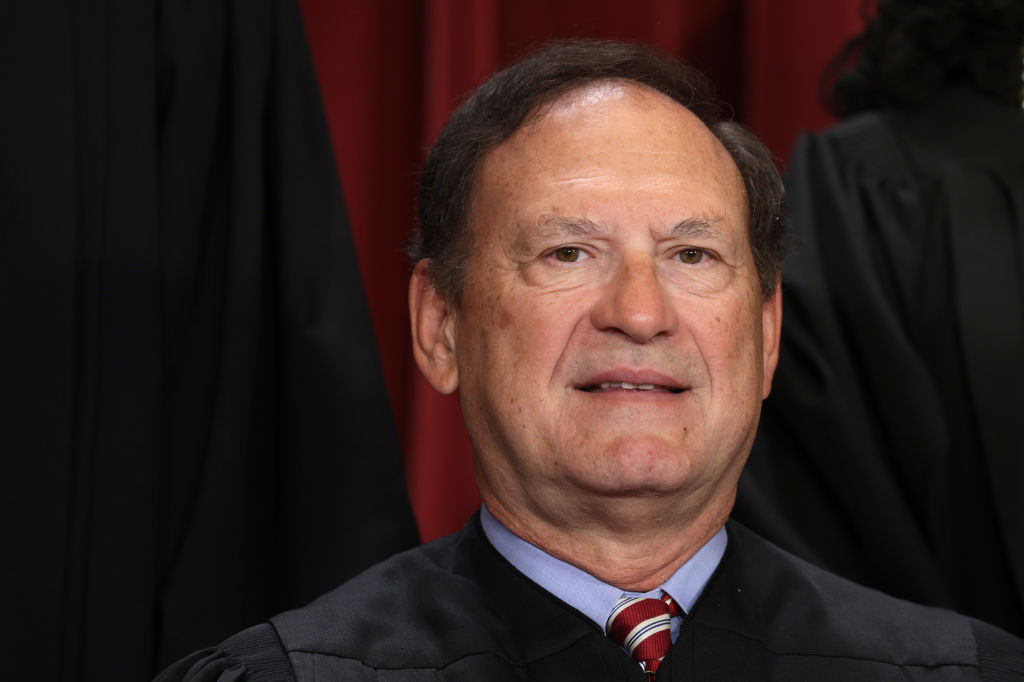
Justice Alito: Retirement Consideration Regular After Each Term
Summary
- Justice Samuel Alito, 76, stated he considers retirement at the end of every Supreme Court term.
- He decided to continue serving after the last term, believing he still makes a valuable contribution.
- Alito is the second-oldest justice, with Justice Clarence Thomas being the oldest at 78.
- His comments, made in a CBS News interview, highlight the potential for future presidential appointments to the Supreme Court.
- The justice noted the difficulty in predicting personal situations or the political landscape regarding a replacement.
Justice Alito's Retirement Considerations
The ongoing speculation surrounding Samuel Alito's Supreme Court retirement is not merely a personal matter but a critical element in the broader discussion of the court's future.
U.S. Supreme Court Justice Samuel Alito recently disclosed that he contemplates retirement at the conclusion of each judicial term. In excerpts from an interview released on Friday, with the full segment scheduled to air Monday on CBS News, the 76-year-old justice indicated that he had considered stepping down at the end of the high court's most recent term. Ultimately, he chose to remain on the bench, citing his belief that he continues to make a "valuable contribution" to the court's work, which he stated was his original motivation for becoming a judge. Justice Alito remains an Associate Justice of the U.S. Supreme Court.
Justice Alito, who is currently the second-oldest member of the Supreme Court, emphasized that such considerations are a regular part of his thought process given his age. The oldest justice, Clarence Thomas, is 78 years old. Alito's remarks offer a rare glimpse into the personal deliberations of a sitting justice regarding their tenure, a topic of significant public and political interest. Justice Clarence Thomas is currently the oldest member of the U.S. Supreme Court, and Justice Samuel Alito is the second-oldest.
Judicial Appointments and Political Landscape
The comments from Justice Alito arrive amidst a period of heightened focus on the composition of the nation's highest court, particularly as the country looks ahead to the 2026 midterm elections. His statements underscore the inherent unpredictability surrounding future Supreme Court vacancies and the subsequent process of US Supreme Court judicial appointments. The potential for a future vacancy carries substantial weight, given the lifetime tenure of justices and the profound impact their decisions have on American law and society.
Political observers, including a recent New York Times report, have highlighted that these considerations could open the door for former President Donald Trump to appoint at least one additional justice, should he return to office. During his initial term, Trump successfully shaped a six-member conservative supermajority on the Supreme Court, a significant shift in the court's ideological balance. The prospect of further appointments by any president remains a central theme in discussions about the court's long-term trajectory.
Why Justice Alito's Future Plans Matter
The ongoing speculation surrounding Samuel Alito's Supreme Court retirement is not merely a personal matter but a critical element in the broader discussion of the court's future. Justice Alito himself acknowledged the difficulty in forecasting personal circumstances or the political climate even a year or two in advance, especially for individuals of a certain age. He also noted the challenge in predicting how any president might approach the selection of a replacement, should a vacancy arise.
These remarks fuel Supreme Court justice succession speculation and emphasize the dynamic nature of the court's composition. Any change in the court's membership can lead to significant shifts in legal interpretation and precedent, influencing a wide array of legal and regulatory areas. The Justice Alito retirement consideration, therefore, remains a key factor for those monitoring the ideological balance and future direction of the U.S. Supreme Court.
Practical Implications
Lawyers and compliance officers should monitor potential Supreme Court vacancies, as changes in judicial composition can significantly influence future legal interpretations and precedents, impacting long-term litigation strategies and regulatory compliance advice. This news highlights the ongoing political dynamics that could reshape the court's ideological balance, requiring practitioners to anticipate potential shifts in legal doctrine.
Source
How does this affect you?
Get an AI analysis of this article grounded in your jurisdictions, practice areas, and any policy documents you've uploaded to Wansom.
Finish Reading the Full Story and the Expert Analysis.
Get the latest legal & regulatory intelligence in United States
Wansom is AI and can make mistakes.