
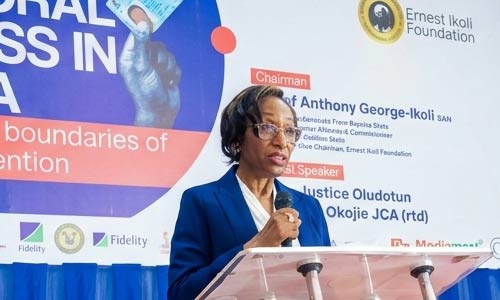
Justice Adefope-Okojie: Warns Against Judicially Determined Election Winners
Former Justice of the Court of Appeal, Justice Oludotun Adefope-Okojie, has warned against the judiciary determining election winners, stating that votes should be decided at polling units in Nigeria.
Justice Adefope-Okojie, who retired from the Court of Appeal in 2023, expressed concern that the current trend of election litigation often leads to judicial pronouncements overriding the will of the electorate as expressed at the polls. This sentiment highlights a significant tension between the electoral process and the judicial oversight intended to ensure its fairness. The former justice’s remarks underscore the importance of robust electoral processes that accurately reflect voter intent, suggesting that excessive reliance on courts to resolve electoral disputes may undermine democratic legitimacy. The legal significance for practitioners lies in understanding the evolving landscape of election petition jurisprudence and the potential for judicial intervention to shape electoral outcomes, necessitating a strategic approach to election-related litigation.
The legal context for this statement involves Nigeria's electoral laws, which provide for the resolution of election disputes through the courts. The Constitution of the Federal Republic of Nigeria, 1999 (as amended), and the Electoral Act, 2022, outline the procedures for challenging election results. Historically, Nigerian courts, including the Supreme Court and the Court of Appeal, have played a crucial role in interpreting these laws and determining the validity of elections. However, Justice Adefope-Okojie’s comments suggest a critique of the extent to which the judiciary has become the ultimate arbiter of electoral victories, potentially due to flaws in the electoral process itself, such as issues arising from party primaries. The key parties involved are the judiciary, particularly retired justices like Adefope-Okojie, electoral bodies such as the Independent National Electoral Commission (INEC), political parties, and the electorate.
For legal practitioners, the takeaway is to advocate for and ensure the integrity of the electoral process at the primary and polling unit levels to minimize the need for judicial intervention in determining election outcomes. This involves meticulous preparation and presentation of evidence in election petitions, while also recognizing the underlying systemic issues that contribute to litigation. Attorneys should remain vigilant about judicial pronouncements on election matters and advise clients accordingly, emphasizing the importance of adhering to electoral laws and regulations to prevent disputes from escalating to the courts. The focus should be on strengthening the electoral system to ensure that the will of the people, as expressed at the ballot box, is paramount.
How does this affect you?
Get an AI analysis of this article grounded in your jurisdictions, practice areas, and any policy documents you've uploaded to Wansom.
Finish Reading the Full Story and the Expert Analysis.
Get the latest legal & regulatory intelligence in Nigeria
Wansom is AI and can make mistakes.