
Julien Ngagne Ndour: Sénégal Affirms State Duty for Droit à l'Eau
Summary
- Julien Ngagne Ndour, Director of Human Rights at Senegal's Ministry of Justice, affirmed the state's primary responsibility to guarantee the right to water at a Dakar NGO forum.
- He highlighted challenges such as high costs, long distances for collection, waterborne diseases, and the disproportionate burden on women and girls.
- Senegal conducted national consultations in 2024 to develop a new water policy focused on governance, transparency, accountability, and equity.
- International targets, including the UN's 2030 goal for universal access, are currently off track, prompting a high-level meeting in Dakar in 2026.
- Article 15 of the Maputo Protocol specifically obliges states to ensure women's access to potable water, a point emphasized at the forum.
Reaffirming State Responsibility for Water Access
The Director of Human Rights underscored that the primary responsibility for ensuring the right to water rests squarely with states, encompassing planning, investment, regulation, resource protection, and guaranteeing service quality and accessibility.
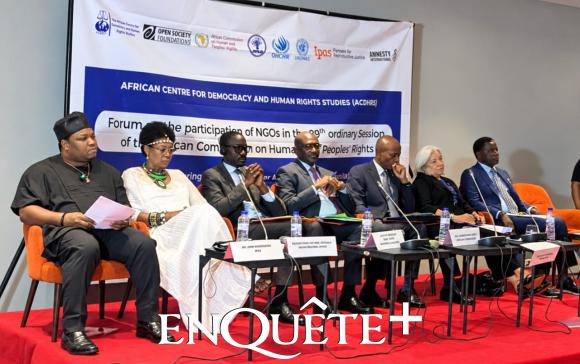
During a three-day NGO forum on water and sanitation held in Dakar, Julien Ngagne Ndour, the Director of Human Rights at Senegal's Ministry of Justice, delivered a crucial message on behalf of the Minister. The forum, part of the 89th ordinary session of the African Commission on Human and Peoples' Rights, served as a platform to address the persistent challenge of millions of Africans lacking access to safe drinking water and adequate sanitation, despite various regional and international commitments.
Mr. Ngagne Ndour unequivocally stated that the primary responsibility for ensuring the right to water rests squarely with states. This encompasses a broad range of duties, including strategic planning, sufficient investment, robust regulation, diligent protection of water resources, and guaranteeing both the quality and accessibility of essential services. He vividly described the severe hardships endured by communities, such as families dedicating substantial portions of their income to purchasing water and individuals forced to travel extensive distances to obtain it. The Director also highlighted the prevalence of waterborne diseases and the disproportionate burden placed on women and girls, whose time spent collecting water often interferes with their education and employment opportunities.
International Commitments and National Policy Efforts
The global community faces significant pressure to meet international deadlines regarding water access. The United Nations had set a target for universal access to water and sanitation by 2030; however, its 2025 report indicates that progress is dangerously off track. This urgent situation necessitates a re-evaluation of strategies, as evidenced by a high-level meeting scheduled for January 26-27, 2026, in Dakar, co-hosted with the United Arab Emirates, to address these pressing concerns.
Further emphasizing the gendered impact of water scarcity, John Gbenagnon, Director of Strategy and Development for the Network of Women Leaders for Development, noted at the forum that women and girls collectively spend approximately 250 million hours daily on water collection. He also underscored the legal obligation enshrined in Article 15 of the Maputo Protocol, which specifically commits states to guarantee women's access to potable water. In a proactive national effort, Senegal conducted comprehensive national consultations on water and sanitation in 2024, aiming to involve diverse stakeholders, including civil society, in shaping a new policy framework centered on principles of governance, transparency, accountability, and equity.
Multifaceted Challenges to Water Security
The crisis in water access is attributed to a complex interplay of factors, as outlined by the Director of Human Rights. These include chronic underinvestment in infrastructure, rapid urbanization, unchecked population growth, and widespread pollution. Furthermore, existing infrastructure is increasingly vulnerable to the impacts of climate change, manifesting as more frequent droughts, severe floods, and the degradation of vital ecosystems. These environmental pressures directly threaten health, food security, and the livelihoods of countless individuals.
Mr. Ngagne Ndour also pointed to governance challenges and the critical link between institutional stability and the continuity of water policies. He explained that political instability, institutional crises, and unconstitutional changes in government can severely weaken administrative capacities, disrupt essential investments, and ultimately compromise public action in the water sector. Additionally, armed conflicts exacerbate the problem by destroying crucial hydraulic and sanitary infrastructure, thereby complicating water access for displaced populations and further deepening humanitarian crises.
Practical Implications
Lawyers and compliance officers in Senegal should note the state's reaffirmed legal obligations regarding the right to water, as articulated by the Director of Human Rights. This necessitates monitoring the ongoing development of national water policies (following 2024 consultations) and ensuring adherence to international commitments, particularly Article 15 of the Maputo Protocol concerning women's access to water. This information is crucial for advising clients on regulatory compliance, potential litigation risks, and advocacy efforts related to water infrastructure and human rights.
Source
Source: Original reporting via Senego
How does this affect you?
Get an AI analysis of this article grounded in your jurisdictions, practice areas, and any policy documents you've uploaded to Wansom.
Finish Reading the Full Story and the Expert Analysis.
Get the latest legal & regulatory intelligence in Senegal
Wansom is AI and can make mistakes.