
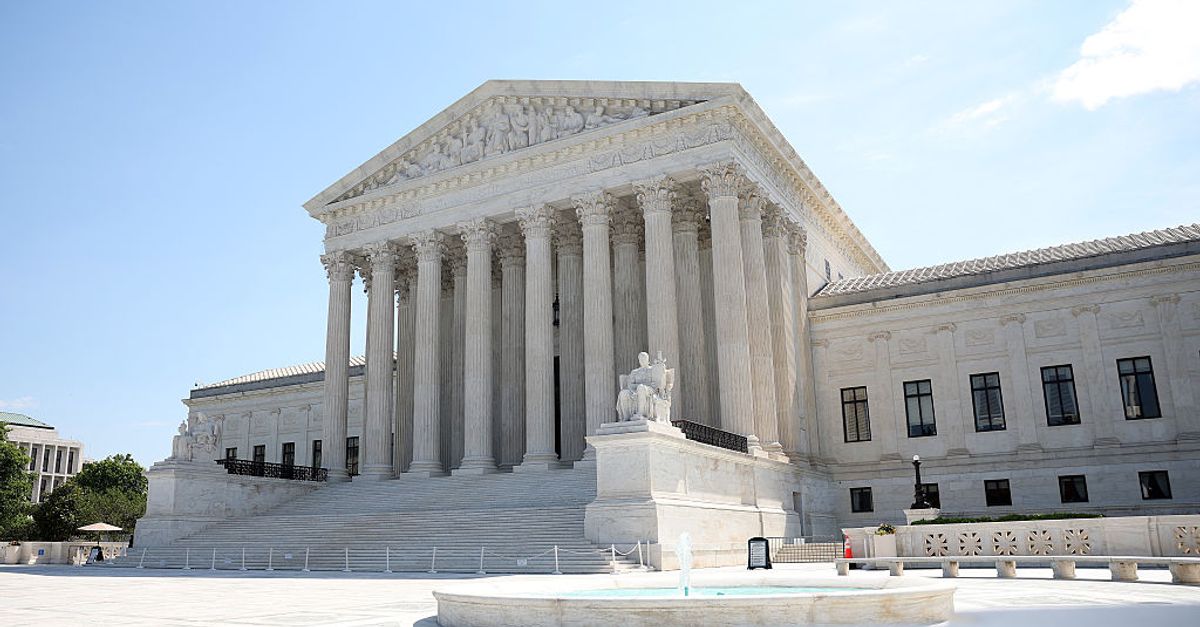
Judge Boardman: Temporarily Blocks Trump Birthright Citizenship Order
Summary
- A federal judge in Maryland has temporarily blocked the Trump administration's recent executive order seeking to narrow birthright citizenship.
- The injunction applies to children born in the U.S. whose parents are temporarily present or lack proper documentation.
- U.S. District Judge Deborah Boardman stated the order is "almost certainly unconstitutional" based on Supreme Court precedent.
- This ruling follows the 2026 Supreme Court decision in Trump v. Barbara, which affirmed the broad reach of the 14th Amendment's citizenship clause.
- The temporary block ensures that the existing interpretation of birthright citizenship remains in effect for now.
What Happened
By temporarily halting the enforcement of the administration's latest directive, the court has effectively preserved the existing legal landscape regarding birthright citizenship.
A federal court in Maryland has issued a temporary injunction, preventing the Trump administration from enforcing a recent executive order aimed at restricting birthright citizenship. The ruling, handed down on Wednesday by U.S. District Judge Deborah Boardman, specifically blocks the order's application to a broad category of children whose parents reside in the United States either temporarily or without proper documentation. This decision marks a significant, albeit preliminary, setback for the administration's efforts to redefine who qualifies for automatic citizenship upon birth within the nation's borders.
Judge Boardman's order comes less than a month after President Donald Trump issued the executive directive, which sought to narrow the long-standing interpretation of birthright citizenship, a principle that currently extends citizenship to nearly all individuals born in the United States. In her written opinion, Judge Boardman asserted that the new executive order is "almost certainly unconstitutional" as it pertains to the affected group. Her reasoning directly cites established Supreme Court precedent, which has already affirmed that these children are indeed citizens from birth. This US District Judge Deborah Boardman ruling underscores the judiciary's role in challenging executive actions that appear to conflict with existing legal frameworks.
Legal Context and Precedent
The temporary injunction issued by Judge Boardman is the latest development in a protracted legal and political struggle concerning the 14th Amendment citizenship clause interpretation. This constitutional provision states that all persons "born … in the United States and subject to the jurisdiction thereof" are citizens. The current legal understanding, reinforced by decades of judicial interpretation, has broadly applied this clause to most individuals born on U.S. soil.
A pivotal moment in this ongoing debate occurred on June 30, 2026, with the Supreme Court's decision in Trump v. Barbara. In that case, the Court struck down an earlier executive order from the Trump administration, which had similarly attempted to deny automatic U.S. citizenship to children born to undocumented immigrants or those temporarily present in the country. Chief Justice John Roberts, writing for the majority, emphasized the "broad reach" of the 14th Amendment's citizenship clause. He clarified that the exceptions to this general rule are "narrow," applying primarily to the children of foreign ministers, thereby solidifying the expansive scope of birthright citizenship. This Trump v. Barbara Supreme Court precedent directly informed Judge Boardman's assessment of the new executive order's constitutionality.
Why It Matters
The Maryland federal court immigration injunction represents a critical moment in the Trump birthright citizenship executive order challenge. By temporarily halting the enforcement of the administration's latest directive, the court has effectively preserved the existing legal landscape regarding birthright citizenship. This means that for the time being, the broad interpretation of the 14th Amendment, which grants citizenship to most individuals born in the U.S., remains fully in effect, irrespective of their parents' immigration status.
This ruling has immediate implications for families and legal professionals, ensuring that the status quo is maintained while the executive order faces further legal scrutiny. It reinforces the judiciary's role as a check on executive power, particularly when executive actions appear to contradict established constitutional interpretations and Supreme Court rulings. The temporary block signals that any attempt to unilaterally alter fundamental aspects of U.S. citizenship through executive action will likely face significant legal hurdles, continuing the broader battle over immigration policy and constitutional law.
Practical Implications
Lawyers and compliance officers should be aware that the Trump administration's latest executive order seeking to narrow birthright citizenship is temporarily blocked, meaning the existing broad interpretation of the 14th Amendment's citizenship clause remains in effect. This impacts legal advice and compliance procedures concerning the citizenship status of children born in the U.S. to parents without permanent legal status, as the order is currently unenforceable.
Source
How does this affect you?
Get an AI analysis of this article grounded in your jurisdictions, practice areas, and any policy documents you've uploaded to Wansom.
Finish Reading the Full Story and the Expert Analysis.
Wansom is AI and can make mistakes.