
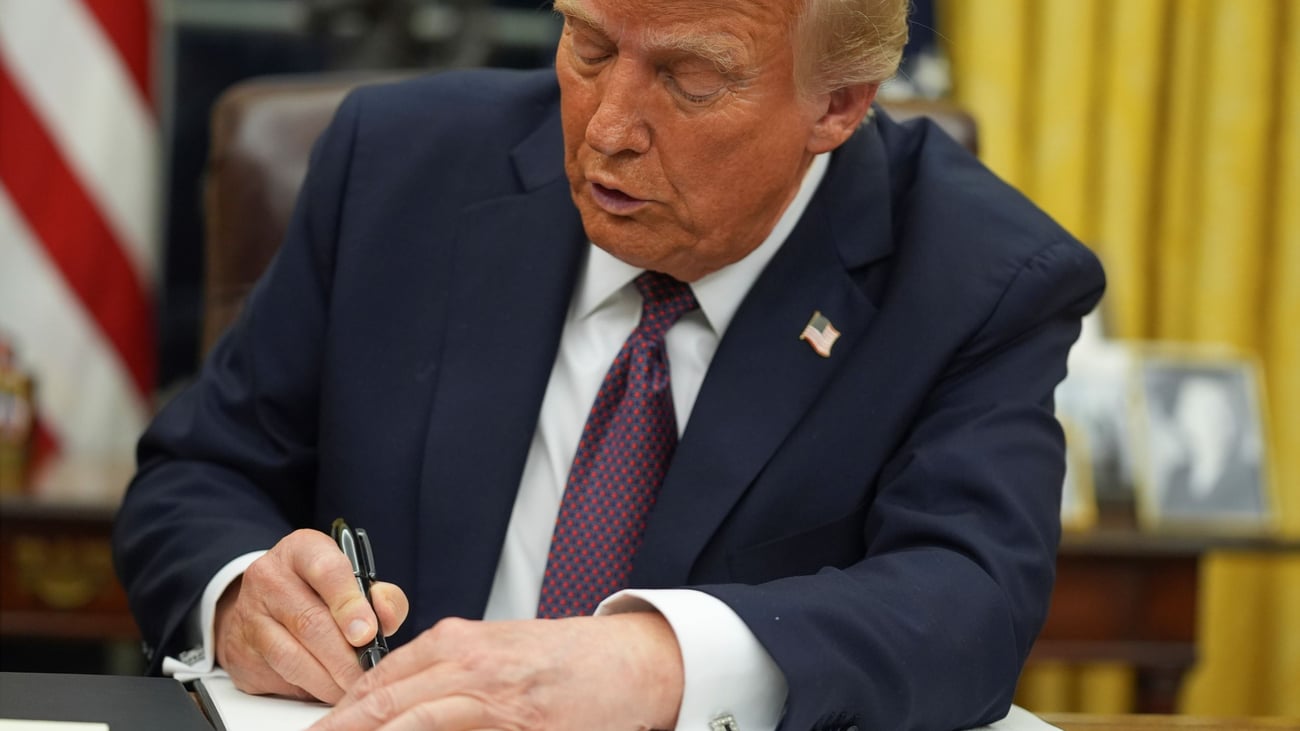
US District Judge Blocks Trump Birthright Citizenship Executive Order
Summary
- A federal judge in Maryland issued a preliminary injunction, temporarily blocking President Trump's latest executive order aimed at limiting birthright citizenship.
- U.S. District Judge Deborah L. Boardman cited Supreme Court precedent, affirming that children in the certified class are 'citizens at birth.'
- The executive order, signed in August, sought to restrict automatic citizenship for children born to individuals with ties to foreign entities or those deemed 'alien enemies,' or those involved in 'birth tourism.'
- The injunction will remain in effect until a class-action lawsuit, brought by immigrant families and advocacy groups including We Are CASA, is fully resolved.
- This ruling maintains the existing interpretation of the 14th Amendment, which guarantees birthright citizenship for nearly all individuals born on U.S. soil.
Judicial Intervention Halts Birthright Citizenship Order
This judicial intervention ensures that the established legal framework for birthright citizenship, rooted in the 14th Amendment, remains undisturbed while the underlying class-action litigation proceeds.
A federal court has issued a preliminary injunction, effectively blocking President Donald Trump's most recent executive order aimed at curtailing birthright citizenship. The ruling, handed down by U.S. District Judge Deborah L. Boardman in Maryland, temporarily prevents the implementation of an order that the administration stated was designed to combat "birth tourism." This significant judicial action comes as a class-action lawsuit, initiated by immigrant families and various advocacy organizations, continues through the legal system.
Judge Boardman's decision means that the executive order, which sought to redefine who qualifies for automatic citizenship, cannot be enforced until the broader legal challenge is fully resolved. In her Wednesday ruling, Judge Boardman, an appointee of President Joe Biden, underscored the established legal precedent, asserting that "The Supreme Court has spoken: Children in the certified class are ‘citizens at birth.’" This injunction provides a temporary reprieve for those concerned about the potential impact of the order on the citizenship status of children born in the United States.
The Contested Executive Order and Its Predecessors
The executive order, which President Trump signed in August, represented a renewed effort to restrict automatic citizenship for specific groups. It targeted children born to adults with affiliations to foreign embassies or international organizations, as well as those born to individuals classified as an “alien enemy” of the United States. The order also defined "birth tourism" as the act of entering the U.S. on a nonimmigrant visa with the explicit intention of giving birth on American soil, and it aimed to deny citizenship to children whose parents engaged in a "commercial transaction to purchase or access birthright citizenship."
This August directive followed a previous attempt by President Trump to alter birthright citizenship. He had issued an earlier executive order declaring that children born to individuals residing in the United States illegally or temporarily were not American citizens. However, that prior effort was struck down by the Supreme Court in June, prompting the administration to issue the more narrowly focused order that is now subject to this preliminary injunction. The President has consistently expressed a desire to end birthright citizenship throughout his tenure.
Legal Challenges and Constitutional Foundations
The class-action lawsuit challenging the executive order was brought by several groups, including We Are CASA, the Asylum Seeker Advocacy Project, and the Institute for Constitutional Advocacy and Protection, alongside affected immigrant families. These plaintiffs voiced significant apprehension, fearing that their children could be denied citizenship based on broad interpretations of the order. Concerns included the possibility of denial simply for purchasing airfare and subsequently becoming pregnant in the U.S., or due to an extended family member's distant connection to a gang in their home country, even if the parents themselves were not involved. The plaintiffs highlighted the confusion and fear generated by the order's ambiguity, particularly regarding the executive branch's expansive view of who might qualify as an "alien enemy," sometimes relying on speculation.
Attorneys for the administration contended that the request for an injunction was premature, arguing that federal agencies tasked with enforcing the order would employ "appropriate measures" guided by official instructions yet to be released. However, Judge Boardman dismissed this argument, stating unequivocally that, "No matter what the guidance says, the 2026 Executive Order commands agencies to deny citizenship documents to several broad categories of children." This rejection underscores the court's view that the order's inherent directives were problematic regardless of future implementation guidelines, reinforcing the 14th Amendment's birthright injunction.
Implications for Citizenship and Immigration Policy
This judicial intervention ensures that the established legal framework for birthright citizenship, rooted in the 14th Amendment, remains undisturbed while the underlying class-action litigation proceeds. Birthright citizenship, which guarantees citizenship for nearly anyone born on U.S. soil with only a few exceptions, has been a cornerstone of American law since the 14th Amendment was ratified in 1868, following the Civil War. The preliminary injunction means that the status quo regarding immigration citizenship remains unchanged by this blocked executive order.
Shana Khader, legal director at We Are CASA, emphasized the broader implications of the ruling, stating, "The White House must recognize it will not succeed in stripping children of their right to citizenship, evading binding court decisions or placing the president’s anti-immigrant agenda above the Constitution." This sentiment highlights the ongoing legal and constitutional battle over birthright citizenship. The White House has not yet provided an immediate response to the court's decision.
Practical Implications
This preliminary injunction means President Trump's latest executive order attempting to restrict birthright citizenship is temporarily blocked, preserving the existing legal interpretation of the 14th Amendment. Lawyers advising clients on immigration and citizenship matters should note that the status quo on birthright citizenship remains unchanged by this order, and clients should not be advised based on its provisions until the underlying class-action lawsuit is resolved.
Source
How does this affect you?
Get an AI analysis of this article grounded in your jurisdictions, practice areas, and any policy documents you've uploaded to Wansom.
Finish Reading the Full Story and the Expert Analysis.
Wansom is AI and can make mistakes.