
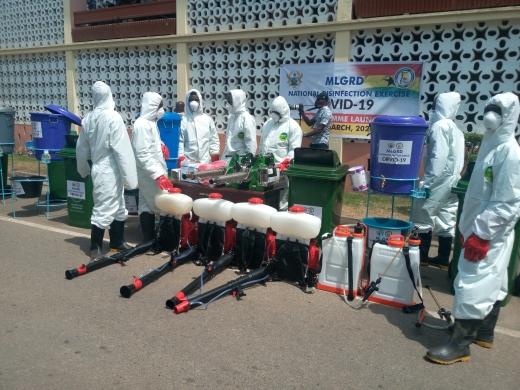
Joseph Winful: Ghana COVID-19 Fumigation Contracts Abuse Needs Deeper Review
Summary
- Joseph Winful, former KPMG Ghana CEO, suggested some COVID-19 fumigation contracts might constitute an abuse of office.
- His comments follow scrutiny from the Auditor-General's audit of COVID-19 expenditure and a report by journalist Manasseh Azure Awuni.
- Winful emphasized the need to examine the rationale behind contracts, not just financial figures, distinguishing financial audits from forensic investigations.
- He questioned whether Ghana's commitment to "value for money" is matched by its public spending assessment systems.
- Effective financial management is crucial for Ghana's development and democratic governance, according to Winful.
Scrutiny on COVID-19 Contracts
A key point articulated by Mr. Winful was the crucial distinction between a financial audit and a forensic investigation, noting their fundamentally different scopes.
Joseph Winful, formerly the Chief Executive Officer of KPMG in Ghana, has raised significant concerns regarding certain contracts awarded for COVID-19 fumigation exercises, suggesting they might amount to an abuse of office. His remarks, made during an appearance on JoyNews' The Pulse on Tuesday, September 15, come amidst increasing scrutiny over public spending during the pandemic. This heightened attention follows both the Ghana Auditor-General's audit of COVID-19 expenditure and specific findings from an investigation conducted by journalist Manasseh Azure Awuni into the extensive fumigation spending.
Mr. Winful emphasized that a comprehensive review of these contracts must extend beyond mere financial figures. He argued for a deeper examination into the underlying rationale for awarding such contracts, asserting that some might lack logical justification. This perspective highlights a critical need to assess the foundational decisions behind public procurement, rather than solely focusing on the monetary aspects of the transactions. The former KPMG Ghana executive's comments underscore a growing call for greater accountability in the allocation of public funds, particularly concerning the Ghana COVID-19 fumigation contracts abuse.
Beyond Financial Audits
A key point articulated by Mr. Winful was the crucial distinction between a financial audit and a forensic investigation, noting their fundamentally different scopes. He explained that the Auditor-General's review primarily constituted a financial audit, which, while important, may not fully uncover instances of potential abuse. To truly understand the nature of the contracts, he advocated for an approach that delves into the rationale and appropriateness of the expenditures.
Illustrating his point, Mr. Winful questioned the potential cost implications of fumigating an open field, acknowledging he is not a public health expert. However, he stressed that those responsible for public health should have provided expert advice to define the scope and duration of such activities, as well as to evaluate their actual worth. This highlights the need for a more rigorous assessment that goes beyond typical accounting practices, suggesting that a forensic investigation in Ghana could provide the necessary depth to scrutinize the Ghana Auditor-General COVID-19 expenditure and identify instances of Ghana public procurement abuse of office. The difference between a financial audit vs forensic investigation Ghana is critical for uncovering potential malfeasance.
Accountability and Public Spending
Mr. Winful also critically examined Ghana's stated commitment to transparency, accountability, and achieving "value for money" in public spending. He questioned whether the systems currently in place for assessing public expenditure genuinely align with these frequently articulated principles. While politicians often use the phrase "value for money," he pondered whether the nation's actions truly aim to obtain tangible value from its investments.
This skepticism points to a broader concern about the effectiveness of governance mechanisms designed to safeguard public funds. The implication is that without robust evaluation systems that scrutinize the actual impact and necessity of expenditures, the rhetoric of accountability remains unfulfilled. Such a gap could perpetuate situations where the Ghana COVID-19 fumigation contracts abuse goes unaddressed, undermining public trust and efficient resource allocation.
Economic Stability and Governance
Ultimately, Mr. Winful underscored the indispensable role of effective financial management in fostering Ghana's national development and upholding democratic governance. He warned that a failure to implement sound financial practices could lead to detrimental consequences, including "haircuts and saving cuts," which would impede the nation's progress. His remarks serve as a stark reminder that the integrity of public procurement processes, such as those seen with the Ghana COVID-19 fumigation contracts, directly impacts the country's economic stability.
The former KPMG Ghana executive's insights suggest that addressing potential Ghana public procurement abuse of office is not merely an ethical imperative but a fundamental requirement for sustainable growth. Ensuring that public funds are utilized judiciously and transparently is paramount to achieving national objectives and maintaining the health of the democratic system.
Practical Implications
Lawyers advising clients on public procurement or compliance in Ghana should note the heightened scrutiny on COVID-19 related contracts, particularly regarding 'abuse of office' and 'value for money' allegations. This signals a need to prepare for potential forensic investigations that go beyond standard financial audits, assessing the rationale and scope of awarded contracts.
Source
How does this affect you?
Get an AI analysis of this article grounded in your jurisdictions, practice areas, and any policy documents you've uploaded to Wansom.
Finish Reading the Full Story and the Expert Analysis.
Get the latest legal & regulatory intelligence in Ghana
Wansom is AI and can make mistakes.