
Maryland County Grand Jury: Joseph Ponpon Acquitted in Liberia Gang Rape
Summary
- Joseph Ponpon, a court bailiff, was arrested and charged in November 2022 with gang rape under Liberia Penal Law Section 14.73.
- The Maryland County Grand Jury returned a Bill of Ignoramus on March 20, 2023, declining to issue an indictment against Ponpon and Alphonso Togba.
- The Fourth Judicial Circuit Court ordered Ponpon's permanent release on March 21, 2023, based on the Grand Jury's finding.
- A formal Certificate of Acquittal was issued on March 23, 2023, declaring both defendants acquitted and free from the charges.
- Ponpon stated in October 2026 that despite the acquittal, the initial allegations severely damaged his reputation and character.
The Case Against Joseph Ponpon
His experience serves as a reminder that while the Liberian legal system, through mechanisms like the Maryland County Grand Jury's Bill of Ignoramus and the subsequent Certificate of Acquittal, provides avenues for justice and clearance, the societal and personal repercussions of such allegations can persist for years.
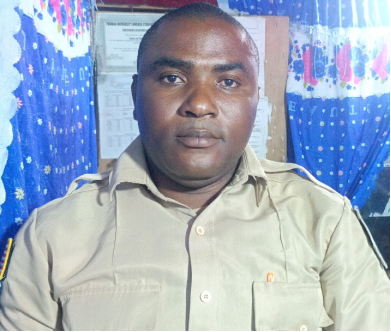
In late 2022, Joseph Ponpon, then serving as a bailiff at the Gedetarbo Magisterial Court in Pleebo, Maryland County, faced serious allegations of gang rape. Media reports on November 5, 2022, detailed his arrest alongside Alphonso Togba, following accusations involving a 13-year-old girl in the Zone 8 community of Pleebo District. The police charge sheet indicated that both individuals were charged with gang rape, specifically citing Section 14.73 of Liberia's Penal Law. Ponpon consistently denied these allegations.
The initial police charges, which included details about the incident and a medical examination of the alleged victim, did not, however, lead to an indictment. The matter subsequently moved to the Fourth Judicial Circuit Court in Harper, Maryland County, where the case was formally recorded as Republic of Liberia by and through the Ministry of Justice versus Joseph Ponpon and Alphonso Togba, with the charges specified as Statutory and Gang Rape. This transition marked a critical procedural step in the Liberian legal system.
On March 20, 2023, the Maryland County Grand Jury made a pivotal decision, returning a "Bill of Ignoramus" in the case. This finding, signed by the Clerk of the Grand Jury and approved by its Forelady, signified that the Grand Jury chose not to issue an indictment against the accused. Following this, the Fourth Judicial Circuit Court, on March 21, 2023, issued an order for the permanent release of the defendant, explicitly referencing the Grand Jury's Bill of Ignoramus.
This court order effectively terminated the criminal proceedings against Ponpon and Togba at that stage. Just two days later, on March 23, 2023, the Clerk of the Fourth Judicial Circuit Court formalized this outcome by issuing a "Certificate of Acquittal." This document unequivocally stated that the Grand Jury's unanimous findings of a "Bill of Ignoramus" were confirmed and affirmed by the court, thereby declaring Joseph Ponpon and Alphonso Togba acquitted and free from the charges, entitled to enjoy their liberties as citizens.
Understanding the Bill of Ignoramus
The issuance of a Bill of Ignoramus by the Maryland County Grand Jury in the case of Republic of Liberia v Joseph Ponpon serves as a crucial illustration of the procedural safeguards within Liberia's criminal justice system. In Liberian legal practice, a Grand Jury's primary function is to determine whether there is sufficient probable cause to bring criminal charges, or an indictment, against an individual. When a Grand Jury returns a Bill of Ignoramus, it signifies their decision that the evidence presented by the prosecution is insufficient to warrant an indictment, effectively halting the criminal proceedings at that stage.
This outcome underscores that police charges, even for serious offenses like those under Liberia Penal Law Section 14.73 concerning gang rape, do not automatically translate into formal prosecution or conviction. The Grand Jury acts as an independent body, reviewing the evidence before a case can proceed to trial. Their finding of "Ignoramus" (meaning "we do not know" or "we ignore") is a definitive statement that the threshold for formal charges has not been met, preventing the case from advancing further in the judicial process.
The subsequent court order for "permanent release" and the formal "Certificate of Acquittal Liberia" are direct consequences of the Grand Jury's decision. The Certificate of Acquittal, issued by the Clerk of the Fourth Judicial Circuit Court on March 23, 2023, provides official documentation of the legal clearance. It confirms that the defendants, Joseph Ponpon and Alphonso Togba, were acquitted and are legally free from the alleged crimes, thereby restoring their full rights and liberties as citizens.
Lingering Effects of Public Accusation
Despite the clear legal outcome and the formal Certificate of Acquittal, the initial public accusations had a lasting impact on Joseph Ponpon. Speaking on October 5, 2026, more than three years after the court proceedings concluded, Ponpon expressed that the legal exoneration did not erase the damage inflicted upon his reputation. He emphasized that the matter extended far beyond the initial police charge sheet, affecting a character he had diligently built over many years.
Ponpon also highlighted concerns regarding the initial media coverage of the allegations. He stated that journalists did not contact him to provide his perspective when the story was first reported, suggesting a lack of balanced reporting at the outset. This personal account underscores the significant and often enduring consequences of public accusations, even when legal processes ultimately lead to an acquittal and a formal declaration of innocence.
His experience serves as a reminder that while the Liberian legal system, through mechanisms like the Maryland County Grand Jury's Bill of Ignoramus and the subsequent Certificate of Acquittal, provides avenues for justice and clearance, the societal and personal repercussions of such allegations can persist for years.
Practical Implications
This case illustrates the procedural significance of a Grand Jury's Bill of Ignoramus in Liberia, confirming that police charges do not automatically result in indictment and highlighting the formal process for obtaining a Certificate of Acquittal. Lawyers should note this as a clear example of how criminal proceedings can be terminated at the Grand Jury stage, providing a precedent for defense strategies in similar cases.
Source
How does this affect you?
Get an AI analysis of this article grounded in your jurisdictions, practice areas, and any policy documents you've uploaded to Wansom.
Finish Reading the Full Story and the Expert Analysis.
Get the latest legal & regulatory intelligence in Liberia
Wansom is AI and can make mistakes.