
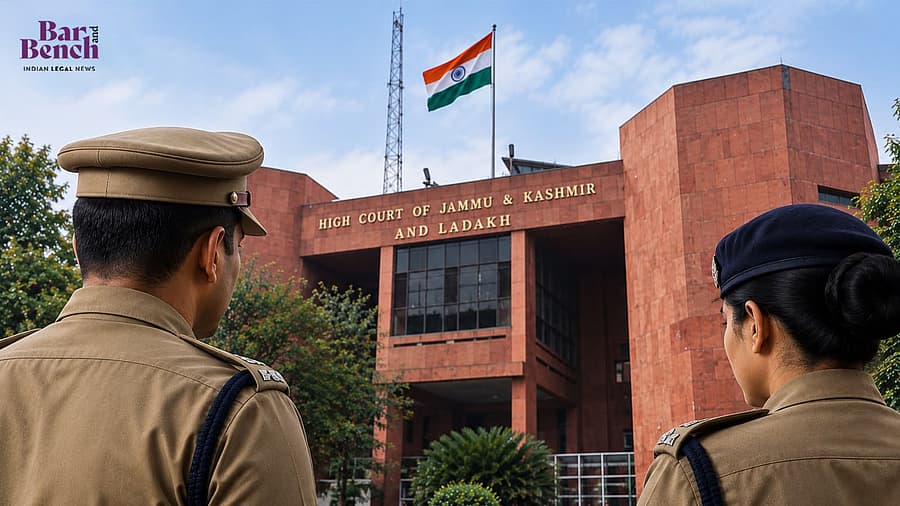
Jammu and Kashmir HC: Police SI Sexual Exploitation Anticipatory Bail Granted
Summary
- The High Court of Jammu and Kashmir and Ladakh granted anticipatory bail to a police sub-inspector accused of sexually exploiting a woman constable.
- The court found the woman constable continued the relationship even after learning the SI was married with two children.
- Justice Sanjay Dhar concluded that the relationship was not based on a misconception of fact given her continued involvement.
- Evidence suggested the prosecutrix and the SI were deeply in love, leading to consensual sexual intercourse.
- The court also noted the SI, as a police employee, was unlikely to abscond during the investigation.
High Court Grants Anticipatory Bail to Police Officer
The court concluded that her ongoing engagement with the petitioner, despite being fully informed of his marital situation, indicated that their relationship was not predicated on a misunderstanding of his marital status.
The High Court of Jammu and Kashmir and Ladakh recently granted anticipatory bail to a police sub-inspector (SI) accused of sexually exploiting a woman constable. The SI, identified in court records as Vikrant Kotwal in the case of *Vikrant Kotwal v. UT of J&K*, faced allegations of repeatedly making false promises of marriage to sustain a sexual relationship with the complainant. This significant ruling, delivered by Justice Sanjay Dhar, centered on the nature of the relationship between the two individuals, particularly the woman's continued involvement despite crucial disclosures.
Justice Dhar's decision highlighted that, by the woman constable's own admission, she maintained the relationship even after becoming aware that the accused SI was already married and had two children from that marriage. This fact became a pivotal point in the court's assessment of the anticipatory bail application. The court's initial view suggested there was merit to the SI's contention that the sexual relationship was, in fact, consensual, challenging the core of the exploitation claim.
Challenging the 'Misconception of Fact'
A central aspect of the court's reasoning revolved around the concept of a "misconception of fact," which is often crucial in cases alleging sexual exploitation under false pretenses. Justice Sanjay Dhar explicitly noted that while the woman constable might not have initially known about the SI's marital status, her subsequent actions of continuing the relationship after gaining this knowledge led to a different inference. The court concluded that her ongoing engagement with the petitioner, despite being fully informed of his marital situation, indicated that their relationship was not predicated on a misunderstanding of his marital status.
Furthermore, the court observed that the evidence presented suggested a deep emotional connection between the prosecutrix and the petitioner, implying they were "deeply in love with each other," which subsequently led to their sexual interactions. This finding directly supported the argument that the sexual relationship was consensual, rather than a result of exploitation based on a false promise to marry. The ruling thus scrutinized the complainant's sustained participation in the relationship as a key factor in determining the presence of a misconception of fact.
Precedent for Sexual Offense Bail Applications
Beyond the specifics of the case, the High Court of Jammu and Kashmir and Ladakh's decision offers a notable precedent for lawyers navigating anticipatory bail in sexual offense cases, particularly those involving allegations of sexual exploitation under false promises. The ruling underscores that a complainant's continued engagement in a relationship, even after becoming fully aware of the accused's marital status, can significantly impact the legal interpretation of consent and the 'misconception of fact' element. This approach suggests a higher evidentiary threshold for proving non-consensual sexual exploitation when the relationship persisted after such disclosures.
The court also considered practical aspects for granting anticipatory bail, noting that the accused police sub-inspector was unlikely to abscond during the investigation. As an employee of the police department, the petitioner remains under the direct investigative and administrative control of the same department, further mitigating the risk of flight. This pragmatic consideration, combined with the nuanced interpretation of consent and misconception of fact, solidified the court's decision to grant anticipatory bail in this police sub-inspector sexual offense bail matter.
Practical Implications
This ruling provides a significant precedent for lawyers arguing anticipatory bail in sexual offense cases, particularly where the complainant's continued participation in a relationship, despite knowledge of the accused's marital status, can be used to challenge the 'misconception of fact' element often central to such charges. It suggests a higher bar for proving non-consensual sexual exploitation when the relationship persisted after full disclosure of marital status.
Source
How does this affect you?
Get an AI analysis of this article grounded in your jurisdictions, practice areas, and any policy documents you've uploaded to Wansom.
Finish Reading the Full Story and the Expert Analysis.
Get the latest legal & regulatory intelligence in India
Wansom is AI and can make mistakes.