
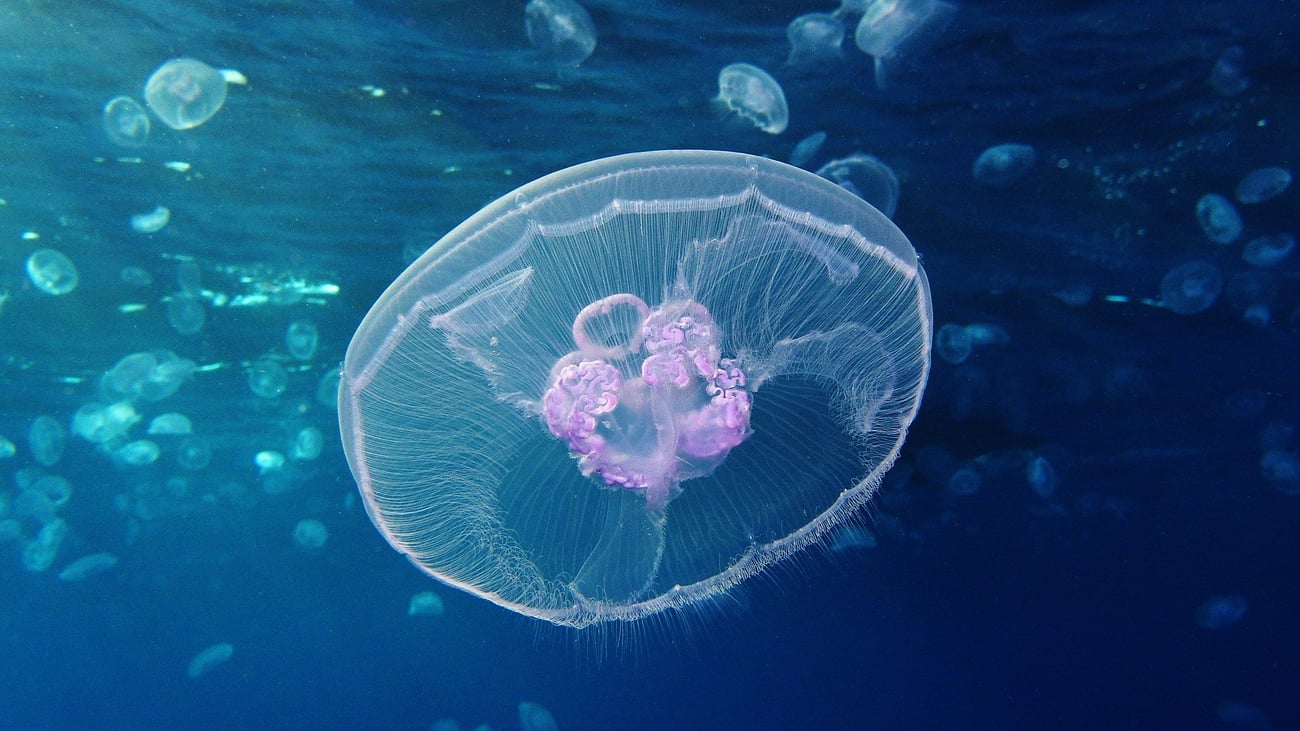
EDF Gravelines: Jellyfish Clog French Nuclear Reactors, Shutdown
Summary
- A swarm of jellyfish clogged pumps at the Gravelines nuclear plant in northern France, forcing the shutdown of three reactors.
- France has seen multiple heatwaves and droughts this year disrupt its nuclear power production.
- The incident highlights the potential impact of climate change-related disruptions to critical infrastructure.
- Experts warn that overfishing, plastic pollution, and warming seas caused by climate change are creating conditions for jellyfish to thrive.
Nuclear Power Production Disrupted
Climate change has created conditions that allow jellyfish to thrive and reproduce, leading to increased instances of these marine animals clogging seawater pumping stations.
France's nuclear power production has been severely disrupted this year due to multiple heatwaves and droughts. The latest incident occurred at the Gravelines nuclear plant in northern France, where a swarm of jellyfish clogged pumps used to cool three reactors, forcing their shutdown on Monday. This is not an isolated incident, as EDF had previously shut down several reactors in June and July due to extreme heat. In fact, on Sunday, France recorded a shortfall of 15.6% in nuclear power production, according to AFP calculations based on EDF data published since 2015.
Legal Context
The shutdown of the Gravelines nuclear plant highlights the potential impact of climate change-related disruptions to critical infrastructure. Lawyers advising clients on energy or environmental matters should be aware of this unusual instance of jellyfish interfering with a nuclear plant's cooling systems. Climate change has created conditions that allow jellyfish to thrive and reproduce, leading to increased instances of these marine animals clogging seawater pumping stations. This is not the first time jellyfish have forced nuclear plants to shut down, as incidents in Sweden in 2013 and Japan in 1999 demonstrate.
Why It Matters
The shutdown of the Gravelines nuclear plant has significant implications for France's energy production. With just one reactor operating at full capacity, the country is facing a shortfall in nuclear power production. This incident serves as a reminder that climate change can have far-reaching consequences, including disruptions to critical infrastructure. As experts warn, overfishing, plastic pollution, and warming seas caused by climate change are creating conditions that allow jellyfish to thrive and reproduce.
Practical Implications
Lawyers advising clients on energy or environmental matters should watch for the potential impact of climate change-related disruptions to critical infrastructure, such as this unusual instance of jellyfish interfering with a nuclear plant's cooling systems.
Source
Source: Original reporting via AFP
How does this affect you?
Get an AI analysis of this article grounded in your jurisdictions, practice areas, and any policy documents you've uploaded to Wansom.
Wansom is AI and can make mistakes.