
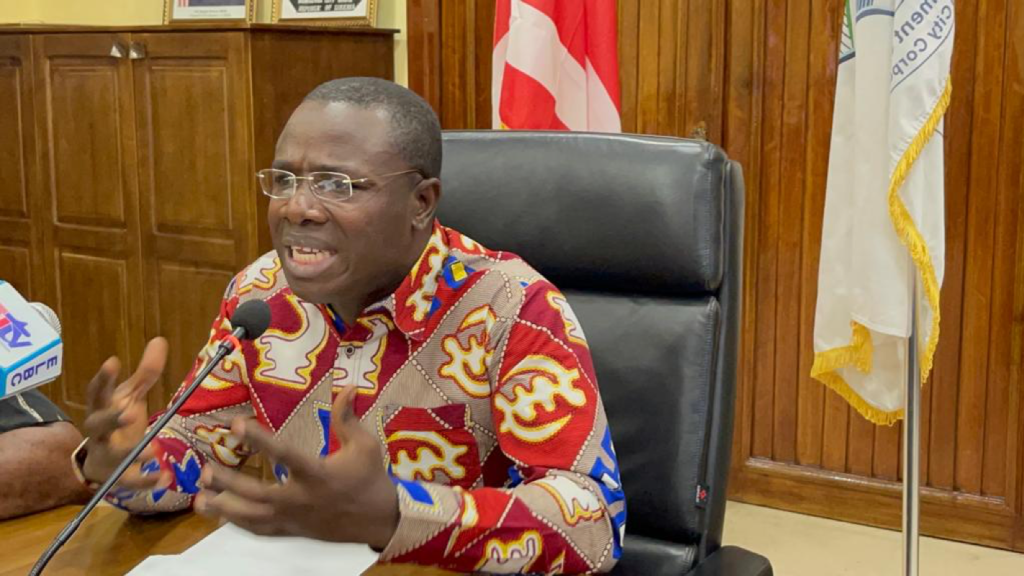
Jefferson Koijee: Sinkor Property Handover to VP Koung in Liberia
Summary
- Former Monrovia City Mayor and current Secretary General of the opposition Congress for Democratic Change (CDC), Jefferson T. Koijee handed over a disputed Sinkor property to Vice President Jeremiah Kpan Koung, citing spiritual guidance and a commitment to peace.
- Koijee insists the handover is not an admission of guilt but part of ongoing political persecution by the Boakai-Koung administration, declaring 2029 as his political destination.
- The property has a history of conflicting claims, with Mo Ali, the current Managing Director of the Liberia Water and Sewer Corporation, alleging Koijee acquired it in 2018, while a 2026 court writ identifies VP Koung as the claimant.
- Koijee challenges the government to explain these discrepancies and provide evidence for other criminal allegations against him, which he claims remain unproven in court.
- The physical handover does not legally resolve the underlying Liberia property ownership claims, leaving the property's legal status ambiguous and requiring formal judicial clarification.
A High-Profile Handover
The physical handover does not legally resolve the underlying Liberia property ownership claims, leaving the property's legal status ambiguous and requiring formal judicial clarification.
Former Monrovia City Mayor and current Secretary General of the opposition Congress for Democratic Change (CDC), Jefferson T. Koijee recently announced the physical transfer of a disputed property located on 19th Street, Coleman Avenue, in Sinkor, Liberia. This action, described as a "Jefferson Koijee Sinkor property handover Liberia," saw the premises conveyed to Vice President Jeremiah Kpan Koung. Koijee publicly stated that his decision was influenced by the counsel of his spiritual adviser, Pastor Philemon A. Tarpeh, and was rooted in his personal faith and a commitment to fostering peace.
Despite the handover, Koijee emphasized that this move should not be misconstrued as an admission of guilt or a retreat from his ongoing political endeavors. He explicitly denied that the relinquishment of the property constituted a surrender, framing the situation as part of what he perceives as political persecution by the current Boakai-Koung administration. Looking ahead, Koijee declared his political aspirations, stating, "2029 is our destination," signaling his intention to remain an active figure in Liberian politics leading up to the next presidential election.
Conflicting Ownership Claims
At the core of this situation lies a complex and long-standing Jefferson T. Koijee property dispute concerning the Sinkor residence. Koijee recounted that on September 18, 2018, Mo Ali, the current Managing Director of the Liberia Water and Sewer Corporation, publicly alleged that Koijee had acquired a house valued at US$250,000 within a nine-month period. This accusation, according to Koijee, persistently shadowed him for years, contributing to a public perception of corruption.
However, the narrative surrounding the property took a new turn with a writ of summons issued by the Monrovia City Magisterial Court on October 13, 2026. This legal document identifies Vice President Jeremiah Koung Sinkor as the claimant to the very same property. Koijee has publicly challenged the government to reconcile these competing Liberia property ownership claims, questioning how the property could have been attributed to him in 2018 only to be claimed by the Vice President years later. He asserts that the Boakai-Koung administration is obligated to provide a clear explanation to the Liberian public regarding these discrepancies.
Allegations of Political Persecution
Koijee has consistently maintained that he is a target of political persecution by the Boakai-Koung administration. He renewed these allegations, asserting that the current government is leveraging state institutions and public platforms to tarnish his reputation. He specifically referenced international sanctions announced against him on December 8, 2023, which he claims were celebrated by his political adversaries as the end of his career and led to repeated visa denials and other restrictions.
Furthermore, Koijee vehemently rejected accusations linking him to criminal activities, including murder. He argued that despite nearly three years of such allegations, authorities have failed to substantiate any claims against him in court. He challenged the government to produce concrete evidence, including financial records and properties allegedly connected to him, to support their accusations. During his tenure as Monrovia City Mayor, Koijee stated he prioritized public service, even continuing to use an official vehicle purchased by his predecessor rather than acquiring a new one.
Lingering Legal Ambiguity
Despite the physical handover of the Sinkor property, the underlying legal status and ownership claims remain ambiguous and unresolved through formal channels. Koijee himself acknowledged that the competing ownership claims and the legal standing of the property necessitate clarification via the appropriate legal process. The intervention of a spiritual adviser and a commitment to peace, while personally significant to Koijee, do not constitute a legal resolution to the property dispute.
The existence of a Monrovia City Magisterial Court writ identifying Vice President Koung as a claimant, juxtaposed with earlier public allegations against Koijee, underscores the need for judicial clarity. This situation highlights how extra-judicial actions, even when driven by spiritual or political considerations, may not legally resolve underlying ownership claims, potentially creating ambiguity and setting precedents for how politically sensitive asset disputes are managed outside formal legal channels.
Practical Implications
This article highlights the challenges in resolving high-profile property disputes in Liberia, especially when political figures are involved. Lawyers advising on property law or public integrity cases should note how extra-judicial 'handover' actions, driven by political or spiritual considerations, may not legally resolve underlying ownership claims, potentially creating ambiguity and setting precedents for how politically sensitive asset disputes are managed outside formal legal channels.
Source
How does this affect you?
Get an AI analysis of this article grounded in your jurisdictions, practice areas, and any policy documents you've uploaded to Wansom.
Finish Reading the Full Story and the Expert Analysis.
Wansom is AI and can make mistakes.