
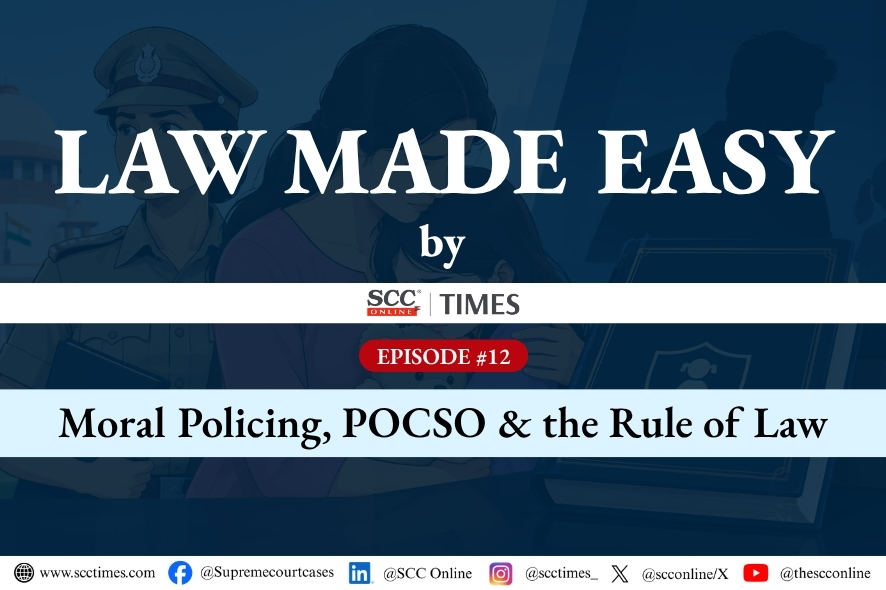
Jamui Incident: Moral Policing Sparks POCSO Act Concerns
Summary
- An incident in Jamui has sparked debate regarding "moral policing" by private individuals against young people.
- The event raises critical questions about the legality of private citizens stopping, restraining, or using force based on disapproval of conduct.
- Legal frameworks like the POCSO Act and laws against unlawful restraint are central to analyzing such private interference.
- The new Bharatiya Nyaya Sanhita (BNS) also plays a role in defining the boundaries of private actions and the rule of law.
- The incident highlights the importance of state authority in child protection and maintaining public order, rather than private enforcement of moral codes.
The Jamui Incident and Public Scrutiny
The core issue arising from the Jamui Incident centers on the legal authority, or lack thereof, for private citizens to enforce their personal moral codes through physical intervention.
An incident in Jamui has recently drawn significant attention, sparking a critical discussion around the concept of "moral policing" and the permissible boundaries of private intervention in public spaces. This event reportedly involved private individuals who allegedly sought to stop, restrain, or use force against young people, ostensibly due to their disapproval of the individuals' conduct. The specific details of the incident itself have not been extensively elaborated in public discourse, but its occurrence has prompted a broader examination of citizen actions.
The core issue arising from the Jamui Incident centers on the legal authority, or lack thereof, for private citizens to enforce their personal moral codes through physical intervention. This situation highlights a tension between societal expectations of behavior and the established legal framework governing individual liberties and the powers of law enforcement. The incident serves as a case study for analyzing when private interference crosses into unlawful restraint, particularly when minors might be involved.
Legal Frameworks Governing Private Actions
The legal analysis surrounding the Jamui Incident directly implicates several key statutes, including the Protection of Children from Sexual Offences (POCSO) Act and the broader principles of unlawful restraint under Indian law. The POCSO Act is specifically designed for child protection, safeguarding minors from various forms of sexual offenses. Any incident involving young people where private individuals exert force or control must be scrutinized under this act to determine if its provisions have been violated, emphasizing the state's paramount duty to protect children.
Furthermore, the actions of private individuals in such scenarios are governed by laws pertaining to unlawful restraint, which prohibit restricting a person's movement without legal justification. The question of whether private individuals can legally stop, restrain, or use force against young people based on perceived misconduct is unequivocally answered by these legal provisions, which generally reserve such powers for authorized state agents. The introduction of the Bharatiya Nyaya Sanhita (BNS) further refines and consolidates criminal law, potentially impacting how such instances of private interference and the use of force are prosecuted and understood in the future, reinforcing the rule of law.
Upholding the Rule of Law and Child Protection
The Jamui Incident underscores the critical importance of adhering to the rule of law, particularly concerning the actions of private individuals in India. When citizens take it upon themselves to enforce moral standards through physical means, it bypasses established legal processes and can lead to serious legal consequences, including charges under the POCSO Act if minors are involved, or for unlawful restraint. Such actions undermine the authority of legitimate law enforcement agencies and can create an environment where personal biases dictate public order, rather than codified laws.
The incident serves as a stark reminder that child protection is a responsibility primarily vested in the state and its designated agencies, not in private citizens acting on subjective moral judgments. Allowing private interference in the lives of young people based on disapproval of their conduct sets a dangerous precedent, potentially exposing them to harm and violating their fundamental rights. Therefore, understanding the legal limits of private intervention is crucial for maintaining a just and orderly society where the rights of all individuals, especially children, are respected and protected under the law.
Practical Implications
Lawyers should advise clients on the legal limits of private intervention and moral policing, particularly concerning minors, to avoid charges of unlawful restraint or violations under the POCSO Act, and to understand the implications of the new BNS on such incidents.
Source
How does this affect you?
Get an AI analysis of this article grounded in your jurisdictions, practice areas, and any policy documents you've uploaded to Wansom.
Finish Reading the Full Story and the Expert Analysis.
Get the latest legal & regulatory intelligence in India
Wansom is AI and can make mistakes.