
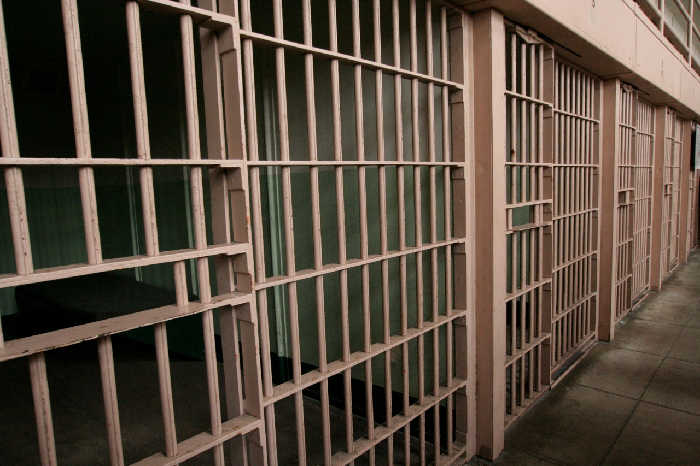
Taraba State: Jalingo Custodial Centre Overcrowding Hinders Justice
Summary
- Over 250 inmates at the Jalingo custodial centre are forced to sleep on the floor due to severe overcrowding.
- This situation has been identified as a major challenge to the administration of criminal justice in Taraba State.
- Urgent reforms are necessary to address both prison congestion and prolonged pre-trial detention.
- The dire conditions raise significant human rights concerns for inmates in Taraba State.
Severe Overcrowding at Jalingo Custodial Centre
Awareness of these severe Taraba State prison conditions is paramount for legal practitioners when preparing bail applications or challenging the legality and duration of pre-trial detention.
The Jalingo custodial centre is currently grappling with severe overcrowding, a situation so critical that over 250 inmates are reportedly forced to sleep on the floor. This stark reality at the facility underscores the challenging Taraba State prison conditions and immediately brings into focus the dire circumstances faced by Jalingo correctional facility inmates. The sheer number of individuals lacking adequate sleeping arrangements points to a profound deficit in the centre's capacity to provide humane accommodation, impacting basic health and safety standards within the institution.
This extreme Jalingo custodial centre overcrowding has been officially identified as a significant obstacle to the efficient and equitable administration of criminal justice in Taraba State. The conditions within the centre not only compromise the fundamental dignity and well-being of those held in detention but also serve as a clear indicator of broader systemic issues plaguing the correctional system. The inability to offer even basic sleeping provisions for a substantial portion of the inmate population signals an urgent requirement for comprehensive intervention and structural enhancements.
Systemic Challenges and the Call for Reform
The severe Jalingo custodial centre overcrowding is inextricably linked to the pervasive problem of prolonged pre-trial detention, a critical factor contributing to the strain on correctional facilities across the region. This extended holding of individuals awaiting trial exacerbates prison congestion and places immense pressure on already limited resources, directly impeding the smooth functioning of the criminal justice administration Taraba. The inability to process cases efficiently means that many individuals remain incarcerated for extended periods, further worsening the conditions for all Jalingo correctional facility inmates.
In light of these pressing issues, Gabriel Olayinka, a former inmate and Chief Executive Officer of Taraba News and SUM TV, has described the current state as a major challenge to the overall administration of criminal justice in Taraba State. This assessment underscores the systemic nature of the problem, extending beyond mere capacity issues to impact due process and the timely dispensation of justice. Consequently, he has called for urgent reforms specifically targeting prison congestion and the issue of prolonged pre-trial detention. Such reforms are crucial for improving Taraba State prison conditions and aligning practices with broader Nigeria pre-trial detention reform efforts. Addressing these systemic failures is vital not only for the welfare of inmates but also for upholding the principles of justice and human rights prison Nigeria.
Implications for Justice and Advocacy
The severe Jalingo custodial centre overcrowding and the associated prolonged pre-trial detention carry significant legal and human rights implications, demanding attention from legal professionals and advocacy groups. The fact that over 250 inmates are forced to sleep on the floor directly implicates human rights prison Nigeria standards, raising concerns about cruel, inhuman, or degrading treatment. These conditions provide a critical context for criminal defense lawyers representing clients within Taraba State to consider.
Awareness of these severe Taraba State prison conditions is paramount for legal practitioners when preparing bail applications or challenging the legality and duration of pre-trial detention. Lawyers can leverage these documented conditions to argue for their clients' release, citing the potential for irreparable harm and the violation of fundamental rights due to the Jalingo custodial centre overcrowding. Furthermore, this situation highlights a crucial area for legal aid organizations and human rights advocacy groups to intensify their efforts. Their focus should encompass not only the immediate welfare of Jalingo correctional facility inmates but also broader systemic Nigeria pre-trial detention reform initiatives, aiming to alleviate prison congestion and ensure a more just criminal justice administration Taraba.
Practical Implications
Criminal defense lawyers representing clients in Taraba State should be aware of these severe overcrowding conditions when making bail applications or challenging prolonged pre-trial detention, potentially citing human rights concerns. This situation also highlights an area for legal aid and advocacy groups to focus on inmate welfare and systemic justice reform.
Source
How does this affect you?
Get an AI analysis of this article grounded in your jurisdictions, practice areas, and any policy documents you've uploaded to Wansom.
Finish Reading the Full Story and the Expert Analysis.
Wansom is AI and can make mistakes.