
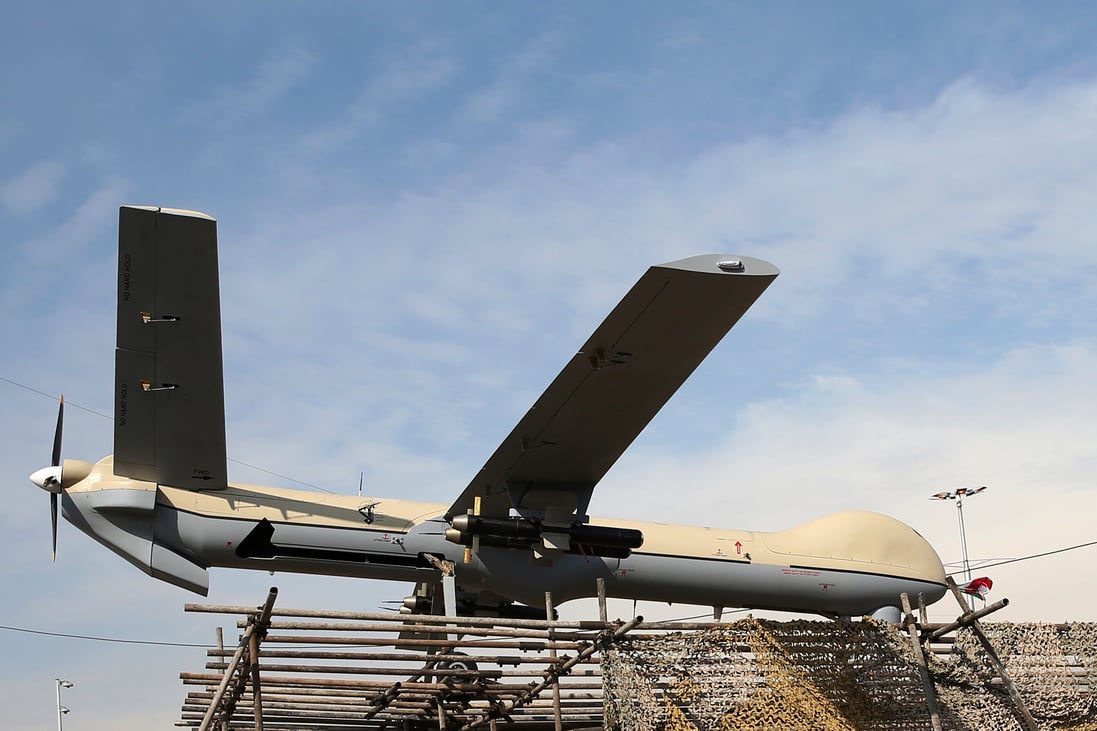
Iranian Drone Strike: 2 Italian Technicians Killed in Kuwait
Summary
- Two Italian technicians were killed in Kuwait during an Iranian drone attack on Thursday.
- The victims, employed by Rheinmetall, were working at an air-defense detection station when several Iranian-made drones struck.
- This incident marks the first fatal strike in Kuwait in months and follows increased Iranian drone activity in the region.
- Italian and EU leaders have condemned the attack and called for greater international pressure on Tehran.
- The attack occurred amidst escalating regional tensions, including a standoff between the U.S. and Iran over the Strait of Hormuz.
What Happened
On Thursday, an Iranian drone attack in Kuwait resulted in the deaths of two Italian technicians.
On Thursday, an Iranian drone attack in Kuwait resulted in the deaths of two Italian technicians. The incident, which saw several Iranian-made drones target Kuwaiti military installations around 2 p.m., marks the first fatal strike in the Gulf state in several months. The Italian Foreign Minister, Antonio Tajani, confirmed the details to the Senate, specifying that the technicians, employed by Rheinmetall, were working on an air-defense detection station when the strike occurred.
The Kuwaiti defense ministry also acknowledged the incident, reporting that at least four individuals sustained injuries. The ministry stated that multiple drones had targeted an unspecified but vital location within the country, and confirmed the fatalities of the two Italian nationals. This attack follows a period of heightened activity, coming just days after Kuwait's air defenses were activated last week to counter similar drone incursions from Iran, the first such activation since early September.
Escalating Regional Tensions
This recent drone strike is set against a backdrop of increasing aggression from Iran, which has intensified its attacks on both Kuwait and Bahrain over the past week. The broader conflict in the region, which began with U.S.-Israeli strikes on Iran in late February, has placed Gulf states in a precarious position, frequently finding their U.S. military facilities and energy installations targeted.
A significant point of contention remains the vital Strait of Hormuz, where the United States and Iran are engaged in a standoff. The U.S. military is actively escorting ships through this crucial waterway, directly challenging Tehran's attempts to assert control and potentially close the passage. This ongoing tension underscores the volatile security environment impacting maritime trade and regional stability.
Broader Gulf Instability
Further south, the long-standing conflict between Saudi Arabia and Yemen's Houthi rebels continues to rage, demonstrating the pervasive instability across the Gulf. The past week has witnessed a significant escalation, with both sides exchanging heavy blows. The Saudi-led military coalition, which supports Yemen's internationally recognized government, reported intercepting two Houthi ballistic missiles aimed at the Saudi capital, Riyadh, overnight, with residents and an AFP journalist confirming an explosion.
Concurrently, the Iran-backed Houthi group claimed responsibility for striking a refinery in Jazan, located in southern Saudi Arabia. This incident is part of a series of barrages that have repeatedly targeted major energy installations within the kingdom. These near-daily exchanges between the Houthis and the Saudi-led coalition highlight the resurgence of Yemen's civil war, which initially commenced over a decade ago, further complicating the already fragile regional security landscape.
International Condemnation
In response to the fatalities, Italian Prime Minister Giorgia Meloni expressed her condolences via social media platform X, stating her thoughts were with all affected by the attack and their families. Ursula von der Leyen, the chief of the European Union, also weighed in, calling for increased pressure on Tehran. She emphasized the necessity to "step up pressure on Iran to put an end to these unacceptable attacks against its neighbors and our partners in the Gulf." These statements underscore the international concern and demand for accountability following the deadly drone strike.
Practical Implications
This article describes an international incident involving drone strikes and geopolitical tensions in the Gulf region. While significant for geopolitical risk assessment, it does not present a direct legal action item, compliance exposure, or precedent for lawyers to act upon in their daily practice.
Source
How does this affect you?
Get an AI analysis of this article grounded in your jurisdictions, practice areas, and any policy documents you've uploaded to Wansom.
Finish Reading the Full Story and the Expert Analysis.
Get the latest legal & regulatory intelligence in United States
Wansom is AI and can make mistakes.