
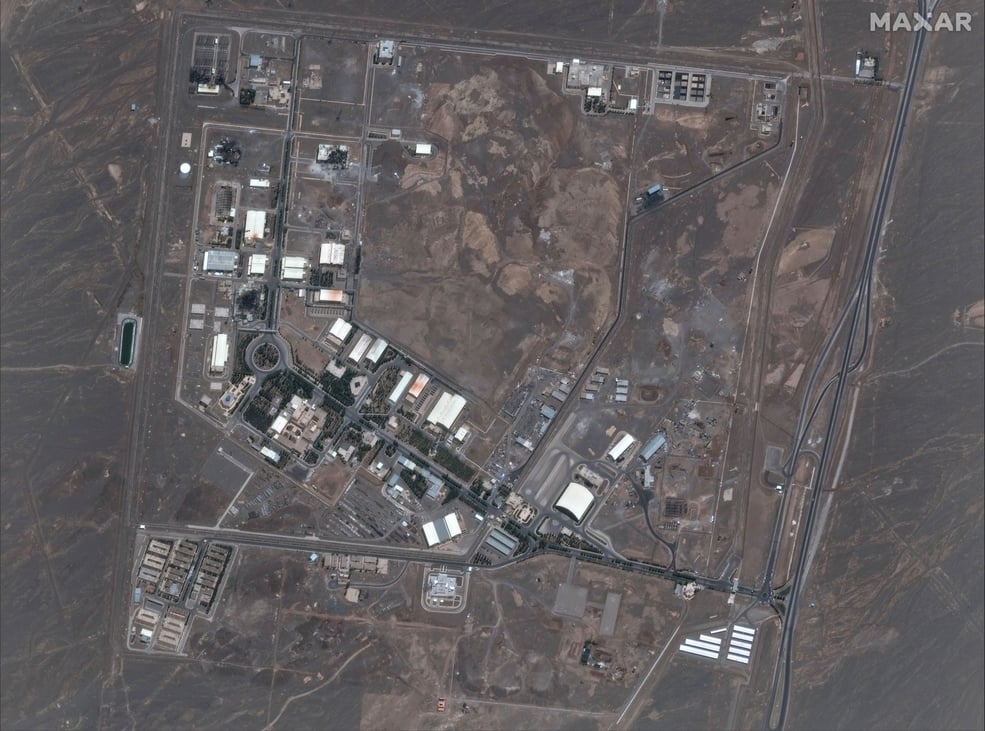
Iran: Nuclear Monitoring Cannot Proceed Due To US Military Threats
Summary
- Iran has informed the International Atomic Energy Agency that nuclear monitoring discussions cannot proceed due to perceived military threats from the United States.
- The IAEA has expressed "proliferation concern" over the lack of access to Iranian nuclear sites and inability to verify its near weapons-grade uranium stockpile.
- Iran's current uranium enrichment stockpile of 440.9 kilograms at 60% purity could potentially be used to produce up to 10 nuclear bombs.
- The suspension of inspections follows recent US and Israeli airstrikes against Iran, including attacks on nuclear facilities and military targets.
- Iran insists that full implementation of its safeguards obligations requires addressing the "root causes" of the current situation and restoring normal conditions.
What Happened
The lack of comprehensive information regarding Iran's atomic sites and nuclear material has been explicitly labeled by the IAEA as "a matter of proliferation concern" that "needs to be rectified with the utmost urgency."
Iran has formally communicated to the International Atomic Energy Agency (IAEA) that discussions regarding nuclear monitoring cannot advance while the nation perceives itself to be under the threat of military aggression. This assertion was detailed in a confidential report from the United Nations nuclear watchdog, which was distributed to member states on Friday and subsequently reviewed by The Associated Press. Tehran specifically cited "a series of persistent, explicit, and public threats" from the President of the United States, indicating intentions to conduct further acts of armed aggression, particularly targeting Iran's nuclear facilities.
The Islamic Republic has made it clear that the current impasse will not be resolved until the underlying causes of the situation are addressed and the necessary conditions for the normal implementation of safeguards are re-established. Despite this, Iran reiterated its "firm commitment to resume full implementation of its safeguards obligations as soon as the relevant legal and actual conditions permit it." This declaration underscores a complex diplomatic standoff where Iran links its cooperation with the IAEA to the cessation of perceived external threats.
Escalating Tensions and Unverified Sites
The current suspension of Iran IAEA inspections follows a period of heightened military activity. Last June, the United States and Israel engaged in a 12-day conflict against Iran, involving extensive airstrikes that severely impacted Iran's nuclear sites, leaving much of its program in disarray, though the full extent of the damage remains unclear. Further military strikes were conducted by the U.S. and Israel on February 28, resulting in the deaths of Iran's Supreme Leader Ayatollah Ali Khamenei and other senior officials. These subsequent attacks targeted Revolutionary Guard command facilities, air defense systems, missile and drone launch sites, and military airfields.
Since the June bombing, the IAEA has been unable to verify the status of Iran’s stockpile of near weapons-grade uranium, and inspectors have not been granted access to nuclear sites affected by these US Israeli airstrikes Iran nuclear facilities. The only facility within Iran that the IAEA has inspected since last June is the Bushehr nuclear power plant, where an inspection took place from September 12-15. The reactor at Bushehr utilizes uranium enriched to 4.5%, a low level suitable for power generation. The IAEA also reported "increasing concern" regarding the Isfahan Fuel Enrichment Plant, a site Iran first disclosed to the UN nuclear watchdog last June, just prior to the commencement of the joint U.S.-Israeli airstrikes. Inspectors had planned to visit Isfahan on the day the strikes began but were forced to cancel, and the IAEA has stated it "does not know" the site's "exact location or whether it contains nuclear material."
Nuclear Proliferation Concerns
The lack of comprehensive information regarding Iran's atomic sites and nuclear material has been explicitly labeled by the IAEA as "a matter of proliferation concern" that "needs to be rectified with the utmost urgency." This concern is amplified by Iran's existing uranium enrichment stockpile, which currently stands at 440.9 kilograms (972 pounds) of uranium enriched up to 60% purity. This level of enrichment is considered a short, technical step away from weapons-grade levels, typically around 90%.
According to the IAEA, this significant Iran uranium enrichment stockpile could potentially enable the country to construct as many as 10 nuclear bombs, should it decide to weaponize its nuclear program. The International Atomic Energy Agency Iran has affirmed its readiness to resume its safeguards activities in Iran promptly, indicating its capacity and willingness to re-engage with monitoring efforts. However, the current impasse, driven by Iran's security concerns, prevents such re-engagement, leaving a critical gap in international oversight.
Legal and Diplomatic Standoff
The ongoing dispute extends beyond physical access to sites, touching upon the very principles of international monitoring and intelligence gathering. Iran conveyed its apprehension to the IAEA regarding a recent offer from the United States, which proposed a reward of up to $20 million for information pertaining to Iran’s nuclear program. Tehran emphasized the critical importance of preserving the "confidentiality" of the IAEA’s operations and ensuring that sensitive information about Iran’s nuclear program is not "disclosed, misused or exploited."
In response to the current deadlock, the IAEA has encouraged Iran to "consider technical and gradual measures" that could facilitate the return of inspectors to the country. This suggestion points towards a potential pathway for de-escalation and renewed cooperation, provided both sides can find common ground. However, Iran's position remains firm: full implementation of its Iran nuclear safeguards obligations is contingent upon the resolution of the "root causes" of the present situation and the restoration of conditions conducive to normal safeguards.
Practical Implications
Lawyers and compliance officers advising on international trade, sanctions, or geopolitical risk should note the heightened non-proliferation concerns and increased risk profile associated with Iran due to the suspension of IAEA monitoring. This development signals potential for intensified sanctions or further military action, necessitating a review of compliance frameworks and contractual obligations related to Iranian entities.
Source
How does this affect you?
Get an AI analysis of this article grounded in your jurisdictions, practice areas, and any policy documents you've uploaded to Wansom.
Finish Reading the Full Story and the Expert Analysis.
Get the latest legal & regulatory intelligence in United States
Wansom is AI and can make mistakes.