
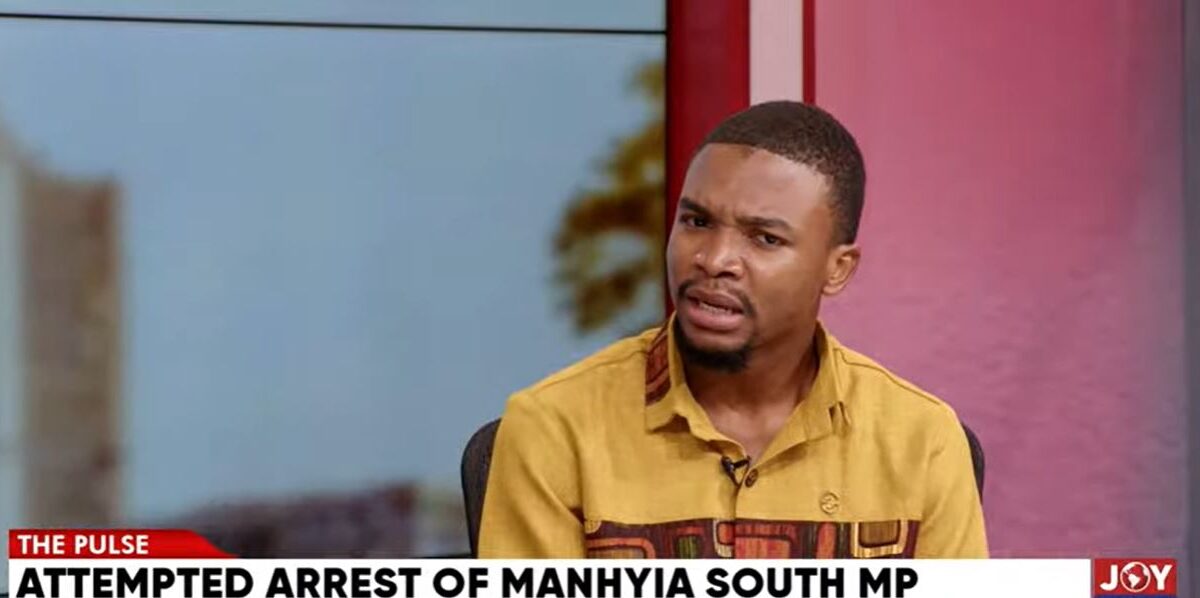
Interior Ministry: Manhyia South MP Arrest Process Needs Decorum
Summary
- The Ministry of the Interior criticized the attempted arrest of Manhyia South MP Nana Agyei Baffour Awuah at the Accra High Court, stating it lacked decorum.
- Ministry spokesperson Julius Kwame Anthony suggested the arrest process should have been channeled through the Speaker of Parliament, even during recess.
- Anthony acknowledged EOCO's legal authority but stressed that an MP's status requires a more decorous arrest procedure.
- He cited a past incident involving Madina MP Francis-Xavier Sosu as a similar example of inappropriate tactics.
- The spokesperson also expressed concern for the EOCO official's safety during the attempted apprehension, deeming the risk avoidable.
Attempted Arrest and Official Critique
The Interior Ministry's perspective, as articulated by its spokesperson, reinforces the idea that the unique position of an MP demands a considered and respectful approach from all state institutions.
An alleged attempt to apprehend Nana Agyei Baffour Awuah, the Member of Parliament for Manhyia South, at the Accra High Court has drawn significant commentary from the Ministry of the Interior. The incident occurred while Mr. Baffour Awuah was present at the court in his capacity as legal counsel for Salomey Baffoe Awiti, a detained nurse. This event prompted Julius Kwame Anthony, the Press Secretary and spokesperson for the Ministry of the Interior, to publicly state that the procedure for the MP's arrest could have been managed through parliamentary channels to ensure a more decorous outcome.
Speaking on September 23, 2026, Mr. Anthony acknowledged that while the Economic and Organised Crime Office (EOCO) possesses the legal authority to execute arrests based on warrants, the distinct status of a Member of Parliament necessitates a different approach to such operations. He emphasized that the manner in which the Manhyia South MP arrest parliamentary process unfolded lacked the appropriate level of respect for the legislative office. The spokesperson's remarks highlight a perceived gap between legal powers and the expected procedural decorum when dealing with elected officials.
The Expected Parliamentary Protocol
Mr. Anthony elaborated on the established Ghana MP arrest protocol, indicating that general understanding dictates that notice should be formally provided to the Speaker of Parliament to facilitate an MP's release for arrest. He conceded that Parliament was currently in recess, which might lead to questions regarding the applicability of certain protections related to travel to or from parliamentary sittings. However, despite the recess, his primary reservation remained that channeling the arrest procedure through the Speaker's office would have lent greater decorum to the entire process.
This perspective underscores the Interior Ministry's position on parliamentary privilege and the procedural requirements for detaining Ghanaian MPs. The spokesperson firmly believed that the situation could have been handled with greater finesse, particularly given that Mr. Baffour Awuah is a well-known public figure who could easily be located and apprehended by authorities if necessary. This suggests that the urgency or method employed by EOCO in exercising its parliamentary arrest powers was, in the Ministry's view, disproportionate to the circumstances.
Advocating for Decorum and Avoiding Past Errors
Beyond the specific incident involving the Manhyia South MP, Mr. Anthony voiced a broader critique of similar tactics employed against Members of Parliament in the past. He recalled with disapproval the pursuit of Madina MP Francis-Xavier Sosu during the previous New Patriotic Party (NPP) administration, describing it as a comparable situation. He explicitly stated his personal dissatisfaction with such conduct at the time and reiterated his belief that such methods should not be permitted.
This stance from the Interior Ministry spokesperson underscores a consistent call for adherence to a higher standard of Interior Ministry MP arrest decorum. He also expressed concern that the EOCO official involved in the attempted arrest of Nana Agyei Baffour Awuah was placed at serious, yet avoidable, risk due to the manner in which the operation was conducted. The comments by Julius Kwame Anthony serve as a reminder that while law enforcement agencies like EOCO have legitimate powers, the execution of these powers, especially concerning elected representatives, must always prioritize procedural propriety and the safety of all parties involved.
Broader Implications for Legislative Privilege
The remarks made by Julius Kwame Anthony regarding the Nana Agyei Baffour Awuah arrest procedure carry significant weight for the ongoing discourse surrounding Ghana parliamentary immunity arrest. His comments highlight the expectation for law enforcement agencies to notify Parliament, even during periods of recess, to circumvent potential procedural challenges and ensure adherence to constitutional decorum when dealing with elected officials. This emphasis on proper protocol aims to safeguard the integrity of the legislative body and its members, even when they are subject to legal scrutiny.
The Interior Ministry's perspective, as articulated by its spokesperson, reinforces the idea that the unique position of an MP demands a considered and respectful approach from all state institutions. It suggests that a failure to follow established or expected parliamentary processes for the Manhyia South MP's arrest could undermine public trust and create unnecessary friction between branches of government. This discussion ultimately underscores the delicate balance between upholding the rule of law and respecting the constitutional privileges and decorum associated with parliamentary office.
Practical Implications
This discussion on the Manhyia South MP's attempted arrest underscores the Interior Ministry's position on parliamentary privilege and the procedural requirements for detaining Ghanaian MPs. Lawyers should be aware of the expectation for law enforcement to notify Parliament, even during recess, to avoid procedural challenges and ensure adherence to constitutional decorum when dealing with elected officials.
Source
How does this affect you?
Get an AI analysis of this article grounded in your jurisdictions, practice areas, and any policy documents you've uploaded to Wansom.
Finish Reading the Full Story and the Expert Analysis.
Get the latest legal & regulatory intelligence in Ghana
Wansom is AI and can make mistakes.